How do you run a business that’s profitable, efficient, and primed for growth? You have to stay on top of things at once. Every process must work as perfectly as possible. At any given moment, you should know where you should invest time and resources.
That’s much easier said than done. To reach such a well-orchestrated state, you’ll first need to figure out where your shortcomings are. One proven method is gap analysis.
What is Gap Analysis?
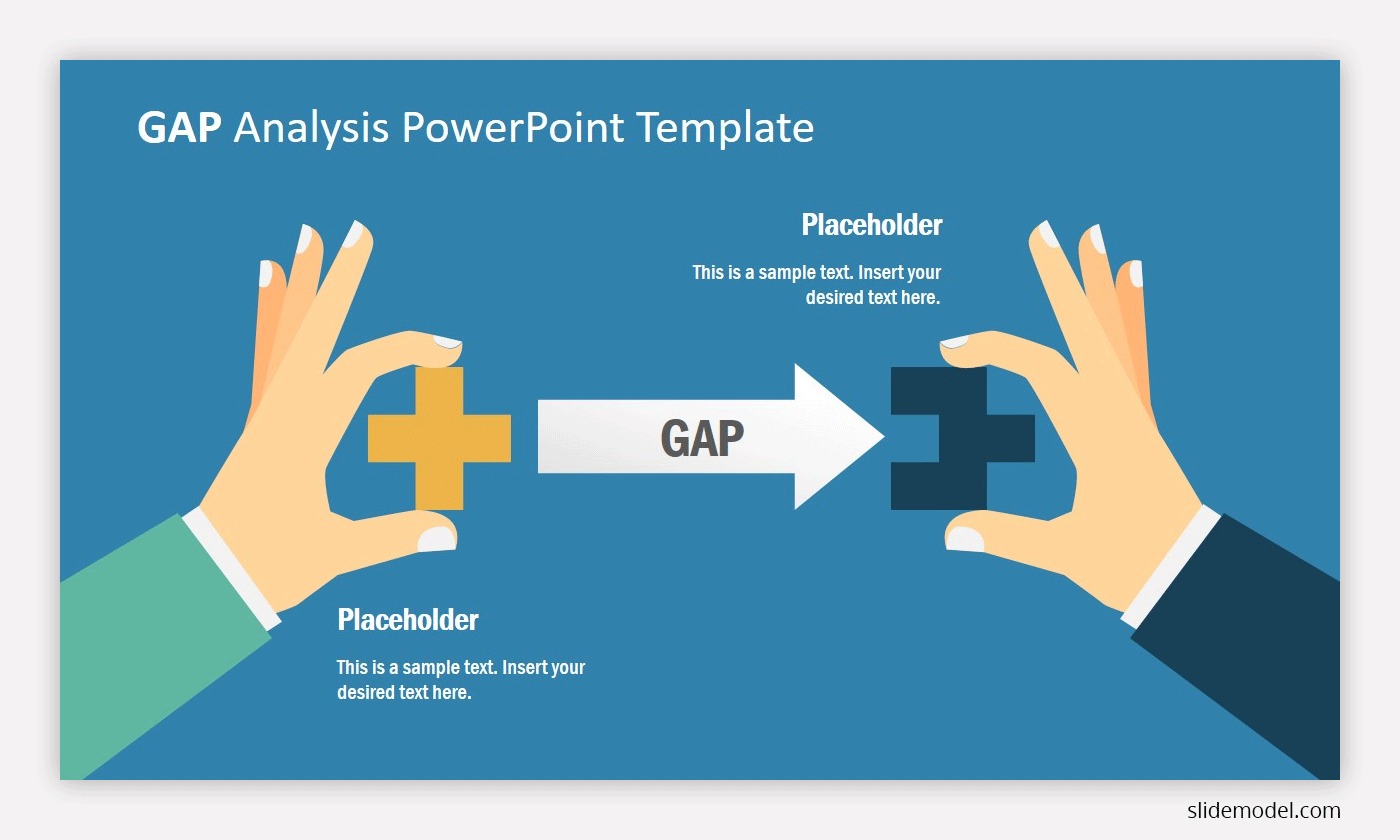
A gap analysis is a process of examining your business’s current state and comparing it with potential or desired outcomes. Your goal is to identify the gaps between your current situation and where you would like your business to be in the future.
After you complete the initial investigation, you will also need to develop a strategy to close those gaps and reach your goals.
Key Areas of Usage
In general, the company as a whole can benefit from a gap analysis process. However, you may be better off focusing on a few key business areas where you will get the most improvement. Some of these key areas of usage include:
- Fiscal performance
- HR
- Market competition and market segmentation
- Innovation (Research and Development)
- IT
- Sales

To provide you with more context, here are a few specific use cases that demonstrate different situations and focus areas for a gap analysis. These gap analysis examples show the broad application of gap analysis methodology.
- You can conduct a gap analysis of manufacturing, shipping, and other factory processes when your company is not meeting productivity goals, customer returns and complaints are high, or other relevant objectives are not being met. A gap analysis can reveal what processes are the issue (e.g. outdated supply chain management practices), and give hints as to what needs to be done.
- When you launch a new product, you might use gap analysis to identify why your sales projections weren’t met or why customer sentiment is skewing negative. It’s a good way to assess the effectiveness of your go-to-market strategy.
- If you sell physical products, you can use a sales gap analysis to review the performance of specific items, categories, etc. Then use the results to determine if you are focusing on the right product lines.
- Gap analysis is also a useful tool in supply management. For example, if a franchisee in a restaurant chain continually runs out of necessary items, a gap analysis can help them understand why.
- A gap analysis can also be conducted on personnel. In fact, it can serve as a valuable self-assessment tool. For example, sales team members can analyze their current performance to identify where they may need additional assistance and training. The process can also reveal some best practices that all team members should consider adopting.
The Objectives of Gap Analysis
When a gap analysis is conducted effectively, the company can gain many tangible benefits. The key is to establish clear, succinct objectives before the analysis begins. Here are some examples:
- To identify where improvement is needed in areas such as employee engagement, customer satisfaction, profitability, efficiency, product quality, etc.
- To determine weaknesses in any business area.
- Support stakeholders and managers in making decisions.
- Learn where to prioritize resources.
- Provide a reality check where assumptions and reality may conflict.
- Determine whether the objectives of a project have been met or not and why.
Types of Gap Analysis: Choosing the Right Approach for Your Business
Not every gap analysis looks the same. The method you choose depends on what you are trying to fix, improve, or strategically reposition. Understanding the main types helps business leaders apply the right framework instead of defaulting to a one-size-fits-all approach.
Performance Gap Analysis
A performance gap analysis measures the distance between where your business currently performs and the benchmarks or targets it aims to reach. This often serves as the starting point for quarterly or annual strategic reviews, where actual output is compared against projected KPIs. For example, a sales team running at 68% of its quarterly quota has a clear performance gap: the analysis helps determine whether the root cause is training, resources, or process bottlenecks.
Teams often use a performance review framework alongside this analysis to create accountability at the individual and departmental level.
Skills Gap Analysis
A skills gap analysis evaluates the competencies your workforce currently holds versus the capabilities your organization needs to meet its goals. It is one of the most common applications in HR and people management, particularly during periods of organizational transformation, technology adoption, or market expansion.
The process typically involves mapping current employee capabilities against a defined skills inventory, then identifying the competency gaps that would prevent the team from executing the strategic plan. For roles affected by AI tools, automation, or new compliance requirements, a targeted skills gap assessment can drive measurable improvements in workforce readiness.
Pair this with a skills matrix to visualize capability spread across your team and identify the individuals most in need of upskilling.
Strategic Gap Analysis
A strategic gap analysis operates at the organizational level and asks: does your current strategy have the capacity to take you where you want to go? It compares the trajectory implied by your existing plans with the outcomes required to meet long-term business objectives.
This is frequently used in C-suite planning cycles and feeds directly into roadmap development, investment prioritization, and M&A decisions. When the gap between current trajectory and desired future state is significant, leadership must decide whether to adjust the strategy, reallocate resources, or explore new market segments.
For a structured approach to this conversation, explore how strategic planning frameworks can structure your organization’s direction-setting process.
Market Gap Analysis
A market gap analysis identifies unmet customer needs, underserved segments, or product and service opportunities that competitors have not yet captured. Unlike internal performance assessments, this type looks outward: scanning the competitive landscape for spaces where demand exists but supply is inadequate.
Organizations launching new products, entering adjacent markets, or repositioning an existing brand rely heavily on market gap analysis to validate their hypothesis before committing resources. Combined with customer data and competitive intelligence, it can surface revenue-gap opportunities that standard financial reporting often misses.
A thorough market research process typically precedes this analysis to ensure your data reflects real demand patterns rather than internal assumptions.
Operational Gap Analysis
An operational gap analysis is more granular. It focuses on specific workflows, systems, and processes within a department or business unit: comparing how work is currently done against the most efficient or compliant version of that process.
Common use cases include identifying process improvement gaps in supply chain logistics, customer service delivery, or manufacturing output. When teams consistently surface operational gaps, the findings feed into a formal process improvement plan that prioritizes changes by impact and feasibility.
Documenting and presenting these findings is easier with a process improvement plan framework that stakeholders can review and act on.
Technology and Data Gap Analysis
A technology gap analysis evaluates whether your existing tech infrastructure, software stack, or data systems can support your business objectives. This is especially relevant for organizations undergoing digital transformation or considering enterprise software migrations.
Infrastructure gaps, software development requirements gaps, and data gap analysis in reporting pipelines are all variations of this category. For instance, a team trying to build real-time dashboards on legacy data infrastructure faces a data gap that no amount of strategic planning will close without a technology investment.
How to Conduct a Skills Gap Assessment in Your Organization
A skills gap assessment is one of the most actionable forms of gap analysis available to HR leaders and people managers. While strategic gap analysis addresses organizational direction and market gap analysis looks externally, a skills gap assessment answers the core question: do your people have what it takes to execute the plan?
Here is a step-by-step approach to conducting one effectively.
Define the target competency profile. Before measuring any gap, you need a baseline of what skills the role or team should have. This often comes from job architecture frameworks, future-state workforce planning documents, or industry benchmarks.
Assess current capabilities. Use a combination of self-assessments, manager evaluations, performance data, and structured skills tests to get an honest picture of your team’s current competency profile.
Map the competency gap. With both profiles in hand, identify where the shortfall is most significant. Prioritize by role criticality: a skills gap in a customer-facing position carries more immediate business risk than the same gap in a back-office function.
Design a training needs analysis. A training needs analysis translates the competency gap into a learning roadmap. It identifies which gaps L&D programs can close, which require external hiring, and which call for structural process changes.
Build a workforce gap analysis model. If your assessment spans multiple teams or the whole organization, a workforce gap analysis model helps visualize talent distribution, identify concentrations of talent gaps, and inform headcount planning.
Track progress and close the loop. Schedule quarterly reassessments so that the gap narrows over time rather than growing through attrition or market change.
Talent gap identification is not a one-time exercise. Skill requirements shift with every new tool, regulation, and market move, so a skills gap assessment that is a year old describes a team that may no longer exist.
When presenting findings to leadership, a 9-box talent review helps visualize how performance and potential distribute across your workforce, making talent gap prioritization more defensible.
For HR teams building a longer-term people strategy, integrating the skills gap assessment into your HR strategic plan ensures that capability development aligns with organizational goals.
Competitive Gap Analysis: Turning Market Gaps into Competitive Advantage
A competitive gap analysis systematically compares your business capabilities, product offerings, pricing, and customer experience against direct competitors. Its purpose is not to copy what others are doing: it is to identify where your competitors fall short and where you have the structural capacity to outperform them.
For business leaders, the competitive gap represents both a risk and an opportunity. Ignore it, and you may lose market share to a rival who has addressed a customer need more effectively. Engage with it deliberately, and you can uncover the white space where differentiation creates lasting competitive advantage.
How to Run a Competitive Gap Analysis
Start by defining the dimensions of competition most relevant to your market: pricing, feature depth, customer service responsiveness, distribution reach, brand positioning, or time-to-market. For each dimension, benchmark your current state against two or three primary competitors.
Tools like Porter’s Five Forces help you frame competitive dynamics at the industry level, while a SWOT analysis surfaces competitive gaps at the company level.
Once you identify gaps, classify them by type: gaps where you are falling behind, gaps where you are on par, and gaps where you are genuinely ahead. The first category demands attention; the third represents your current source of competitive advantage and should be protected and amplified.
Brand Positioning Gaps
Brand positioning gaps emerge when your brand perception among target customers diverges from the position you intend to occupy. A company may offer a superior product but still lose deals because customers perceive a competitor as more innovative, more reliable, or more aligned with their values.
Closing a brand positioning gap requires both analytical and creative work. The analytical side involves customer perception surveys, competitive messaging audits, and share-of-voice analysis. The creative side involves refining your messaging architecture, visual identity, and thought leadership content to close the distance between perceived and intended position.
Revenue Gap Analysis
A revenue gap analysis quantifies the difference between your actual revenue run rate and the target you need to reach a specific financial goal. While this sounds like a simple arithmetic exercise, the value lies in breaking the revenue gap into its contributing factors: pricing gaps, volume gaps, mix gaps, and market penetration gaps.
Each factor points to a different strategic lever. A pricing gap may call for a repositioning strategy or a new tier structure. A market penetration gap may indicate that your current channels can’t reach the full addressable market.
Linking revenue gap findings to a market analysis gives leadership the market context needed to prioritize the right growth lever.
Competitive gaps move as fast as your competitors do. Re-running the analysis at least once a year, and again after any major competitor launch or pricing change, keeps the findings tied to the market you actually face.
Using Gap Analysis for Process Improvement and Operational Excellence
While strategic and competitive gap analyses direct resources at the highest level, operational gap analysis makes improvements tangible. Operational excellence frameworks: from Lean and Six Sigma to Agile and ITIL, all share a common dependency on understanding the gap between current process performance and target process performance.
Identifying Process Improvement Gaps
Process improvement gaps are the inefficiencies, redundancies, bottlenecks, and compliance shortfalls that prevent a workflow from performing at its designed capacity. Identifying them requires process mapping, data collection, and stakeholder interviews: a combination that gives you both the quantitative evidence and the qualitative context to prioritize correctly.
Common examples include: order fulfillment cycles that consistently exceed SLA targets, customer onboarding workflows with high drop-off rates, or approval chains in financial operations that create unnecessary delays. In each case, the gap analysis frames the problem as a measurable distance between current and desired performance, not as a vague complaint about inefficiency.
A fishbone diagram is a practical companion tool for identifying the root causes behind a process gap before designing the corrective action.
Project Gap Analysis
In project management, a project gap analysis evaluates whether a project’s current trajectory (scope, timeline, budget, or quality) will deliver the intended outcomes. Teams conduct this assessment at key milestones, comparing the project’s current state against the approved baseline.
Requirements gaps are especially common in IT and software development projects, where initial specifications rarely capture every stakeholder need. A structured requirements gap analysis midway through a project can prevent costly rework by surfacing misalignments before they become architectural problems.
Establishing measurable targets using the OKR framework helps teams translate gap findings into tracked improvement goals with clear owners and timelines.
Customer, Service, and Content Gap Analysis in Marketing
Marketing teams apply gap analysis to understand why their campaigns underperform, why customers churn, or why organic search rankings plateau. Each scenario maps to a different type of gap, and each calls for a different corrective strategy.
Customer Gap Analysis
A customer gap analysis measures the distance between what customers expect and what they actually receive. This concept is central to the service gap model developed by Parasuraman, Zeithaml, and Berry, which identifies five distinct gaps in service delivery: the knowledge gap, the policy gap, the delivery gap, the communication gap, and the customer gap itself.
For marketing and customer success teams, closing the customer gap typically involves improving expectation-setting in pre-sale communications, increasing post-sale delivery reliability, and systematically collecting and acting on customer feedback.
Content Gap Analysis
A content gap analysis identifies the topics, questions, and intent signals your target audience searches for that your existing content doesn’t address. This is one of the highest-leverage SEO activities a content team can undertake, since it maps directly to organic traffic potential.
The process involves identifying keywords your competitors rank for, but you don’t, mapping those keywords to search intent, and creating or updating content to fill the gap. Consistently closing content gaps improves topical authority: a signal that search engines increasingly use to evaluate content quality.
A well-executed content gap analysis feeds directly into your content marketing plan and editorial calendar, ensuring new content serves a measurable SEO purpose rather than being published opportunistically.
Service Gap Model Applications
The service gap model is particularly useful in customer-facing industries (retail, financial services, healthcare, and B2B software), where the gap between promised and delivered experience directly affects customer retention and NPS scores.
Each of the five gaps in the model can be addressed through a specific management intervention. The knowledge gap, for instance, closes when organizations invest in rigorous customer research. The delivery gap closes when frontline teams receive better training, tools, and accountability structures.
Presenting service gap findings to leadership works best when framed alongside market segmentation data so that gap-closing priorities reflect the most valuable customer segments, not just the loudest complaints.
The Benefits and Limitations of Gap Analysis
The Benefits
To get the best results from any gap analysis technique, you need buy-in. You can do this by pointing out the benefits of conducting a gap analysis. These include:
- It gives you a view of your business that you likely haven’t experienced before. Depending on the type of analysis you perform, that outlook could be quite focused and in-depth. It can also be done from a very wide angle.
- It supports important decision-making and helps management better determine where their priorities should be.
- It forces you to take a deeper look at your current practices without assuming they are effective. With that objective view, you can identify which processes may have outlived their usefulness.
- Depending on the project’s scope, a gap analysis can lead to rapid problem identification. This is often done using a Gap Fit analysis.

The Limitations
It’s also important to understand what a gap analysis will not accomplish. In addition, it’s critical to acknowledge where an analysis is likely to be flawed. First, a gap analysis simply identifies a gap. It does not provide action steps or improvement recommendations. Competition and external factors may also be at play and not part of the research. Finally, in fast-moving industries, so much may be shifting and changing that an analysis may be outdated before it can be published and distributed.
Gap Analysis Examples and Frameworks
Several effective gap analysis tools are worth using, and Gap Analysis templates for PowerPoint and Google Slides presentations. Pick the right one to best accomplish your objectives. Here are some examples of Gap Analysis models and tools that you can use to conduct and present a Gap Analysis.
McKinsey 7S Framework

McKinsey & Company first conceived the 7S Framework in the 1970s. It focuses on exploring organizational structure and achieving optimal alignment among the 7 internal elements within the company. McKinsey 7-S model is particularly handy when you want to analyze the interplay between different parts of your organization.
PESTEL Framework

PESTEL acronym stands for Politics, Economy, Social, Technology, Environmental, and Legal. Marketing departments often use it to analyze how external factors can impact a business’s marketability. For example, political conflict between a company’s country of origin and another country can affect the company’s ability to make its products available in that area. It can also turn customer sentiment negative. An example of an economic factor is that rising unemployment could impact sales.
Nadler-Tushman Congruence Framework
The Nadler-Tushman Congruence framework is commonly used to identify the cause of performance issues. It’s based on the idea that four of the following elements must be in harmony to get the best performance out of employees:
- Culture
- Work
- People
- Structure

For example, imagine you have hired a team that is highly skilled but also very independent. If your work culture is very traditional and your management structure is tall, those people won’t be able to do their best work.
SWOT Analysis
For the uninitiated, SWOT analyzes a company’s Strengths, Weaknesses, Opportunities, and Threats.

A SWOT analysis can be very simple, like a brainstorming session with notes jotted on a piece of paper. It can also involve an in-depth analysis that uses data to identify the factors impacting SWOT.
Burke-Litwin Causal Model
The Causal gap analysis model is based on the hypothesis that both internal and external factors impact organizational performance. This framework is used to assess how both the environment and the organization can impact performance.

Other frameworks and templates are available. For example, the fit-gap analysis template can be used for rapid problem identification as mentioned above.
How to Do a Gap Analysis
Most people will find this four-step approach helpful when conducting a gap analysis. The steps involved, as well as a gap analysis example, are listed below:
1. Identify the Current State of the Analyzed Subject
Your current state is simply what you are doing right now. Imagine you have a growing catering company and want to focus on improving your corporate events catering revenue. Your first step would be to define what you consider a corporate event versus other types of events, then determine the monthly revenue you make from those events. Let’s imagine that your monthly revenue is 20K.
2. Formalize Future Goals
It isn’t enough to simply want to improve; you have to establish formal goals to work towards. These should be measurable, achievable, and realistic. In our example, let’s say you want to increase monthly revenue from corporate events to 35K.
3. Identify Existing Gaps
Based on the information you have, you are 15K away from reaching your goal. That is your gap, and it will continue to exist unless you take action.
Your goal, however, is not just to identify the current gap, but also to drill into why it exists. This is best done with a 5 Whys root cause analysis. Ask your team a series of questions until you identify the real bottleneck.
4. Devise an Improvement Plan Based on the Gap Analysis Report
Once you have reviewed the final gap analysis document, you can begin devising strategies to address the gaps. To do so effectively, use the root-cause information you’ve gathered and incorporate it into your fixes. For instance, if you found that your team lacks people to be more effective, consider hiring more staff or scheduling fewer personal events for a few weeks.
Also, assess the cost of implementing various strategies for closing the gap. Perhaps you don’t have the budget to hire new people full-time. Maybe you can increase your team’s efficiency in some other way? For example, by providing them with better event planning tools.
A Worked Gap Analysis Example
Frameworks are easier to apply once you have seen the numbers move. Consider a B2B software company whose customer support team is under pressure after two consecutive quarters of rising churn. Leadership asks for a gap analysis before approving new headcount.
Current State and Desired State
The team documents its current state from the help desk system: an average first response time of 18 hours, a customer satisfaction (CSAT) score of 72%, and 35% of tickets reopened at least once. The desired state comes from the customer contract and the company’s retention target: a first response within 4 hours, CSAT of 85%, and a reopen rate below 15%.
The Gaps and Their Root Causes
Laid side by side, the gaps are 14 hours in response time, 13 points in satisfaction, and 20 points in reopened tickets. A fishbone diagram session with agents and team leads shows that headcount is only part of the story. Tickets arrive in a single queue with no priority routing, agents lack access to the billing system and escalate every invoice question, and the knowledge base hasn’t been updated since the last product release, which explains most reopened tickets.
The Improvement Plan
The resulting plan addresses each root cause with an owner and a deadline: priority routing rules in the help desk tool within four weeks, read-only billing access for tier-one agents within six weeks, and a knowledge base refresh tied to every future release. Only after those changes are measured does the plan revisit hiring. The analysis turned a request for more people into a set of cheaper process fixes, which is the outcome a gap analysis is designed to produce.
How to Present a Gap Analysis to Leadership
A gap analysis only creates change if the people who control budget and priorities understand it quickly. Most leadership audiences need four slides, not forty, and the order matters.
Open with the Gap, Not the Method
Lead with a single slide that shows the current state, the target, and the size of the gap for the two or three metrics that matter most. A waterfall chart works well for showing how individual factors add up to the total gap, for example, how pricing, volume, and churn each contribute to a revenue shortfall. A bridge diagram makes the current-to-future journey visual for less quantitative audiences.
Show Root Causes Before Solutions
The second slide should explain why the gap exists. Executives who see a solution before the cause tend to debate the solution; executives who see the cause first tend to agree on what needs fixing. Keep the root causes to the three or four with the largest effect and park the rest in an appendix.
Close with a Prioritized Plan and a Decision
Finish with the action plan, ranked by impact and effort, and one explicit request: budget approval, a change in priorities, or a named owner for each initiative. A Gap Analysis PowerPoint template gives you a ready layout for the current state, future state, and bridging actions, so you can focus on the numbers rather than the slide design.
FAQs
What is gap analysis in business?
A gap analysis in business is a structured comparison between an organization’s current state (its actual performance, capabilities, or market position) and its desired future state. The output is a clear view of what is missing and a foundation for building the strategy, investments, or process changes needed to close the gap.
How does gap analysis measure current vs. desired performance?
Gap analysis measures performance by establishing a baseline (current state) and defining a target (future state), then quantifying the distance between them using relevant metrics such as revenue, output volume, cycle time, or customer satisfaction scores. The gap is the measurable shortfall between where you are and where you need to be.
Why conduct a gap analysis before strategic change?
Conducting a gap analysis before implementing strategic change ensures that decisions are grounded in evidence rather than assumptions. It helps leaders understand the required investment, identify missing capabilities, anticipate risks, and prioritize initiatives by impact, reducing the likelihood of costly mid-execution course corrections.
What are the key stages in gap analysis: current state, future state, and gap identification?
The current state stage documents what is true today: performance data, available resources, and existing capabilities. The future state stage defines what success looks like: the target metrics, capabilities, or market position the organization is working toward. Gap identification is the analytical step that compares the two and surfaces the specific areas that need investment, change, or improvement.
What types of gaps exist in a business context?
Common types include performance gaps (actual vs. target output), skills gaps (current vs. required competencies), market gaps (unmet customer needs), strategic gaps (current trajectory vs. long-term objectives), competitive gaps (your position vs. competitors’), operational gaps (process inefficiencies), revenue gaps (actual vs. targeted income), and technology gaps (current vs. required infrastructure).
What is a performance gap analysis?
A performance gap analysis measures the difference between an organization’s actual performance (in sales, productivity, quality, or customer satisfaction) and the performance benchmarks it is trying to achieve. It is commonly used in quarterly business reviews, sales team assessments, and operational efficiency audits.
How does market gap analysis differ from a profit gap analysis?
A market gap analysis focuses on external opportunities: identifying unmet customer needs, underserved segments, or product categories where demand exceeds supply. A profit gap analysis is an internal financial assessment that compares actual profit against target profit and breaks down the shortfall into its contributing components: price gaps, volume gaps, and cost gaps.
How do you use gap analysis for process improvement?
To use gap analysis for process improvement, map the current state of the process (inputs, steps, outputs, and performance metrics), define the target state (an efficient, compliant, or lower-cost version of the same process), and identify the gaps: inefficiencies, bottlenecks, or non-compliant steps. The gap analysis output feeds directly into a process improvement plan that prioritizes corrective actions by business impact.
What role does competitor analysis play in a gap assessment?
Competitor analysis provides the external benchmarks that make a gap assessment more meaningful. Without knowing how competitors perform, price, position, or serve customers, it is difficult to determine whether your gaps are unique or industry-wide, and whether closing them will create competitive differentiation or simply bring you to parity.
How do you prioritize gaps based on impact and risk?
Prioritize gaps using a two-dimensional matrix: impact (how significantly closing the gap would improve performance, revenue, or competitive position) and risk (how serious the consequences of not closing the gap are over 12–24 months). Address gaps that are high-impact and high-risk immediately. Low-impact, low-risk gaps can be deferred without material consequence.
Final Words
A gap analysis is one of the simplest tools in strategic planning and one of the most often misused. The method itself rarely fails. What fails is a vague desired state, a current state built on assumptions instead of data, or a list of gaps that never turns into an owned, dated plan. Getting those three pieces right matters more than which framework you choose.
Start small if you need to. Analyzing one process, one team, or one product line properly will teach your organization more than an enterprise-wide exercise that stalls in review. Present the result in a format leadership can absorb in a few minutes, revisit it on a fixed schedule, and treat a closed gap as the starting point for the next analysis rather than the end of the work.