Efficiently convey your ideas using an impressive visual communication tool with the Sustainable Creative Economy PowerPoint Diagram. A sustainable creative economy aims to take advantage of unique characteristics of the creativity in different aspects of a community. Mostly, it concerns cultural, media as well as functional innovations. The creative industries help the economic growth in partnership with the growing tourism industry in many countries. Different cultures from different countries highlight distinctive qualities in people, places and experiences which draw awareness and interest. As a result, this industrial framework of culture directly and indirectly boosts the economy’s growth. It generates job directly to the entities that provide the cultural highlight and also provides jobs in hotel and other accommodation industry, food industries as well as travel and transportation industry.
In addition, the creative economy, through arts and media, offers more value to products and services. With the collaboration of the widely accessed information traffic, creativity can fuel value into existing brands while it boosts the new and upcoming ones. This works by creating accessible contents that have value to different type of people who are collectively a target market for a lot of products. The great thing about this concept is that contents can widely vary to harbor interest from different types of people. Whether written, videos, photos or anything accessible in print or in digital format, creative contents can spark interests. Emotional as well as intellectual interests are the main capital in building relationships to the target market. This process develops and ultimately enables the brand to benefit from a good market relationship. For example, a rapper can build a good market relationship by giving out free music online. This may sound ridiculous because music is the rapper’s main product. On the other hand, the rapper doesn’t necessarily have to give all his records for free. Also, once he established a good relationship with his audience, he can expect profits from a sold out concert, biography book, t-shirts, caps and other merchandise.
This PowerPoint template is the perfect tool in visually stimulating the audience’s comprehension of Sustainable Creative Economy. It efficiently communicates the idea on its own and can be more dynamic with the use of other shapes in our Creative Layouts gallery. The presenter can describe the analysis of a current creative economy, or can guide the audience in to the different stages of a new analysis.
What’s inside this template
Example presentation scenarios
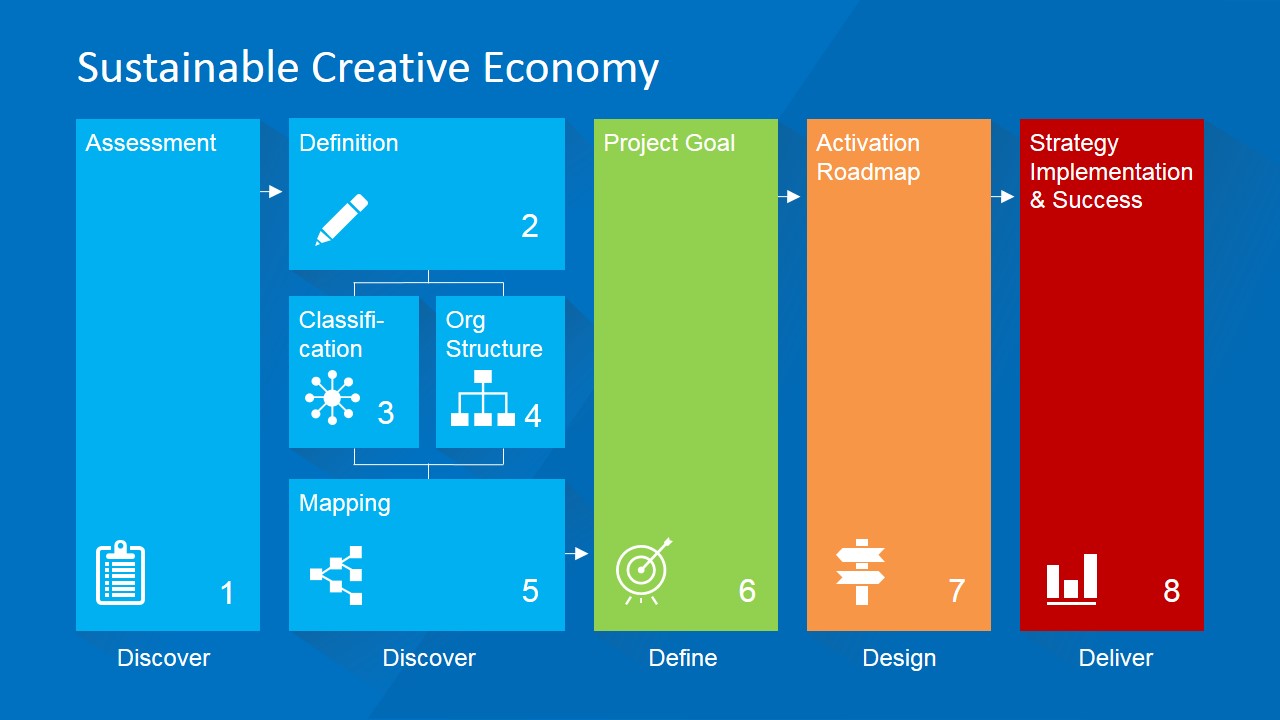
- An economic development consultant can use the process overview to introduce how assessment, definition, mapping, and implementation connect in a creative economy plan.
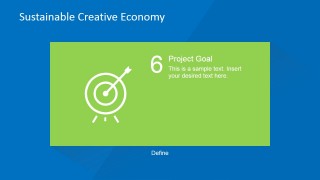
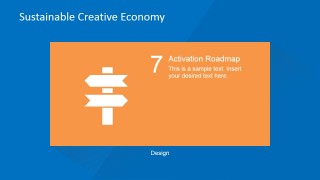
- A public sector presenter can use the Project Goal and Activation Roadmap step cards to align stakeholders around a cultural development initiative.
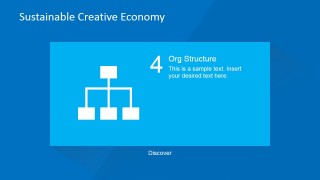
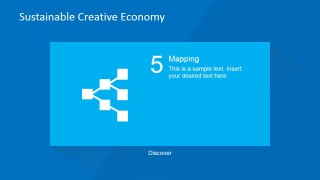
- An innovation manager can use the Classification, Org Structure, and Mapping slides to explain how creative sectors, teams, and relationships are organized.
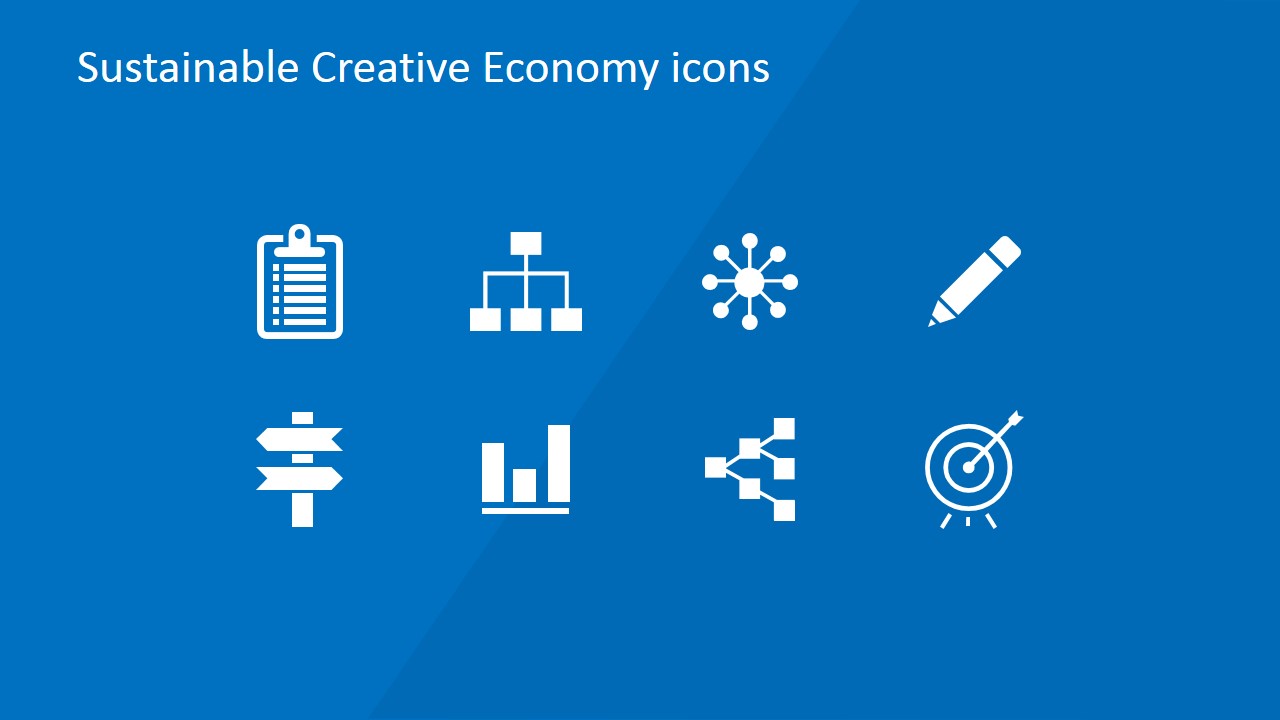
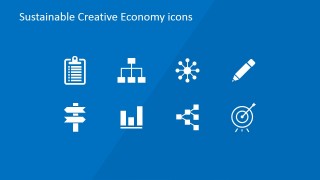
- An educator can use the icon sheet and individual step cards to teach students the building blocks of sustainable creative economy planning.
Features
- 100% editable presentation template
- Compatible with Microsoft PowerPoint and Google Slides
- 16:9 aspect ratio slides
- Scalable vector shapes, icons and illustrations
- AI-Ready for Microsoft Copilot and Claude
- Instant access and download
Frequently asked questions
Q: How should a presenter explain the process without making the model feel too abstract?
A: Start with Slide 1 to give the audience the full process in one view, then move into the step cards only for the areas that need discussion. Tie each icon to a concrete activity: assessment means evidence gathering, mapping means relationships, and activation roadmap means action planning. This keeps the framework practical.
Q: Who is this template best suited for in a strategy discussion?
A: This template fits presenters who need to explain a planning pathway for creative industries, cultural programs, or community innovation. It works well for consultants, policy advisors, educators, and program managers because the slides separate discovery, definition, design, and delivery into clearly labeled steps that non-specialist stakeholders can follow.
Q: Why does the design use a full process view followed by single-step cards?
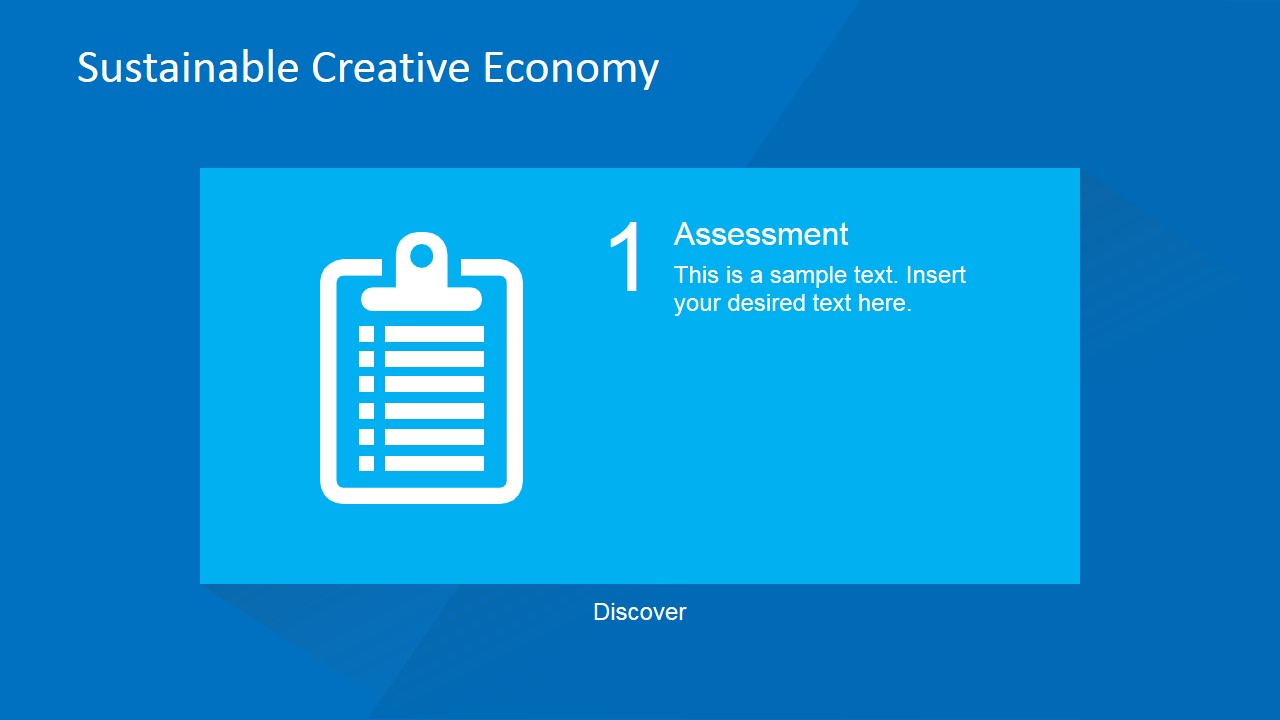
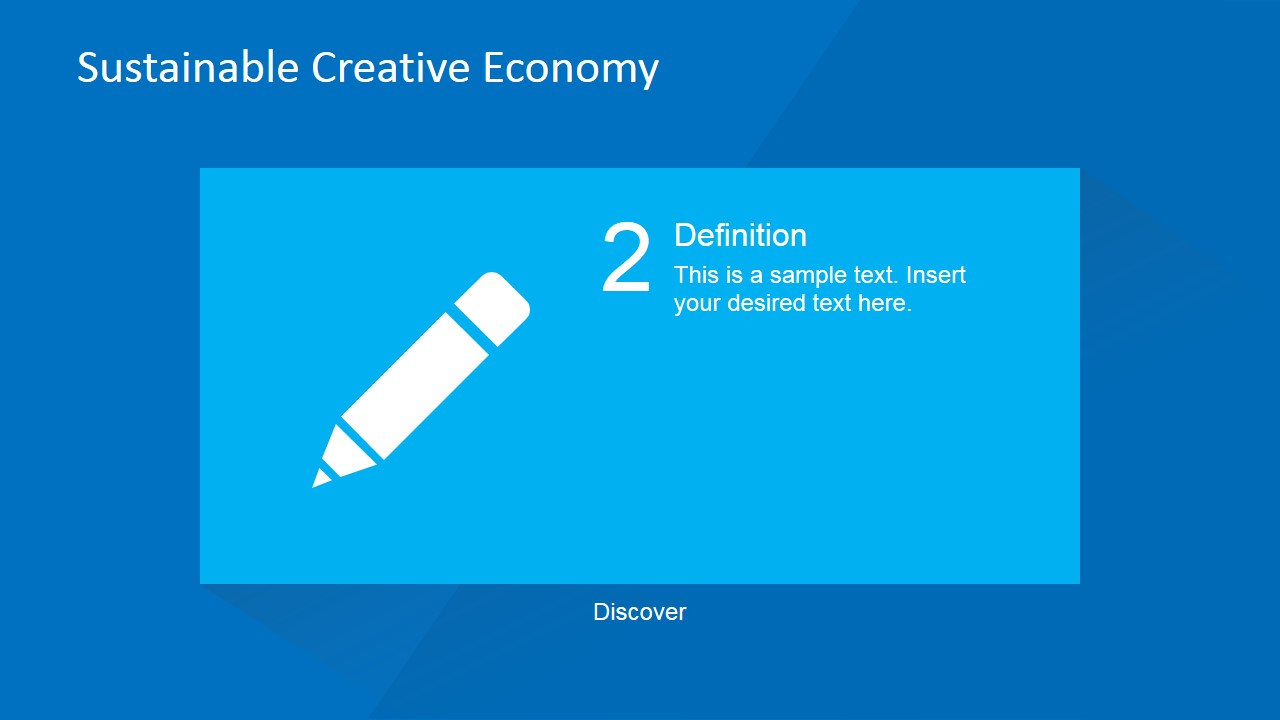
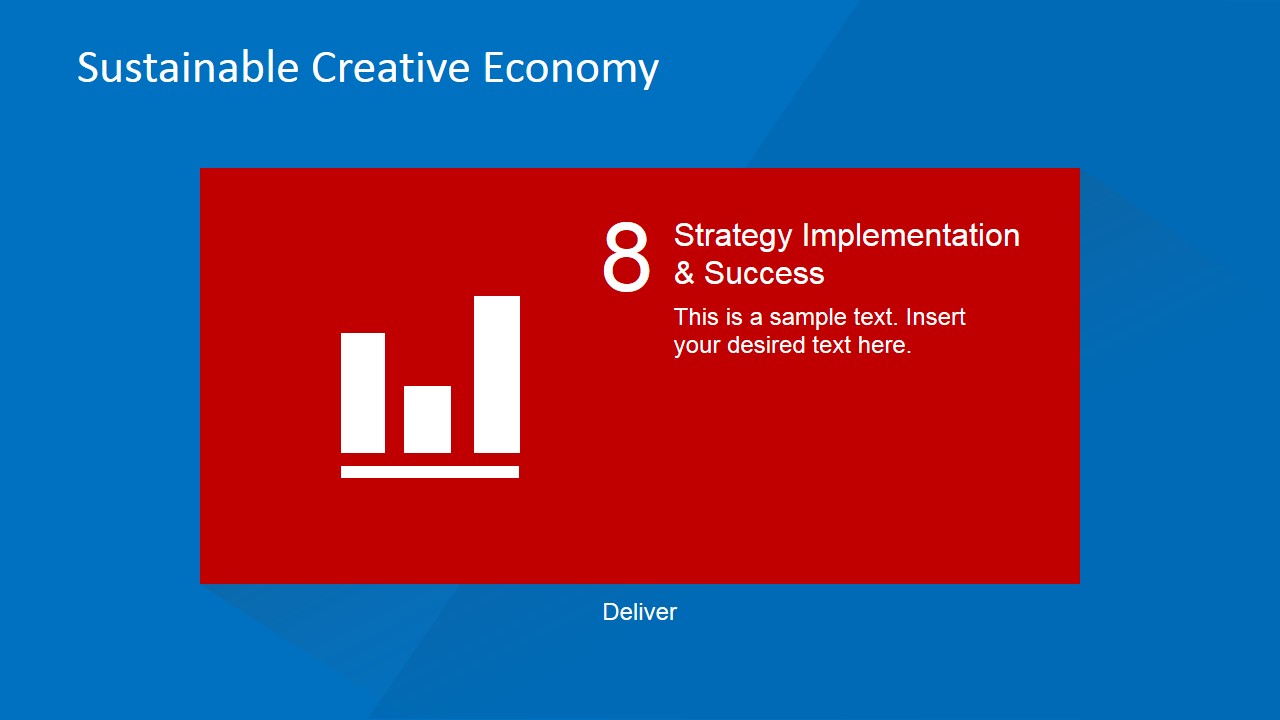
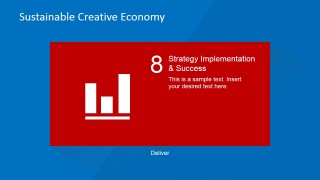
A: The opening diagram builds orientation before the audience hears details. The single-step cards then reduce visual load by isolating one idea, icon, and text block at a time. This sequencing helps a presenter move from system-level thinking to focused explanation without forcing the audience to read the whole framework repeatedly.

Sustainable Creative Economy PowerPoint Diagram
10-slide presentation template for creative economy process maps, step cards, and sector icons
This 10-slide diagram template presents a sustainable creative economy process with an overview flow, individual step cards, an org structure diagram, a mapping diagram, and an icon sheet. It is built for consultants, policy teams, educators, and innovation presenters working in Microsoft PowerPoint or Google Slides.
- Category
- Process Diagrams
- Rating


 Loading...
- Aspect ratio
- 16:9, 4:3
- Item ID
- 6639-02
- Colors
 Microsoft PowerPoint
  Microsoft Copilot
  Claude for PowerPoint
 Other formats supported
Subscribe today and get immediate
access to download our PowerPoint templates.