Bucket Diagram PowerPoint Templates – In common contexts of marketing, business intelligence and data analysis, bucketing is a phrase used to describe the classification of elements into groups of certain affinity.
For example, bucketing is used under the A/B testing context, where randomised test experiment which isolates two variants, A and B, which are the control and treatment groups within a controlled experiment. This is a form of testing for a statistical hypothesis which is used predominantly in the field of statistics. As the formal name of the bucketing technique, A/B test, implies two versions of a thing are compared. These test subjects are identical in all principals excepting for the one variation that could be imagined to influence a user’s behaviour. For instance, version A might be the version currently being used (otherwise known as being the control group), while version B has – though otherwise identical – been altered in some manner (this version is hence referred to as being the treatment group). These bucketing tests can be used in a variety of situations, in online settings, such as in web design (particularly within the realms of user experience design) when the goal of an A/B test is to identify the changes made to web pages and systematically identify the changes made to the pages and landing pages that might increase or capitalize on the product of interest. In the case of online tests, the product of interest relates to click-through rates and page views.
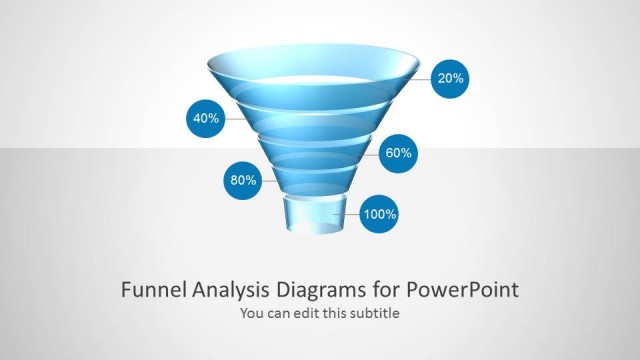
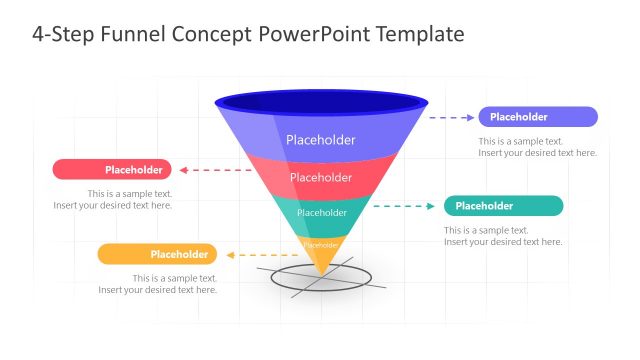
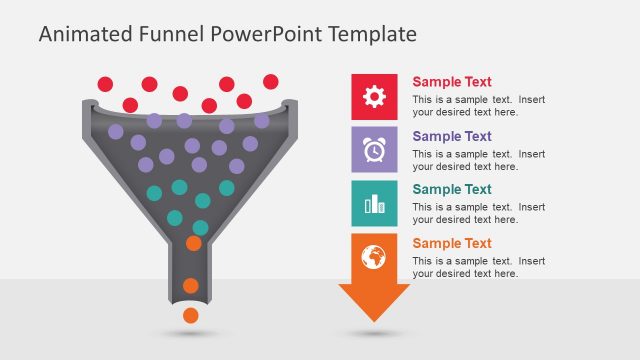
Bucketing concepts are also used for classification of leads. The lead bucketing concept consists of tagging the leads with metadata used in the later analysis to qualify the leads significance. In common funnel analysis you can bucket the leads in each funnel step like:
- Just Browsing
- Shopping
- Converting – Purchasing
- Using
- Recommending
This information allows to group similar groups of behaviours and characteristics, later used to optimize the funnel.
Another heavy use of the concept is Data bucketing, where sets of data are broken down according to facts or attributes. In more scientific contexts this is also called clustering.
The Bucketing PowerPoint Template is a fully customizable and professionally designed template that offers ultimate flexibility. All of the elements and icons that play together to create this attractive presentation template are created from high quality clip art icons that have been created as PowerPoint Shapes. Whether you’re looking to produce a presentation for a business or marketing seminar or are trying to convince a CEO that a bucket test is the way forward, this is the model for you.
What’s inside this template
Example presentation scenarios
- A marketing analyst can explain an A/B testing setup by using the seven-step bucket sequence to show how visitors or leads are assigned to labeled control and treatment groups.
- A sales operations manager can present lead qualification logic by mapping prospect categories across the labeled bucket row and using the footer numbers to show stage order.
- A business intelligence trainer can teach clustering concepts with the three-bucket cluster slide, using the callouts to define attributes, behaviors, and grouping rules.
- A product manager can compare segment sizes or priority levels with the stacked bucket comparison, showing how small categories build toward a larger target group.
Features
- 100% editable presentation template
- Compatible with Microsoft PowerPoint and Google Slides
- 16:9 aspect ratio slides
- Scalable vector shapes, icons and illustrations
- AI-Ready for Microsoft Copilot and Claude
- Instant access and download
Frequently asked questions
Q: How should a presenter explain a bucketing process without overloading the audience?
A: Start with the cover or a simple row of buckets to define the bucket metaphor, then move through the numbered seven-step slides one group at a time. Keep each bucket label short and reserve the callout text for the decision rule, such as behavior, score, test variant, or segment condition.
Q: When is this template the right choice for a business or analytics presentation?
A: This template fits presentations where the main idea is classification: sorting leads, users, tasks, or data points into meaningful groups. It is especially useful for marketing, product, and BI teams because the bucket sequence can explain assignment logic, while the cluster and stacked bucket slides can summarize segment relationships.
Q: Why does the bucket metaphor work for segmentation and A/B testing topics?
A: Buckets give the audience a familiar visual metaphor for putting items into defined containers. The repeated bucket row supports step-by-step logic, the pouring bucket signals active assignment, and the stacked bucket slide suggests scale or priority. This makes abstract grouping rules easier to remember than a text-only list.


Bucket Diagram PowerPoint Templates
11-slide presentation template for bucket diagrams, segmentation workflows, and A/B testing groups
Bucket Diagram PowerPoint Templates is an 11-slide diagram set for explaining bucketing, clustering, A/B testing groups, and lead classification. It includes a cover, seven-step bucket sequence, dual pour-in bucket layout, three-bucket cluster, and stacked bucket comparison. Built for business, marketing, analytics, and training presentations in Microsoft PowerPoint and Google Slides.
- Category
- Diagrams
- Rating


 Loading...
- Aspect ratio
- 16:9, 4:3
- Item ID
- 6814-02
- Colors
 Microsoft PowerPoint
 Microsoft Copilot
 Claude for PowerPoint
Other formats supported
Subscribe today and get immediate
access to download our PowerPoint templates.