Sales Process PowerPoint Templates
Deals close unevenly when the process lives in each rep’s head rather than on paper, because every seller works a slightly different sequence and nobody can point to the one that wins. A sales process PowerPoint template puts that sequence on a slide as a flowchart with defined stages, so the method becomes something a manager can train instead of something a new hire absorbs by watching whoever sits nearby. Sales enablement leads and sales managers use these layouts to document the route to a closed deal once and coach it the same way every quarter.

Sales Rep Presentation PowerPoint Template
Sales Playbook PowerPoint Template
Sales Playbook PowerPoint Template

Professional Sales Proposal PowerPoint Template
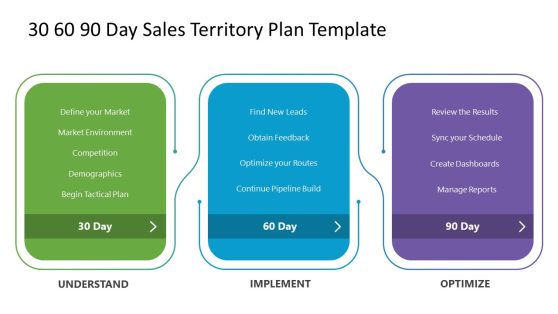

Sales Enablement Plan Presentation Template
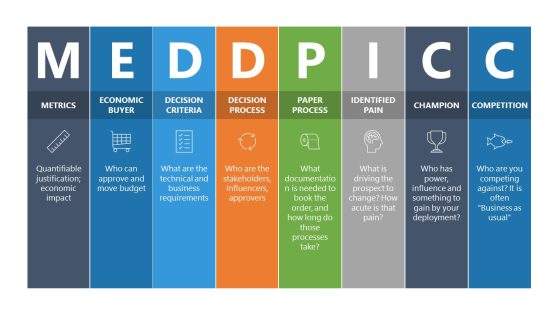
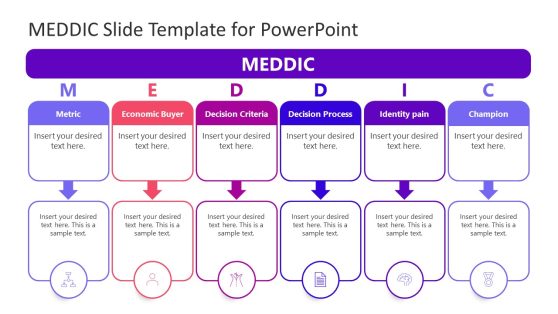
MEDDIC Slide Template for PowerPoint
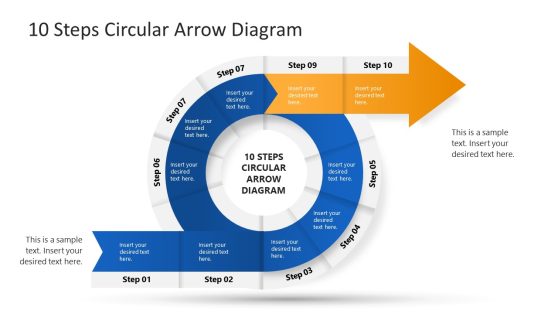
10-Step Circular Arrow PowerPoint Template
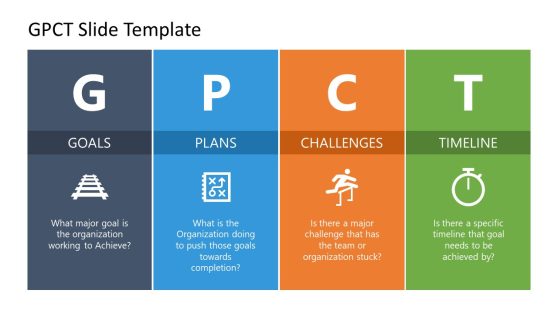
GPCT PowerPoint Template
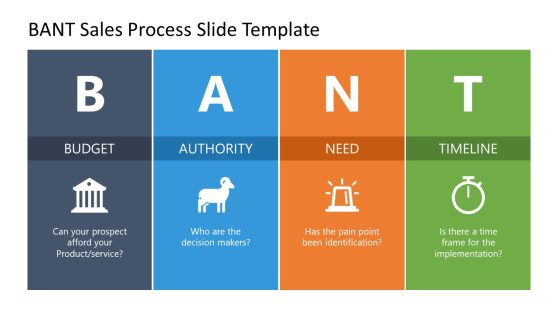
BANT Sales Process PowerPoint Template
A Sales Process Slide Documents What Actually Repeats
Habits accumulate in a sales team whether anyone writes them down or not. The ones living only in a senior rep’s head never reach a new hire, which is why close rates spread out as headcount grows. Sales process templates capture the sequence that genuinely repeats, from first contact through signature, as a flowchart every rep reads the same way. Onboarding is where that pays for itself, since a new hire starts with the working method instead of reconstructing it across three months of observation. A team that also keeps a sales funnel guide can run both views together, the funnel showing volume moving between stages and the process diagram showing what a rep does to move it.
What a Sales Process PowerPoint Template Includes
The point of the format is to make a sequence trainable, so the building blocks are structural rather than decorative:
- Flowchart diagrams showing the full sales sequence from lead to close
- Stage definition slides clarifying entry and exit criteria for each step
- Objection handling reference slides tied to specific process stages
- Process exception paths for non-standard deal types
Sales Teams, Onboarding, and the Process Slide’s Second Life
Sales enablement runs the flowchart during onboarding week, so a new rep receives the documented route to a closed deal rather than an explanation from whoever happens to be free that afternoon. Pipeline review puts the stage definition slides to different work, forcing a manager to confirm a deal has actually met its exit criteria before it advances.
Revenue operations picks up the same diagram again at CRM configuration time, since the stages in the tool should match the stages on the slide. The written sales process carries the reasoning behind the sequence, and because the deck stays editable in Google Slides, teams spread across regions can revise the diagram as the method changes without recirculating a file.
What is a sales process presentation template?
A repeatable sequence only stays repeatable if it’s documented somewhere beyond one rep’s memory, which is what this format is built to capture.
How do I create a sales process PowerPoint template?
Take a flowchart layout and map your own stages onto it, then define what has to be true for a deal to enter and leave each one. Add the exception paths last, once the standard route is settled.
Where can I find a free sales process PowerPoint template?
Both free and premium sales process layouts sit in our catalog, flowcharts and stage definition slides included.
How is a sales process template different from a sales funnel template?
A sales funnel typically shows volume narrowing at each stage, while a sales process flowchart shows the specific actions and criteria a rep follows to move a deal from one stage to the next.
Can the flowchart show parallel activities happening at the same sales stage?
Yes, parallel tracks can be added within a single stage, useful when, for example, technical evaluation and contract negotiation happen simultaneously rather than sequentially.
Are the objection handling slides tied to specific objections, or generic placeholders?
They’re structured as placeholders you fill in with your team’s actual common objections and responses, rather than pre-written for a specific industry.
Can this PPT template represent a sales process with multiple product lines using different stages?
Yes, separate flowchart tracks can be built for each product line if their sales stages genuinely differ, rather than forcing every product through one identical sequence.