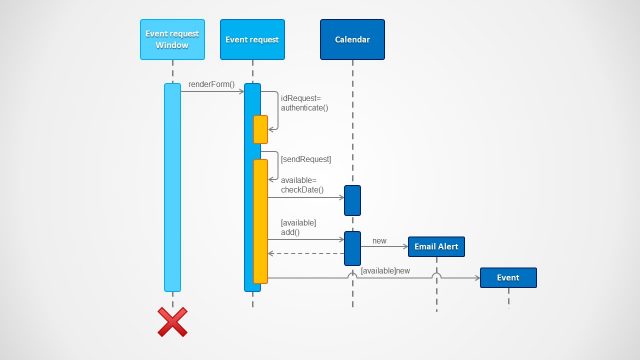
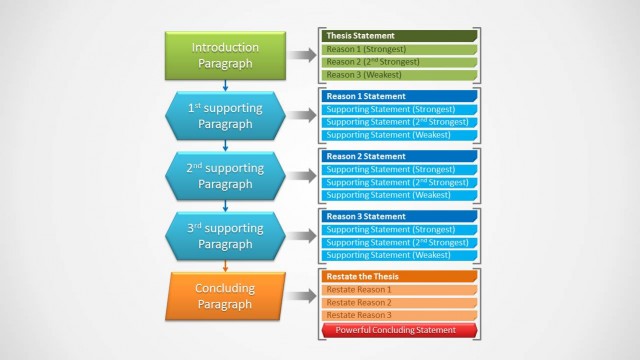
Organize business plans with the Sequence Diagrams for PowerPoint. The presentation design contains a sequence diagram for software development and project planning. Sequence diagrams are a kind of interaction diagrams, also known as Gantt charts.
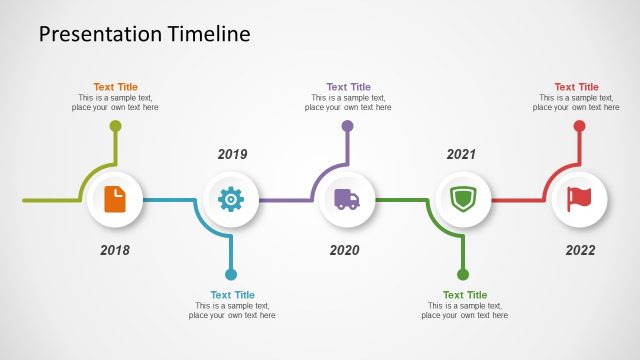
Sequence diagrams use horizontal bars and segments in the same way as a timeline. In sequence diagrams, however, several timelines – one for each activity – are shown simultaneously across the same period. There are usually two types of timelines in the diagram. The first is an estimated timeline, while the second is an actual timeline. These two types allow the users to compare the times and forecast the lengths of the succeeding events.
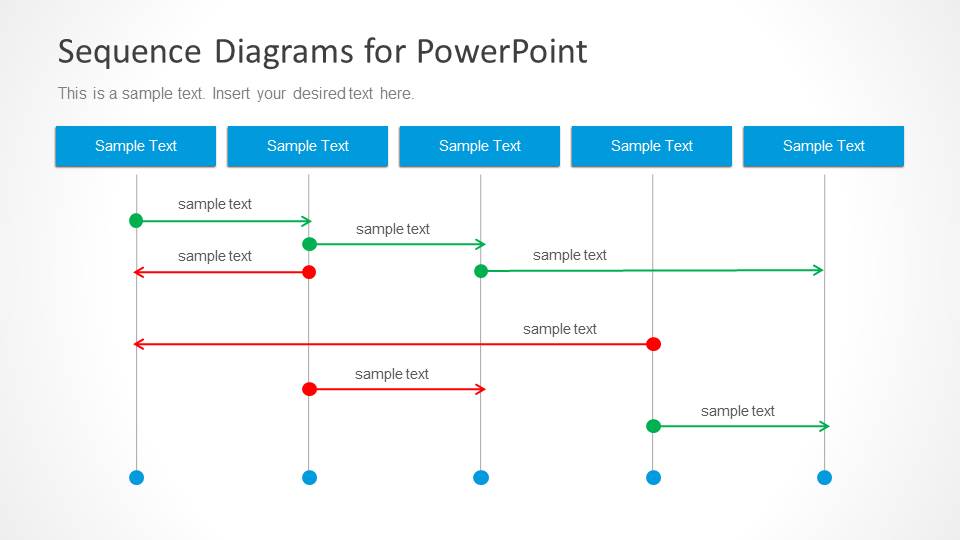
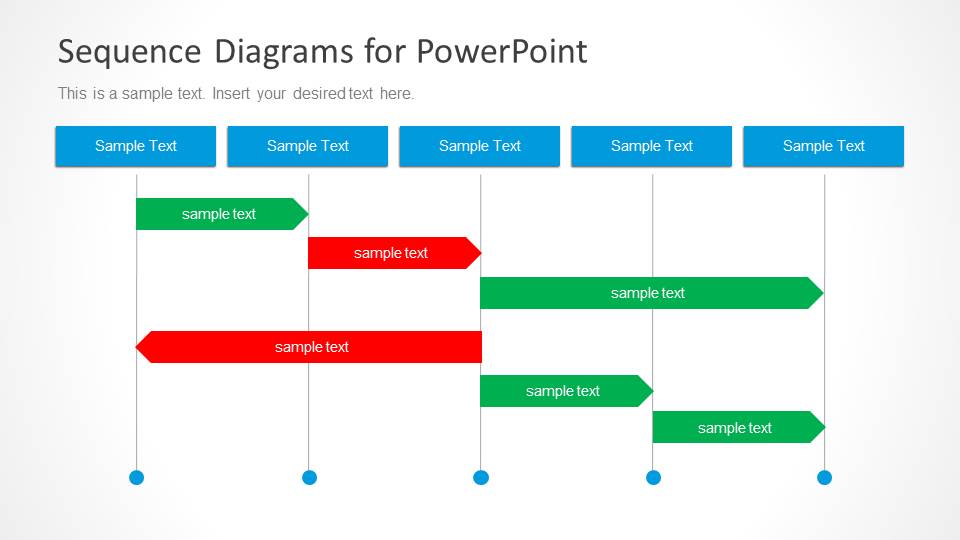
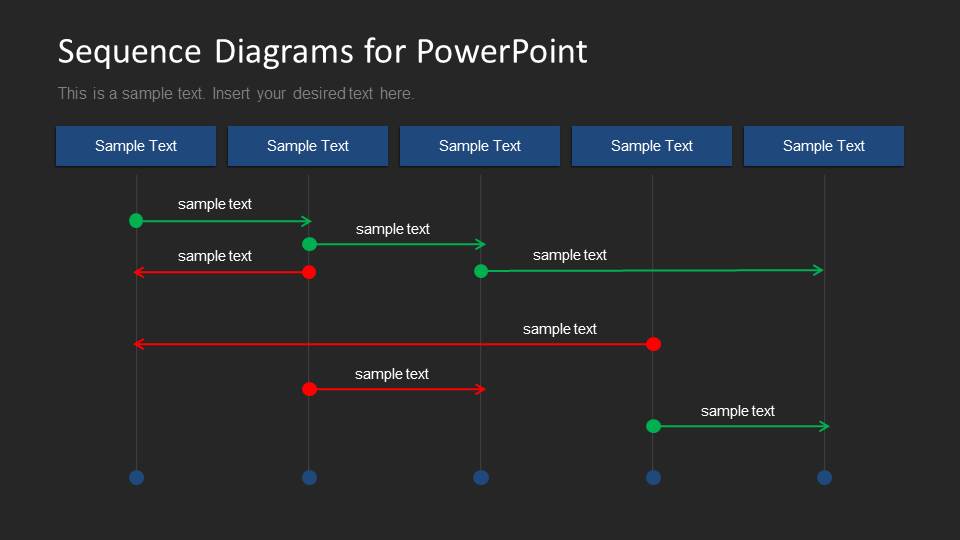
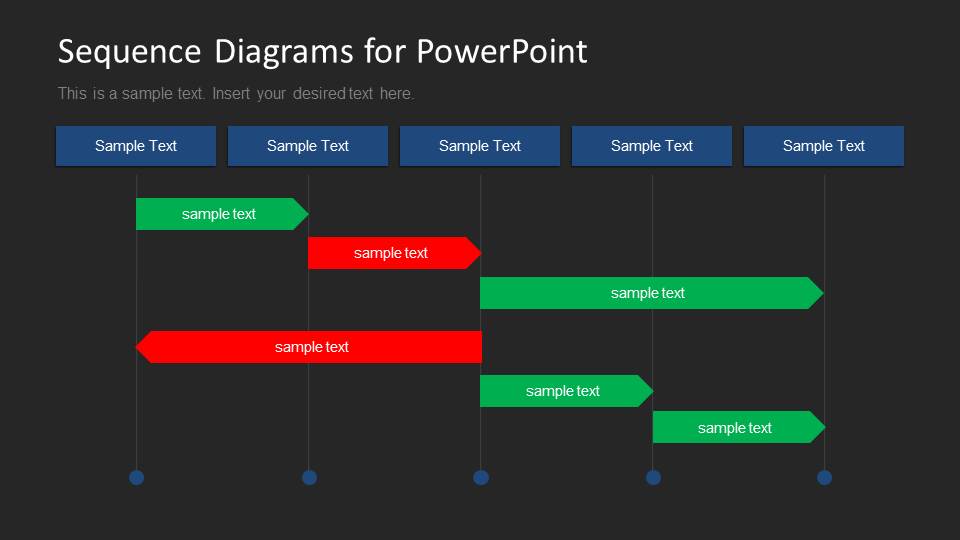
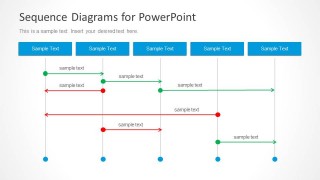
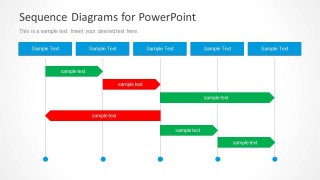
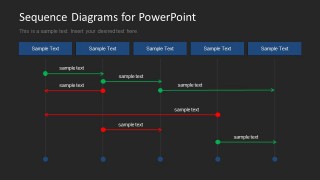
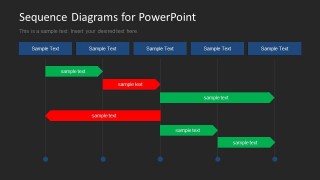
The PowerPoint template has two principal variations of the sequence diagram. The first variant uses thin line arrows, in ray form. With these slides, the presenter can bring more focus to the events themselves, rather than the length of time. The second type substitutes the line arrows with banner arrows. This type emphasizes the lengths of each sequence, giving more importance to their implementation. This is ideal when the action itself, is more significant than whether it took a long time to apply.
The slides have a single basic form. It is created with five rectangular headers, with text placeholders, found near the top of the slide. The timelines are located below the headers, with one timeline placed below another. The timelines are colored in either red or green, depending on whether they represent the actual or estimated times.
The Sequence Diagrams template for PowerPoint can be employed in project planning for small or large companies. These sequence diagrams permit the user to analyze schedules and implement contingency plans. Text can be inserted and colors can be modified, depending on the user’s preferences. Any modification, even to size, will not affect its graphic resolution so the design remains visually appealing.
Alternatively, you can download other sequence diagram templates, like the PowerPoint sequence diagram PPT template, process flow templates, UML templates for PowerPoint, or Gantt Chart PPT templates.
What’s inside this template
Example presentation scenarios
- A project manager can use the banner-arrow timeline layout to compare planned and actual activity durations during a schedule review with stakeholders.
- A software team lead can use the thin line-arrow sequence diagram to explain interaction order across five components or workstreams in a sprint planning meeting.
- An operations manager can use the dark banner-arrow version to present overlapping tasks, handoffs, and delays during an implementation status update.
- A business analyst can use the five header lanes and red-green event paths to document process dependencies before a workflow redesign discussion.
Features
- 100% editable presentation template
- Compatible with Microsoft PowerPoint and Google Slides
- 16:9 aspect ratio slides
- Scalable vector shapes, icons and illustrations
- AI-Ready for Microsoft Copilot and Claude
- Instant access and download
Frequently asked questions
Q: How should a presenter explain the sequence without making the diagram feel crowded?
A: Start by naming the five header lanes as workstreams, systems, or phases before walking through the arrows. Use green paths for expected or completed progress and red paths for delays, exceptions, or actual timing gaps. Keep each label short so the audience follows order and duration rather than reading full task descriptions.
Q: Who gets the most value from this sequence diagram template?
A: This template fits presenters who need to explain timing relationships across parallel activities. Project managers, product owners, software leads, and operations teams can use it when a simple table is too static but a full Gantt chart or UML diagram would add more detail than the audience needs.
Q: Why use both line-arrow and banner-arrow versions in the same presentation?
A: The line-arrow slides draw attention to event order and handoffs, while the banner-arrow slides make duration more visible. Using both metaphors lets a presenter first explain how events connect, then shift the audience to timing, overlap, and schedule impact without changing the overall visual system.
Sequence Diagrams for PowerPoint
4-slide presentation template with sequence diagrams, timeline lanes, and event scheduling layouts
Sequence Diagrams for PowerPoint is a 4-slide diagram template for mapping event order, parallel timelines, and schedule differences. It includes line-arrow sequence diagrams, banner-arrow timelines, five header lanes, and light and dark variants for project managers, software teams, and planners using Microsoft PowerPoint or Google Slides.
- Category
- Diagrams
- Rating


 Loading...
- Aspect ratio
- 16:9
- Item ID
- 6111-02
- Colors
 Microsoft PowerPoint
 Microsoft Copilot
 Claude for PowerPoint
Other formats supported
Subscribe today and get immediate
access to download our PowerPoint templates.