Slide 5 of 20 from Network Diagram Template for PowerPoint
6177-02-network-diagram-template-powerpoint-5
Network Diagram for PowerPoint Slide 5
- Diagram
- Other
- Context Slide
- 16:9
- 100% Editable
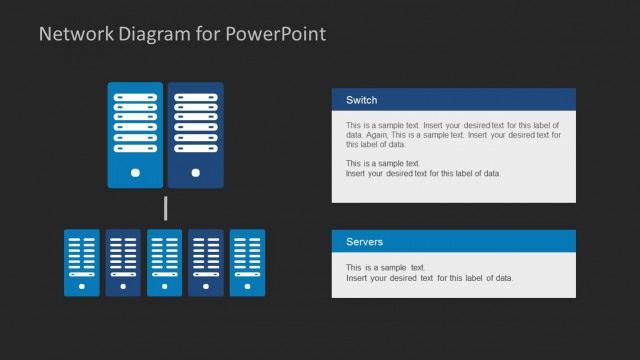
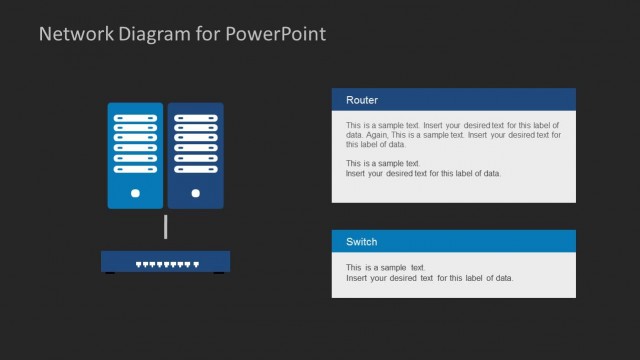
The Network Diagram with Switch and Servers slide from the Network Diagram Template for PowerPoint offers a clear layout for illustrating IT infrastructure and cloud computing concepts. This slide template includes editable shapes and vector icons arranged symmetrically to enhance readability in business presentations. It is ideal for technical discussions or project updates within a corporate presentation or pitch deck template, providing a straightforward visualization of network components without clutter.
What’s on This Slide
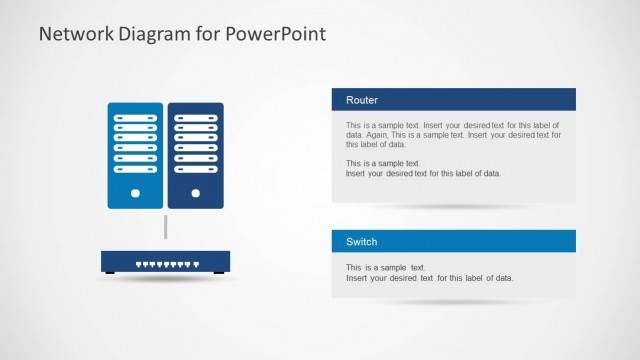
The layout features a central switch icon at the top, with two server icons positioned below it. The switch is represented in a blue gradient, while the servers are in a darker blue. Text placeholders are located to the right of the switch and below the server icons, with titles aligned left and body text below. The placeholders are rectangular, with a clear visual hierarchy. The overall composition is symmetrical, with a clean background that enhances readability. Connecting lines or arrows are absent, emphasizing a straightforward structure.
How to Use It
This layout serves as a network diagram, illustrating the relationship between a switch and multiple servers. It is suitable for presentations on IT infrastructure, cloud computing, or software development. This slide fits well after problem framing slides, providing clarity on network components. It can be used in business scenarios such as explaining network architecture or discussing system interoperability, making it relevant for technical discussions or project updates.
Text Placeholders & Capacity
Keep your copy within these limits so it fits without resizing. Body slots can hold about 15-20 words each.
| Placeholder | Count | Max characters (approx.) |
|---|---|---|
| Slide title | 1 | 30 |
| Item heading | 2 | 20 |
| Item body | 4 | 100 |
Slide Keywords
Download unlimited PowerPoint templates, charts and graphics for your presentations with our annual plan.
DOWNLOADReturn to Network Diagram Template for PowerPoint.