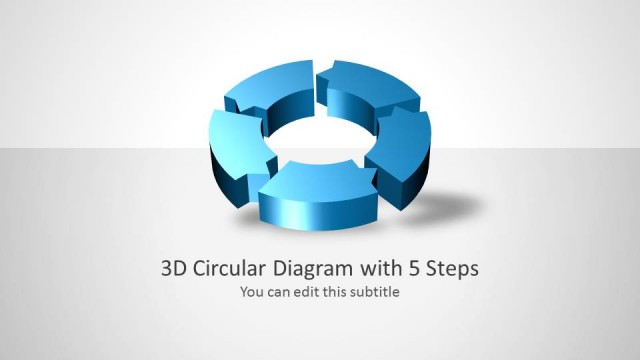
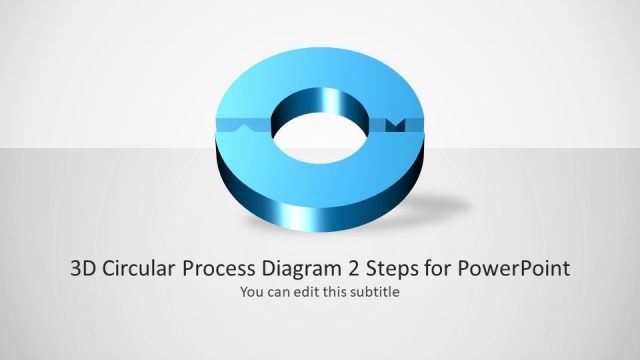
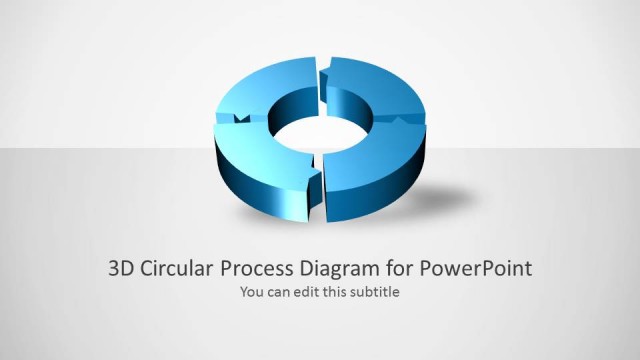
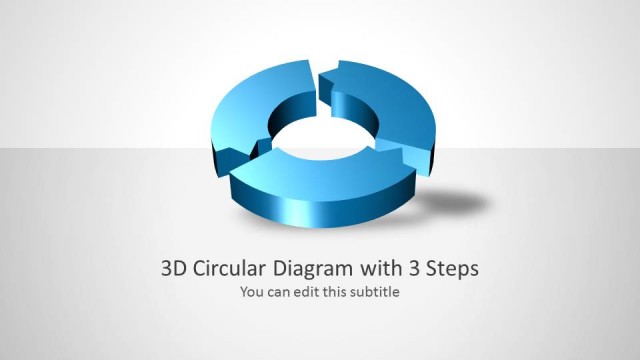
The creative and interactive 3D Loop Diagrams for PowerPoint are useful for modelling a circular process with looping steps. Specifically, it can be used to illustrate a series of circular processes that are generated by the events on-going in another process. The presenter can show an obvious interconnection between the series of processes, molding them into one big, cohesive chain of procedures.
The design can help viewers understand where one step ends – or in this case, continues – and where another begins. This is especially useful when tracking down specific faults or characteristics that appear on a certain point of a cycle. It allows the presenter to see the stage wherein the fault occurs, and the specific track that must be followed to identify the other areas which may have been affected throughout the process.
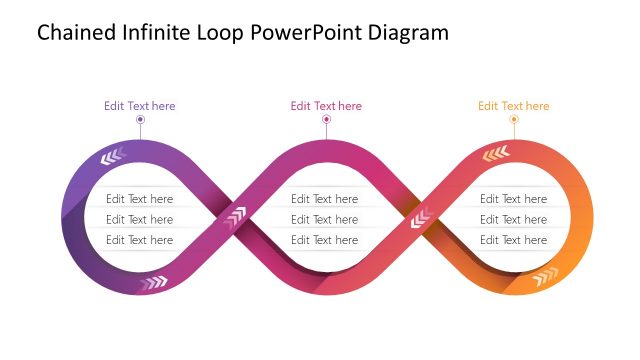
The PowerPoint template contains three general forms of chained loop diagram. The first, and the one with most number of variations, consists of a chain of loops that extends from a single line and exits out another straight line. This can involve a large number of processes. For example, a simple purchase from a grocery store can trigger the beginning of a purchasing and inventory process in the system, which, in turn, affects payroll. This domino effect of the cycles can be shown best using the template.
Another form in the template consists of a straight line placed tangent to a circle. This can represent a straight process – that is, a procedure that has a single beginning and a single end. A single point in the process can generate the beginning of a circular process.
The last form is illustrated by two circles placed tangent to another. The drawing represents the idea of two circular processes which are dependent on each other. These two sequences are shown as exclusively related to each other.
Ideal for showing the forms of several circular processes, the 3D Loop Diagram for PowerPoint contains both 3D and 2D forms of circular diagrams. All the elements in the PowerPoint slides are 100% editable, created as PowerPoint Shapes. They are editable without the need of complex design techniques; the user can change the theme palette and the PowerPoint Diagram will automatically adapt. The effects are created with PowerPoint effects, allowing the user to customize it to its look and feel need.
What’s inside this template
Example presentation scenarios
- An operations manager can explain how a service process creates recurring follow-up tasks by using the single-loop tangent process layout.
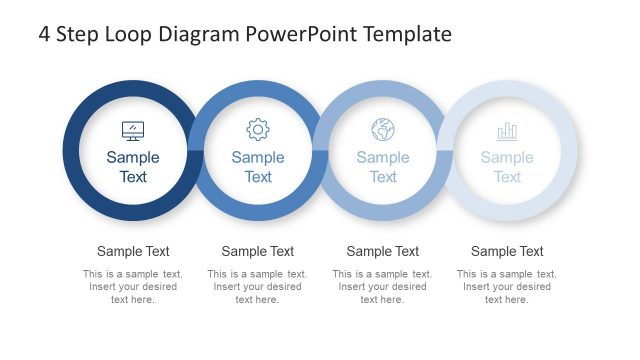
- A business analyst can map interdependent workflows across departments by using the four-loop chained process diagram with entry and exit arrows.
- A consultant can show two mutually dependent operating cycles to an executive audience by using the paired cycle loop diagram with outside callouts.
- A project manager can describe where a workflow branches into a repeated review stage by using the two-loop process diagram on a horizontal flow line.
Features
- 100% editable presentation template
- Compatible with Microsoft PowerPoint and Google Slides
- 16:9 aspect ratio slides
- Scalable vector shapes, icons and illustrations
- AI-Ready for Microsoft Copilot and Claude
- Instant access and download
Frequently asked questions
Q: How should I explain a complex looped process with this template?
A: Start with the simplest visible flow before adding dependencies. Use the horizontal arrows to establish where the process enters and exits, then describe what happens inside each loop. For dense workflows, assign one key idea to each circle and move supporting explanation into the side text blocks.
Q: Who is this template best suited for?
A: This template fits presenters who need to make process relationships easier to follow, such as operations leaders, business analysts, consultants, and project managers. It is strongest when the subject includes recurring reviews, feedback cycles, operational handoffs, or a straight process that triggers one or more circular subprocesses.
Q: Why use 3D loops instead of a flat process diagram?
A: The 3D loop metaphor makes repetition visible without requiring a long sequence of boxes. The circular forms show recurrence, while the straight line and arrow elements show direction and handoff. This helps an audience distinguish between the main flow, repeated stages, and linked cycles.


3D Loop Diagrams for PowerPoint
6-slide presentation template with 3D loop cycle diagrams for process flow and circular workflows
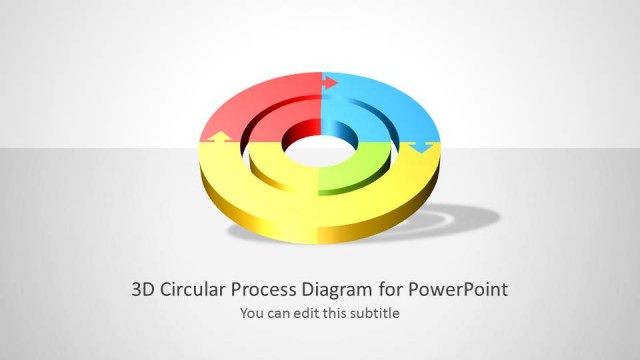
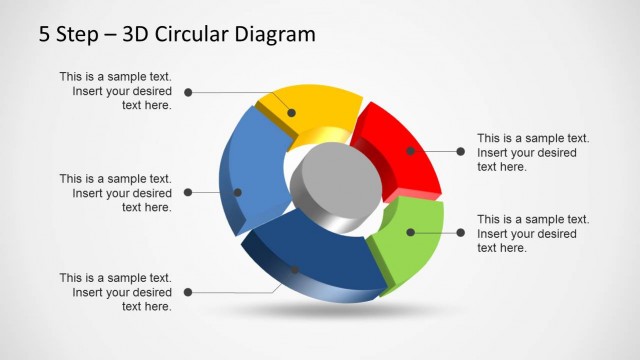
3D Loop Diagrams for PowerPoint is a 6-slide diagram template for explaining circular process flows in Microsoft PowerPoint and Google Slides. Visible layouts include a 3D cover loop chain, four-step chained loop, three-loop process, tangent line-to-circle flow, single-loop process segment, and two connected cycle loops for business process presenters.
- Category
- Diagrams
- Rating


 Loading...
- Aspect ratio
- 16:9, 4:3
- Item ID
- 6104-01
- Colors
 Microsoft PowerPoint
 Microsoft Copilot
 Claude for PowerPoint
Other formats supported
Subscribe today and get immediate
access to download our PowerPoint templates.