Every significant business decision involves people whose roles, interests, and authority affect what happens next. Communicating with those people in a structured, purposeful way is what separates a stakeholder presentation from a general deck assembled for a meeting. Whether the goal is to secure funding, align a project team on direction, or navigate organizational change, a well-constructed presentation to stakeholders signals to the room that the presenter understands who they are, what they need to know, and what they are being asked to decide.
This article covers what stakeholder presentations are, how they differ from general business communications, and how to build one that leads to clear decisions rather than inconclusive discussions.
What Is a Stakeholder Presentation?
A stakeholder is anyone with a legitimate interest in the outcome of a project, decision, or organizational initiative. That definition covers a wide range: board members weighing a capital investment, clients reviewing a partnership agreement, employees navigating a policy change, or project sponsors tracking delivery risk. What they share is a defined relationship to the outcome and an expectation that their interests will be considered.
Therefore, a stakeholder presentation is a communication format designed for this audience. Its purpose is fundamentally different from a company profile slide deck, which exists to communicate organizational identity and capabilities. Stakeholder presentations are built around decisions. They exist to drive alignment around strategy or direction, obtain approval or funding, raise awareness of risks and how they will be managed, and build the kind of commitment that makes execution possible.
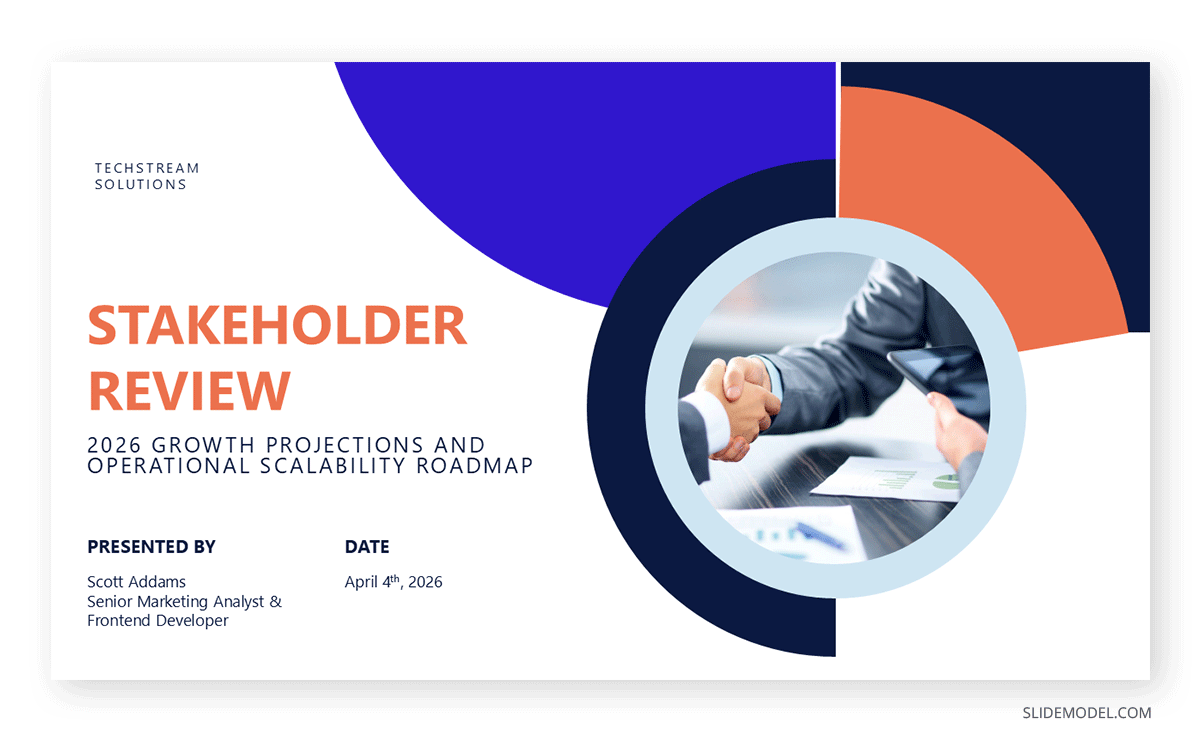
That shift in purpose changes everything about the format. The opening of the presentation frames a decision, not a company introduction. The body connects data and analysis to implications rather than cataloging achievements. The close states a specific ask rather than restating what was just covered. Understanding this distinction is what allows a presenter to build a deck that actually changes something rather than merely informing an audience.
Common Types of Stakeholder Presentations
Stakeholder presentations take different forms depending on the relationship between presenter and audience and the nature of the decision at hand. Knowing which type of situation you are working in shapes the format, the level of detail, and the tone of the first slide.
Executive and Board Presentations
Presentations delivered to executive leadership or boards operate under particular constraints. Decision-makers at this level review large volumes of information, focusing on implications and recommendations rather than operational details.
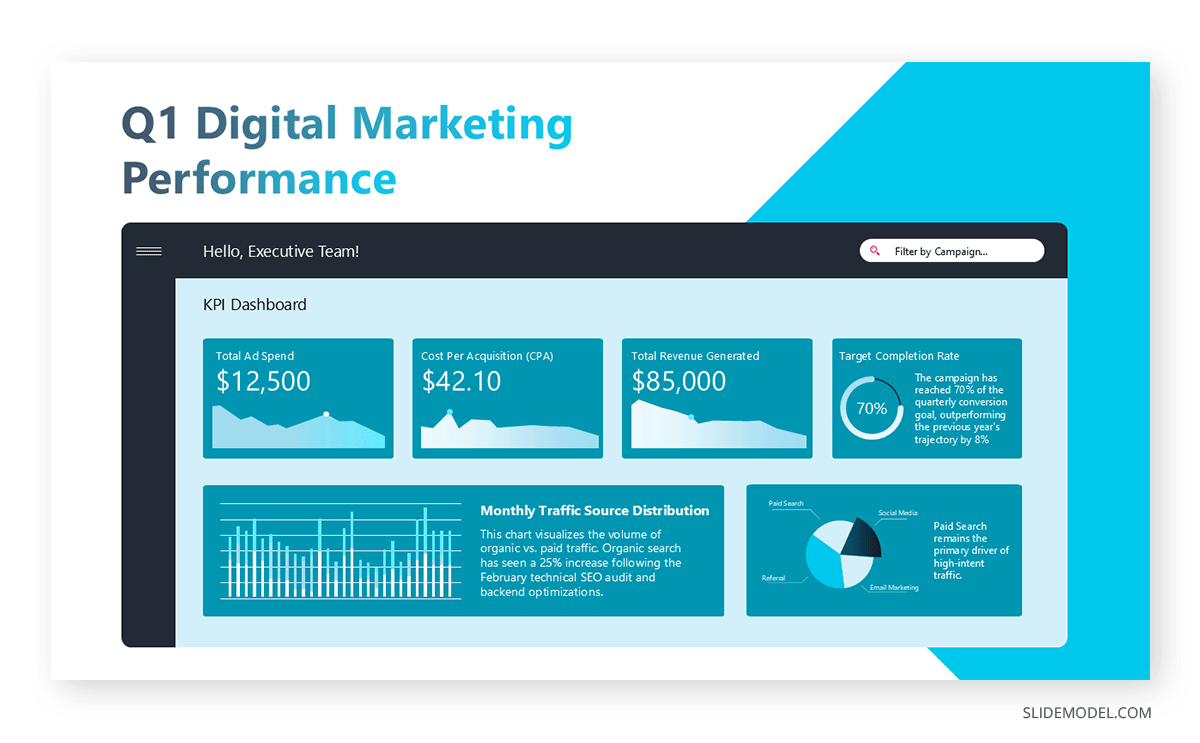
A board presentation typically opens by framing the situation requiring a decision, moves through the supporting analysis concisely, and arrives at a recommendation with a clear ask. Supporting data belongs in appendices or handout materials, not on the main slides. The presenter’s job is to make the case, not to demonstrate how much work went into it.
Project Update and Steering Committee Presentations
Projects of any significant scale involve governance structures, and steering committee presentations exist specifically for oversight and escalation. The format needs to clearly communicate the current status, outstanding decisions, and risks so the committee can act during the meeting.
Because these sessions tend to recur, consistency in format matters: committee members should be able to track progress across meetings without having to reorient themselves each time. A stable template for status, issues, and next steps removes friction and keeps the discussion focused on decisions.
Investor and Shareholder Presentations
Investor-facing presentations carry significant credibility requirements. The audience is evaluating both the quality of the opportunity and the judgment of the team presenting it. When presenting an equity breakdown to stakeholders or explaining financial projections, data must be accurate, assumptions clearly disclosed, and the narrative coherent enough to withstand scrutiny.
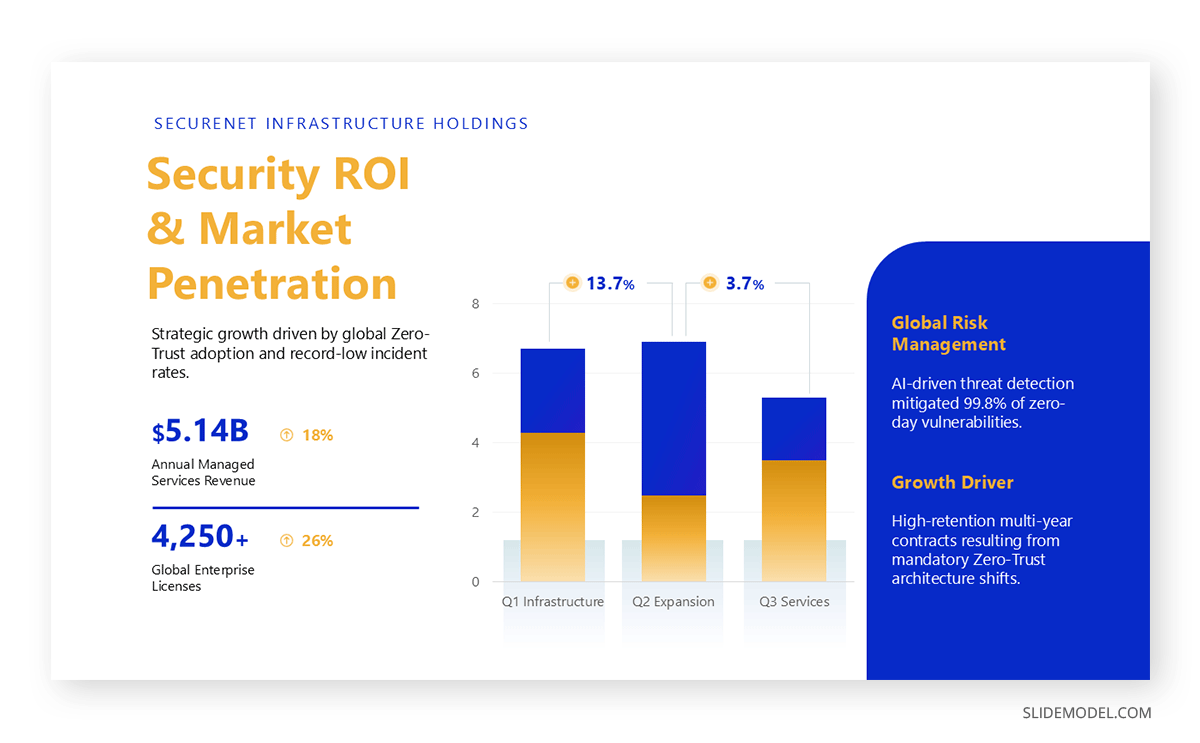
Numbers alone are never sufficient. An audience evaluating investment returns or ownership structure wants to understand what the numbers mean, what assumptions underpin them, and what the risk profile looks like if those assumptions prove incorrect.
Client or Partner Alignment Presentations
When two organizations are working toward a shared goal, alignment presentations serve as coordination mechanisms. The audience already has some level of commitment to the relationship; the presentation exists to ensure all parties are operating from the same understanding of the plan.
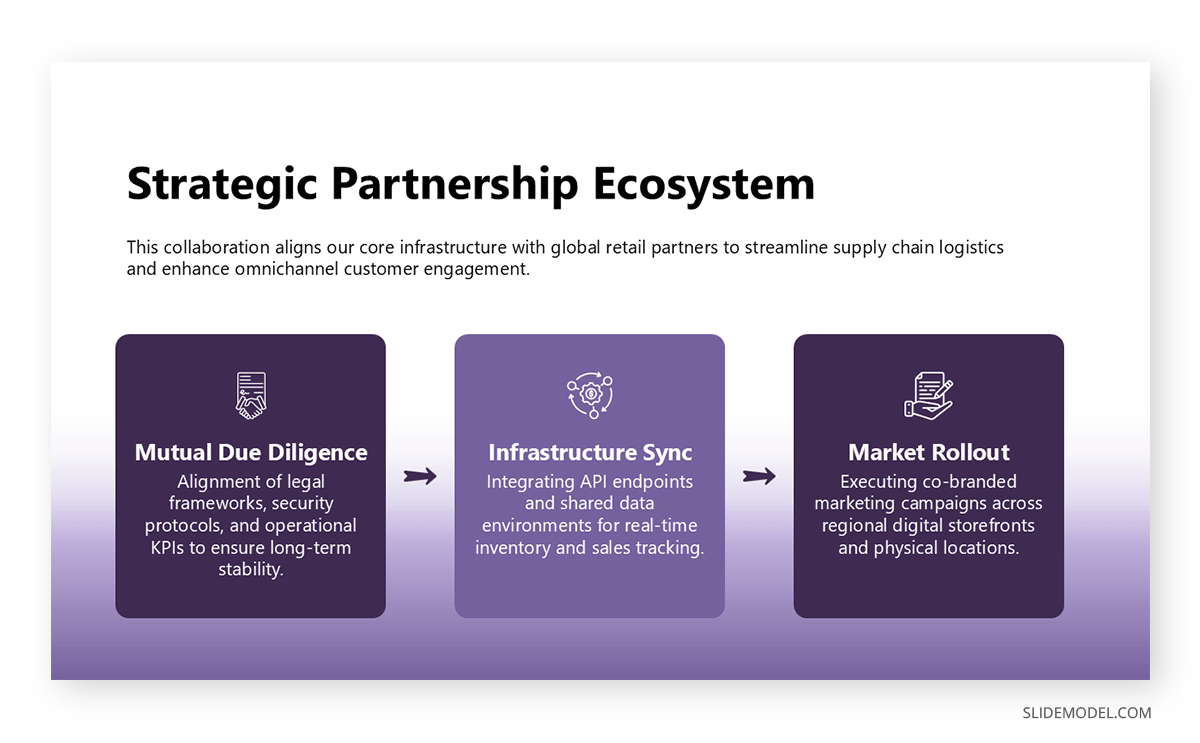
The tone is less about persuasion and more about shared clarity. Open questions should be surfaced and resolved, and accountability for the next phase should be established before the meeting ends.
Change Management and Transformation Briefings
Few presentations carry more organizational weight than those delivered during periods of change. Whether the change involves a new operating model, a technology migration, or a shift in strategic direction, the audience often arrives with concerns about what the change means for them personally.
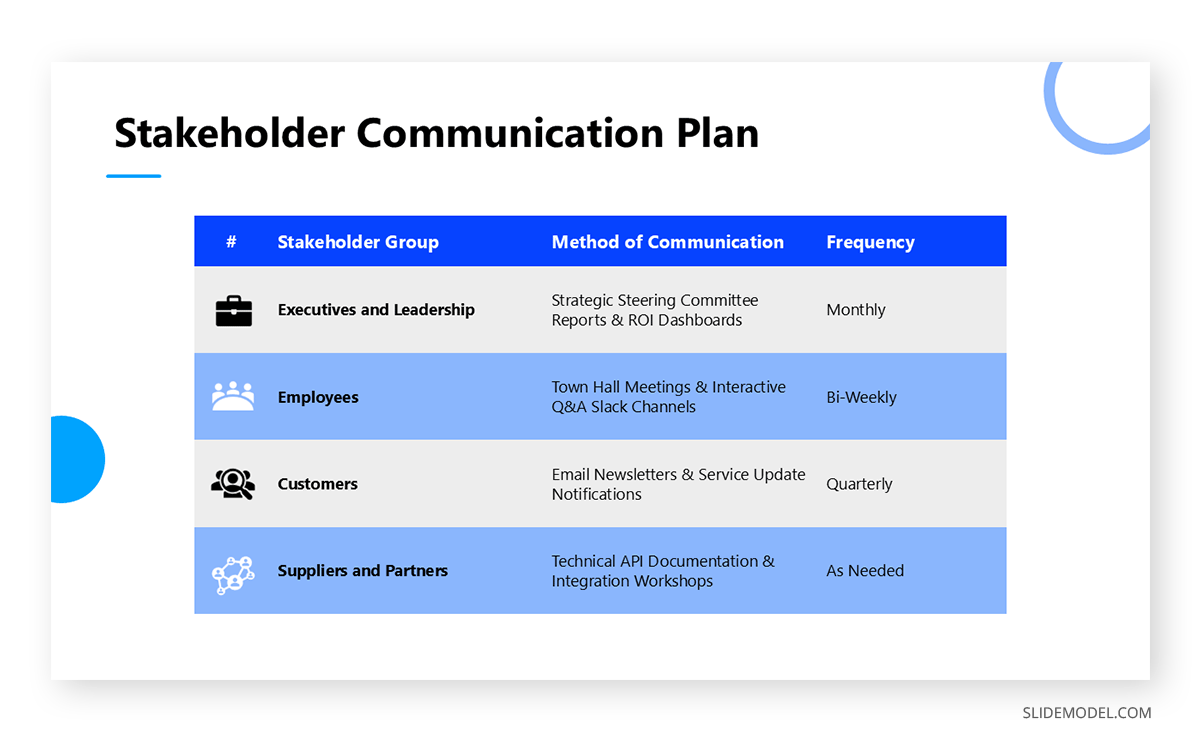
A well-structured change management presentation acknowledges those concerns directly, explains the rationale behind the decision, describes the path forward, and clarifies what each group is being asked to do. Glossing over ambiguity tends to erode trust; addressing it plainly tends to build it.
What Stakeholder Presentations Are Designed to Achieve
Knowing the purpose of a presentation before building it is not a preliminary step to skip. The purpose determines which information belongs on the slides, how it should be sequenced, and what the final ask needs to be.
Most stakeholder presentations aim to accomplish one or more specific outcomes: creating alignment around a strategy or organizational direction, obtaining approval or funding for a proposal, raising awareness of risks that need active management, securing buy-in from people who must support the plan, or establishing the transparency that builds durable trust between leadership and those affected by its decisions.
These goals are not interchangeable. A presentation designed to obtain approval needs a concrete recommendation and an unambiguous ask. A presentation designed to surface risk needs to frame that risk in terms that the audience recognizes as relevant to their responsibilities. A presentation focused on building buy-in needs to demonstrate that the concerns of the people in the room have been genuinely considered. Presenting to stakeholders without a defined objective usually results in a deck that tries to do too many things simultaneously and accomplishes none of them well.
Knowing Your Audience Before You Build the Deck
A presentation built without audience analysis is one built around what the presenter wants to say rather than what the audience needs to understand. Those are rarely the same thing. Stakeholder mapping is a practical starting point. Before building a single slide, the presenter should be able to answer key questions about the people in the room: what their role is in the decision, what they already know about the subject, what objections they are likely to raise, and what level of technical detail is appropriate for the context.
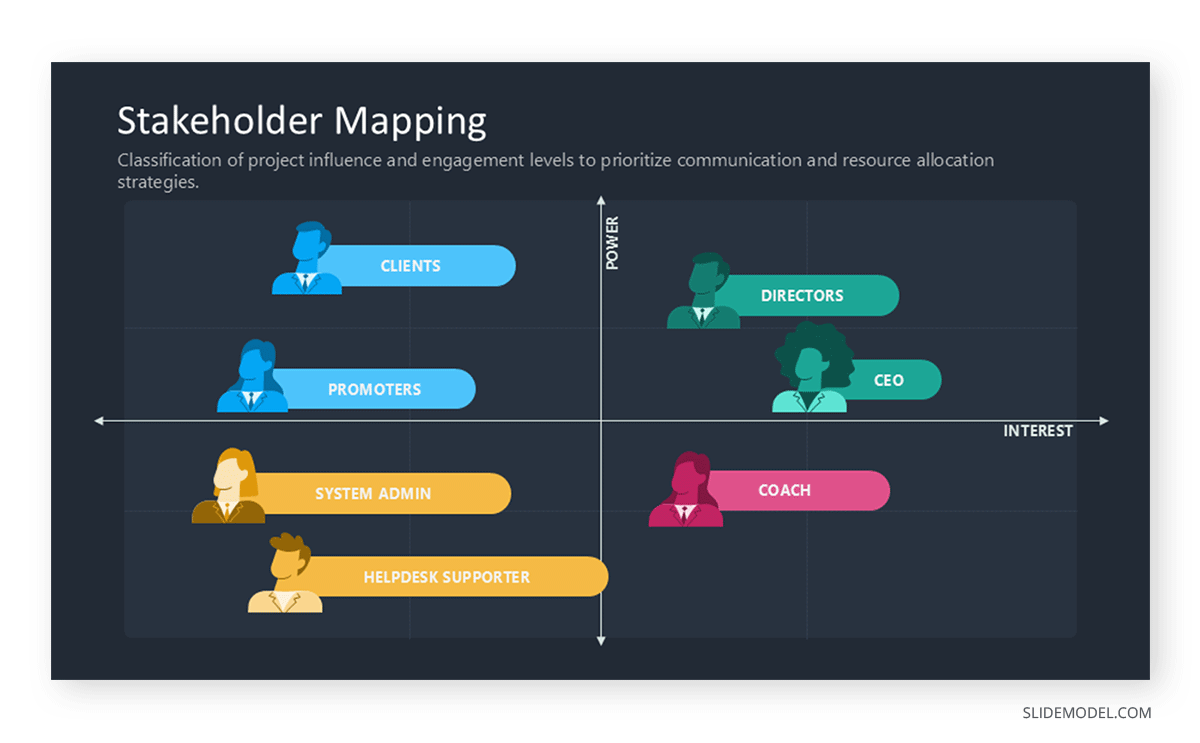
Different stakeholders require different approaches even when they share an interest in the same outcome. A CFO reviewing a project budget wants to understand spending relative to approval thresholds. A project sponsor wants to know whether delivery is on track and which decisions need to be escalated. A department head wants to understand the operational implications for their team. Applying stakeholder management principles to the preparation process allows the presenter to address all these perspectives within a single, coherent narrative, rather than building separate decks for each group.
How to Structure a Stakeholder Presentation
The structure of a stakeholder presentation should follow the logic of the decision it is designed to support. A recommended approach that works across most scenarios moves through seven phases: establish context and purpose, describe the current situation or problem, present key insights or data, explore options and their implications, make a recommendation or proposal, address risks and how they will be managed, and close with the specific decision or next steps required from the audience. This presentation structure applies whether the deck is going to a board, a steering committee, or a client review.
This sequence does several things at once. It orients the audience before asking them to process complex information. It connects data to decisions rather than presenting data as an end in itself. It ends with a clear call to action rather than leaving the meeting without resolution. The final slide of a stakeholder presentation should not restate everything that came before it. It should state what happens next and who is responsible for making it happen, which is the difference between a presentation that generates discussion and one that generates decisions.
How to Present Data and Insights to Stakeholders
Presenting data to stakeholders is one of the most consistent points of failure in business communication. The data may be accurate and relevant, but if it is not framed correctly, the audience cannot act on it. Data storytelling in a stakeholder presentation means building a coherent narrative around the numbers. The presenter’s role is to explain what changed, why it changed, and what it means for the decision at hand.
When presenting SEO results to non-technical stakeholders, for example, raw ranking data or traffic figures carry little meaning in isolation. The presenter must explain what the numbers represent in terms the audience already cares about, whether that is market reach, customer acquisition, or revenue contribution. The same discipline applies when presenting SEO forecasts, financial projections, or operational metrics: projections without clear assumptions are not actionable, and metrics without context are not meaningful.
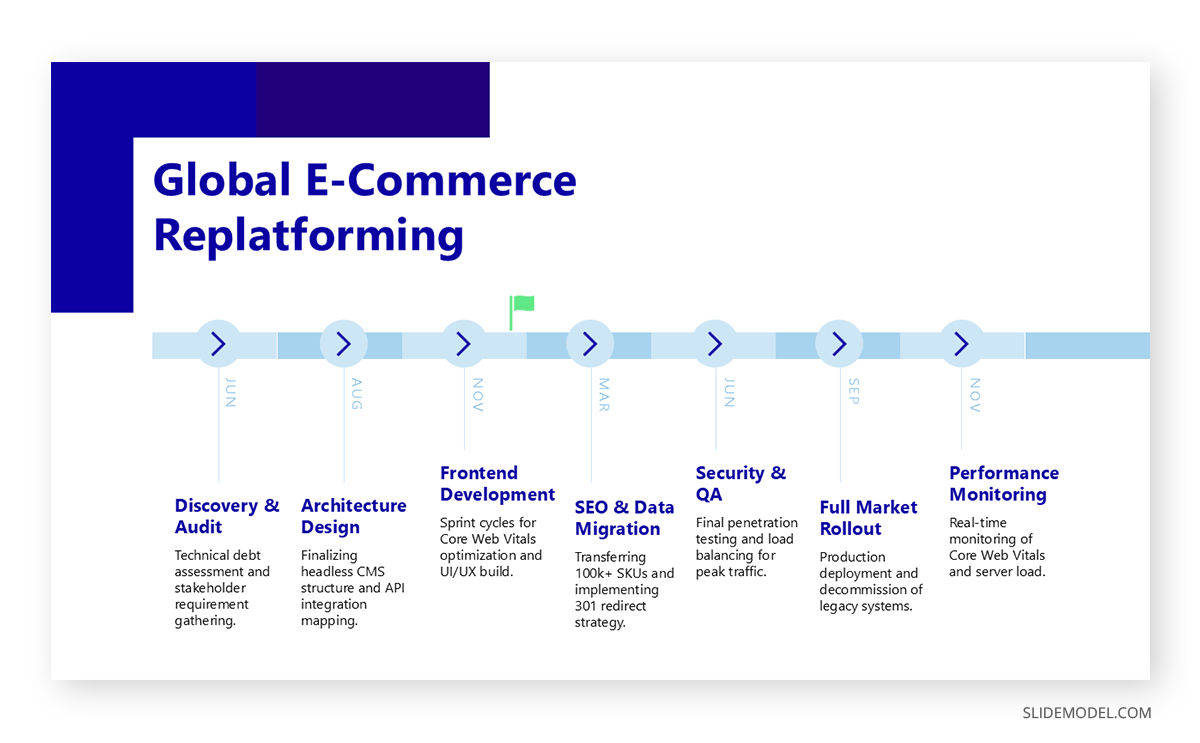
Presenting a project plan to stakeholders follows the same logic. Timeline visualizations communicate the schedule, but what stakeholders typically need to assess is whether the plan is credible, where the critical dependencies lie, and where the risks of delay are concentrated. The chart is a reference point; the analysis is the actual communication.
Selecting Content and Using Visuals to Support the Argument
Choosing what to include in a stakeholder presentation is as important as deciding how to present it. Every slide that does not directly support the audience’s understanding of the situation or decision-making dilutes the overall argument. A useful test is to ask, for each piece of content, whether removing it would leave the audience less equipped to make a decision. If the answer is no, the content belongs in supplementary materials, not on the main slides.
Visuals should make complex information easier to process, not simply more visually engaging. The choice of chart or diagram should follow the logic of the data: trends call for line charts, comparisons for bar or column formats, part-to-whole relationships for structures that show proportion clearly. Stakeholder PPT templates provide a useful starting point for organizing the visual flow, and adapting them to the specific context of the presentation is straightforward once the content and structure are clear.
FAQs
What is a stakeholder presentation?
A stakeholder presentation is a structured communication designed for people who have a defined role in a business decision or initiative. Unlike general-purpose business decks, it is built around a specific outcome, whether that is approval, alignment, risk awareness, or commitment, and its structure is shaped by what the audience needs to decide rather than what the presenter wants to convey.
How is a stakeholder presentation different from a general business deck?
A general business deck is typically built to inform or introduce an organization, product, or idea to a broad audience. A stakeholder presentation is built for a specific group with a defined stake in a decision. Everything from the opening frame to the final ask is determined by what those stakeholders need to understand and do, not by the full scope of information the presenter holds.
How do you present data to stakeholders who are not technical?
The core approach is to translate data into the language of outcomes the audience already cares about. When presenting SEO performance, financial projections, or operational metrics to a non-technical audience, begin with what changed and what it means for the business, then support that with the underlying numbers. Avoid technical terminology without defining it, and keep the emphasis on decisions rather than on analytical methodology.
What should the final slide of a stakeholder presentation contain?
The final slide should state the specific decision or action being requested, not summarize the presentation. If the goal is approval, name what is being approved. If the goal is alignment on a plan, name the next steps and who owns them. Ending with a clear, direct ask signals that the presentation was built with the audience’s role in mind, not as a document of record.
How do you handle pushback or skeptical stakeholders during the presentation?
Resistance from stakeholders is usually a sign that a concern was not anticipated in the preparation, not that the audience is wrong. The most productive approach is to treat objections as requests for more information rather than opposition to be overcome.
Name the concern clearly, acknowledge what is valid in it, and respond with the specific evidence or reasoning that addresses it. If a question cannot be answered in the room, commit to a follow-up rather than speculating. Stakeholders who feel their concerns are taken seriously are far more likely to reach alignment than those who sense their objections are being deflected.
Should you send the deck before or after the meeting?
The answer depends on the type of meeting and the complexity of the material. For decisions requiring significant analysis, distributing the deck in advance allows stakeholders to arrive with questions rather than spending the first half of the session orienting themselves to the content.
For sensitive topics, such as restructuring or risk escalations, it is often better to present live so that context, tone, and framing accompany the information. In recurring governance meetings, a consistent pre-read schedule builds a productive rhythm over time. There is no universal rule, but the decision should be made deliberately rather than by default.
How do you present bad news or underperformance to stakeholders?
The structure for difficult updates follows the same logic as any stakeholder presentation, with additional care given to framing. Begin by establishing the context that explains what happened, then present the facts clearly without softening them to the point of obscuring the actual situation.
Move quickly to what has been learned, what is being done differently, and what the realistic path forward looks like. Stakeholders can absorb disappointing results far more readily when they receive an honest account accompanied by a credible response. What tends to erode trust is discovering that a problem was minimized or delayed in the reporting.
What is the right slide count for a stakeholder presentation?
Slide count is a function of the decision being supported, not of the information available. A useful frame is to work backward from the ask: identify the minimum number of slides needed to give the audience sufficient context to make a confident decision.
For executive and board presentations, ten slides or fewer is a reasonable ceiling in most cases. Steering committee updates and project presentations may require more, particularly when status across multiple workstreams needs to be conveyed. Slides added to appear thorough, rather than to serve the audience’s decision-making needs, tend to dilute the overall argument rather than strengthen it.
How should you follow up after a stakeholder presentation?
A follow-up note sent within 24 hours of the meeting serves several purposes. It confirms what was decided or agreed, documents any outstanding questions and who owns the answers, and creates a record that participants can refer back to.
For presentations that end with a decision, the follow-up should clearly state the decision and outline the next steps and accountabilities. For presentations that end without a resolution, the follow-up should confirm what remains open and the process for closing it. The discipline of consistent follow-up signals to stakeholders that the presenter is managing the process, not just delivering information.
Final Thoughts
A stakeholder presentation succeeds when the audience leaves the room with a clear understanding of the situation, the options, and what is expected of them. That outcome is not the result of comprehensive coverage of everything the presenter knows. It comes from deliberate choices about what to include, how to sequence it, and how to connect analysis to decisions.
Building that kind of presentation requires knowing who is in the room and why they are there, structuring content around the decision rather than around the topic, and treating data and visuals as tools in service of an argument. When those elements come together, a presentation on stakeholder engagement becomes a genuine instrument of organizational decision-making rather than a formality that precedes one.