
Company values are often introduced as a short list of principles that describe how an organization intends to behave. Yet values only become meaningful when employees, partners, and stakeholders understand what those principles look like in practice. A company values presentation serve as the bridge between abstract language and everyday decisions. It explains what the organization stands for, why those principles exist, and how they shape behavior across teams.
Many organizations underestimate the difficulty of presenting values. The challenge lies in the nature of the topic itself. Values are conceptual, and concepts are difficult to communicate without drifting into slogans. If a presentation only repeats the official wording of each value, the audience hears statements but gains little insight into how those ideas affect real work. The role of the presenter, therefore, is to translate language into context.
A well-developed values presentation frames company culture as a living system rather than a decorative statement. Employees should leave with a clear understanding of how values influence decisions, collaboration, accountability, and priorities. For external audiences such as partners or potential hires, the presentation signals how the organization behaves under pressure and how it expects others to operate within its ecosystem.
Framing the Narrative Behind Organizational Values
A common mistake in values presentations is to begin immediately with the official list of values. While this may seem logical, it often disconnects the audience from the reasoning behind those principles. Before introducing the values themselves, the presenter should establish the context that led the organization to define them.
Recommended lecture: Storytelling for Presentations
Every company develops its values in response to specific experiences. Sometimes they arise from founding principles that shaped the business from its earliest days. In other cases, they emerge after periods of growth that expose cultural inconsistencies. Explaining this background helps the audience understand that values were not created arbitrarily. They represent lessons learned about how the organization operates at its best.
This narrative framing also helps the presenter avoid the appearance of preaching. Instead of presenting values as rules imposed from above, the presentation shows them as conclusions drawn from the company’s history. When audiences understand that connection, the principles feel more credible and less performative.
For instance, a company that emphasizes transparency may have adopted that value after communication failures damaged collaboration between teams. A value centered on ownership may reflect a period when unclear responsibilities slowed progress. These stories provide concrete grounding for the values that follow.
Structuring a Company Values Presentation
Although company values presentations vary across industries, effective structures share certain characteristics. The presentation moves from context to explanation and finally to application. Each stage deepens the audience’s understanding of how the values operate within the organization.
The opening section introduces the cultural challenge the organization seeks to address. This may involve explaining how the company grew, how teams collaborate, or what expectations guide decision-making. Rather than overwhelming the audience with history, the presenter identifies the turning points that influenced the organization’s cultural framework.

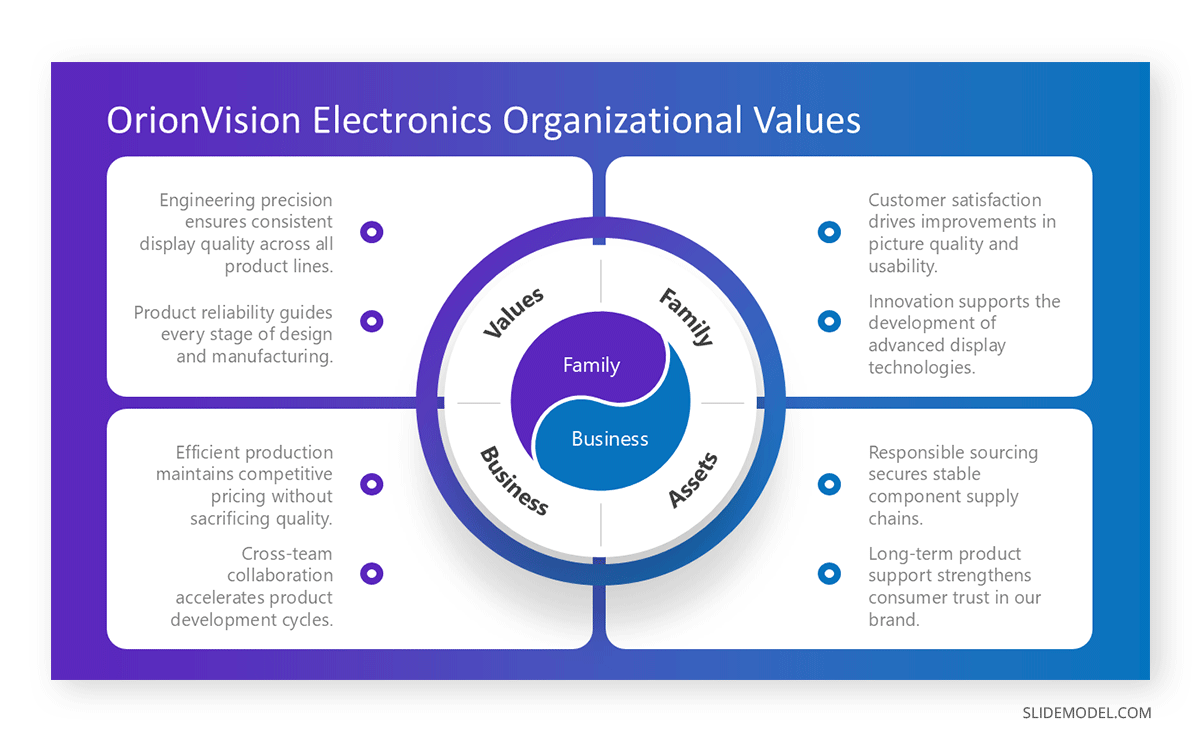
After the context is established, the presentation introduces the values themselves. Each value receives its own section so that the audience can focus on its meaning without confusion. Instead of presenting definitions alone, the presenter explains which behaviors demonstrate that value and which contradict it.
The final section focuses on application. Here, the presentation shifts from explanation to implementation. The presenter shows how the values influence hiring decisions, leadership expectations, customer interactions, and internal collaboration. This stage answers the implicit question many audiences carry: how do these values affect daily work?
Explaining Each Value Without Repeating Corporate Language
Corporate value statements often contain broad terms such as integrity, collaboration, accountability, or customer focus. While these words appear clear, they rarely communicate enough detail on their own. One organization’s interpretation of accountability may differ significantly from another’s.
When presenting values, the goal is not to repeat the official wording but to interpret it. This interpretation gives employees a practical understanding of what the company expects.
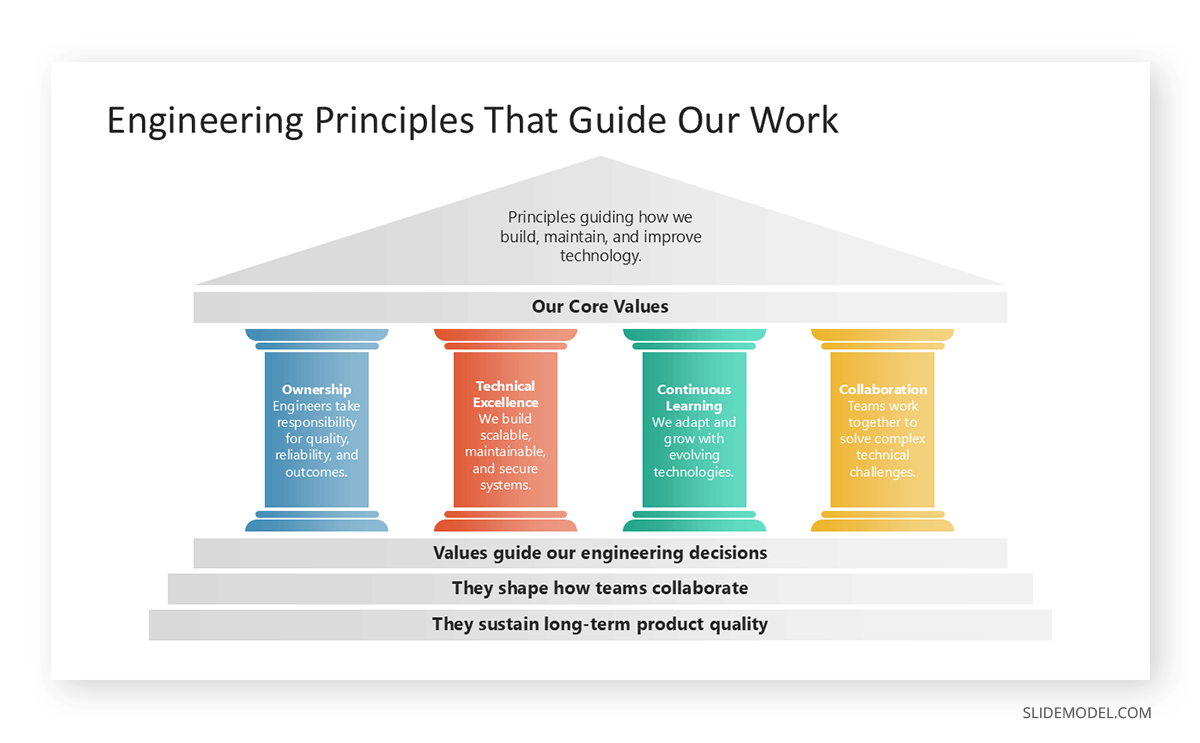
Consider the example of a company that lists “ownership” as one of its core values. Simply displaying the word ownership on a slide does little to clarify expectations. The presenter must explain how ownership manifests in everyday work. Does it mean employees are responsible for solving problems without waiting for direction? Does it emphasize accountability for outcomes rather than activity? Does it encourage individuals to challenge decisions if they believe a better solution exists?
Providing this explanation prevents ambiguity. Employees can evaluate their behavior against a clear standard rather than guessing what leadership intends.
Examples are particularly useful in this context. Short scenarios that show how employees apply a value in projects, client interactions, or internal disagreements help transform the concept into something tangible.
Demonstrating Values Through Real Organizational Behavior
Values become credible only when they appear consistently in the organization’s actions. For this reason, a values presentation should include examples that demonstrate how the company has applied its principles in real situations.
These examples do not need to be dramatic events. Often, the most instructive stories involve ordinary decisions that illustrate cultural expectations. A team that delayed a product launch to maintain quality may demonstrate a commitment to craftsmanship. A leader who publicly acknowledged a mistake may illustrate transparency and accountability.
By describing these situations, the presenter connects values to behavior rather than ideology. The audience begins to see how principles guide decision-making when competing priorities arise.
Aligning Values with the Company’s Culture
Values presentations often intersect with broader discussions about organizational culture. While values describe principles, culture reflects how those principles operate across teams and leadership structures. Connecting these two elements helps the audience understand that values are not separate from daily operations.
A section dedicated to cultural alignment can show how values shape communication, performance expectations, and collaboration patterns. For example, a company that emphasizes open dialogue may encourage employees to challenge ideas regardless of hierarchy. Another organization may prioritize careful decision-making and structured analysis before committing to a course of action.
Explaining these cultural patterns allows the presenter to illustrate how values guide the organization’s working environment. This is particularly useful for new hires or external partners who need to understand how decisions are typically made.
At this stage, presenters sometimes refer audiences to related materials, such as a company culture presentation, which explores the broader systems that support those values. While the values presentation focuses on principles, the culture presentation expands on how those principles shape organizational behavior across departments.
Visual Structure and Slide Design for Company Culture Presentations
Because value presentations deal with abstract ideas, visual clarity becomes essential. The design of each slide should support comprehension rather than compete for attention.
Slides introducing a value should present a concise statement, supported by a brief explanation or example. Overly dense text forces the audience to read rather than listen. Presenters should treat slides as anchors for discussion rather than scripts.
Visual elements such as icons, diagrams, or photographs can help illustrate the concept behind each value. However, these elements must remain restrained. Decorative graphics that do not reinforce the message can distract from the explanation.
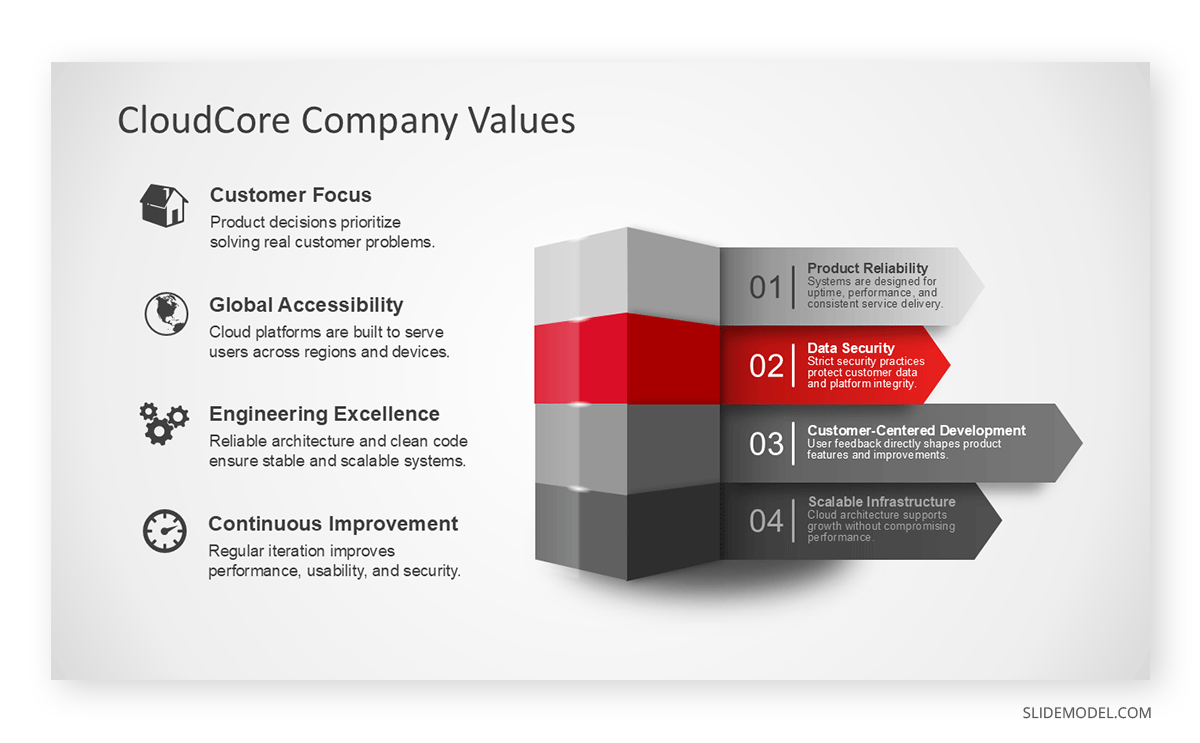
Consistency across slides is equally important. If each value appears with a similar layout, the audience can focus on the meaning rather than adjusting to a new visual structure every time.
Many organizations begin this process using core values PPT templates, which provide a structured framework for presenting principles and examples in a consistent format. Templates can save time, but they should not dictate the narrative. The presenter still determines how each value is explained and contextualized.
Common Mistakes in Values Presentations
Presenting company values may seem straightforward, yet several recurring mistakes undermine their effectiveness.
Excessive Abstraction
One common issue is excessive abstraction. When the presentation focuses only on philosophical language, employees struggle to translate values into daily work. The solution is to emphasize examples and scenarios rather than definitions alone.
Value Stuffing
Another problem occurs when presenters attempt to cover too many values. Some organizations list ten or more principles, each with overlapping meanings. This overload makes it difficult for the audience to remember or apply them. Presentations should emphasize the values that genuinely guide decision-making.
Inconsistent Behavior
Inconsistency between language and behavior represents another challenge. If employees recognize that the organization frequently acts contrary to the stated values, the presentation loses credibility. Presenters must address this risk by demonstrating how leadership applies those principles in practice.
Self-Promotion
Finally, overly promotional language can undermine trust. When values presentations resemble marketing campaigns rather than honest explanations, audiences become skeptical. Clear examples and measured language help maintain credibility.
FAQs
What is a company values presentation?
A company values presentation explains the principles that guide how an organization operates and makes decisions. Unlike a simple list of values on a website, a presentation interprets those principles and shows how they influence behavior across teams, leadership, and customer interactions. The objective is to clarify what each value means in practice and how employees should apply it in their daily work.
Why do companies present their values to employees?
Organizations present their values to create alignment across teams. As companies grow, employees bring different working styles and expectations. A values presentation clarifies the standards the organization uses to evaluate decisions, collaboration, and accountability. When employees understand these principles, they can make consistent choices even when leadership is not directly involved.
When should a company values presentation be used?
Values presentations appear in several contexts. They are common during employee onboarding, leadership workshops, company-wide meetings, and internal training sessions. Organizations also present their values when introducing cultural changes or when integrating new teams after a merger or acquisition. In these situations, the presentation helps establish shared expectations.
How many company values should be included in a presentation?
Most organizations focus on four to seven values during a presentation. A smaller number helps the audience remember and apply the principles more easily. When too many values appear in a presentation, their meanings begin to overlap, making it harder for the audience to recall them. The emphasis should be on clarity and depth rather than quantity.
What makes a company values presentation credible?
Credibility depends on whether the values appear in real organizational behavior. A presentation becomes convincing when it includes examples that demonstrate how the company applied its principles in actual decisions or situations. If employees can recognize those examples from their own experience, the values feel authentic rather than symbolic.
Should a company values presentation include real examples?
Yes. Examples help translate abstract ideas into concrete situations. When presenters describe how teams handled specific challenges while following company values, the audience can see how those principles guide decisions. These examples do not need to be dramatic events; everyday situations often provide the clearest demonstrations of how values operate.
Who should deliver a company values presentation?
Leadership figures often deliver these presentations because values reflect the organization’s direction and expectations. However, managers and team leaders also play an important role in presenting values within their departments. When different leaders consistently communicate the same principles, employees recognize that those values apply throughout the organization.
How is a company values presentation different from a mission or vision presentation?
Mission and vision presentations focus on the organization’s purpose and long-term direction. A company values presentation that focuses on behavior. It explains how employees are expected to act while pursuing the organization’s goals. In practice, these concepts are related, but they address different questions: mission explains why the company exists, vision describes where it is heading, and values define how it operates.
Do company values presentations need to be updated over time?
Yes. As organizations grow or enter new markets, the way values are interpreted may evolve. Periodically reviewing the presentation allows the company to update examples, reflect new experiences, and clarify how the values apply to current operations. Updating the presentation also prevents values from feeling outdated or disconnected from the organization’s present reality.
Final Thoughts
A company values presentation requires more than displaying a list of principles. Its purpose is to translate abstract ideas into practical guidance that employees and stakeholders can understand and apply. This process involves explaining the origin of the values, interpreting their meaning, and demonstrating how they influence decisions throughout the organization.
When values are presented through credible examples and clear explanations, the audience begins to see them as part of the company’s operating logic rather than symbolic language. Leaders, employees, and partners share a reference point for evaluating decisions and expectations.