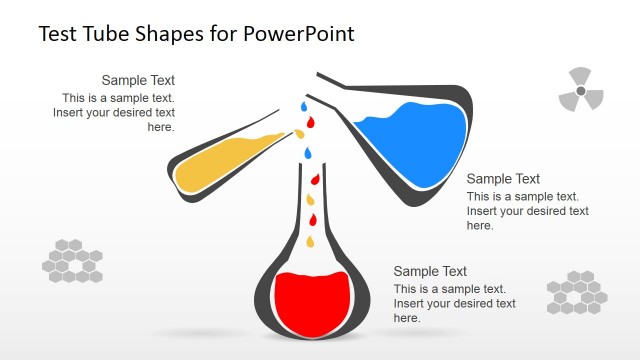
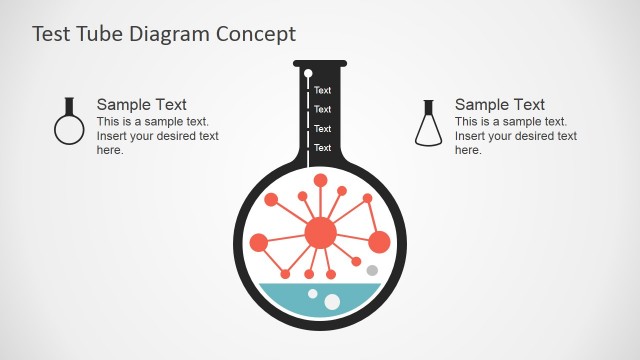
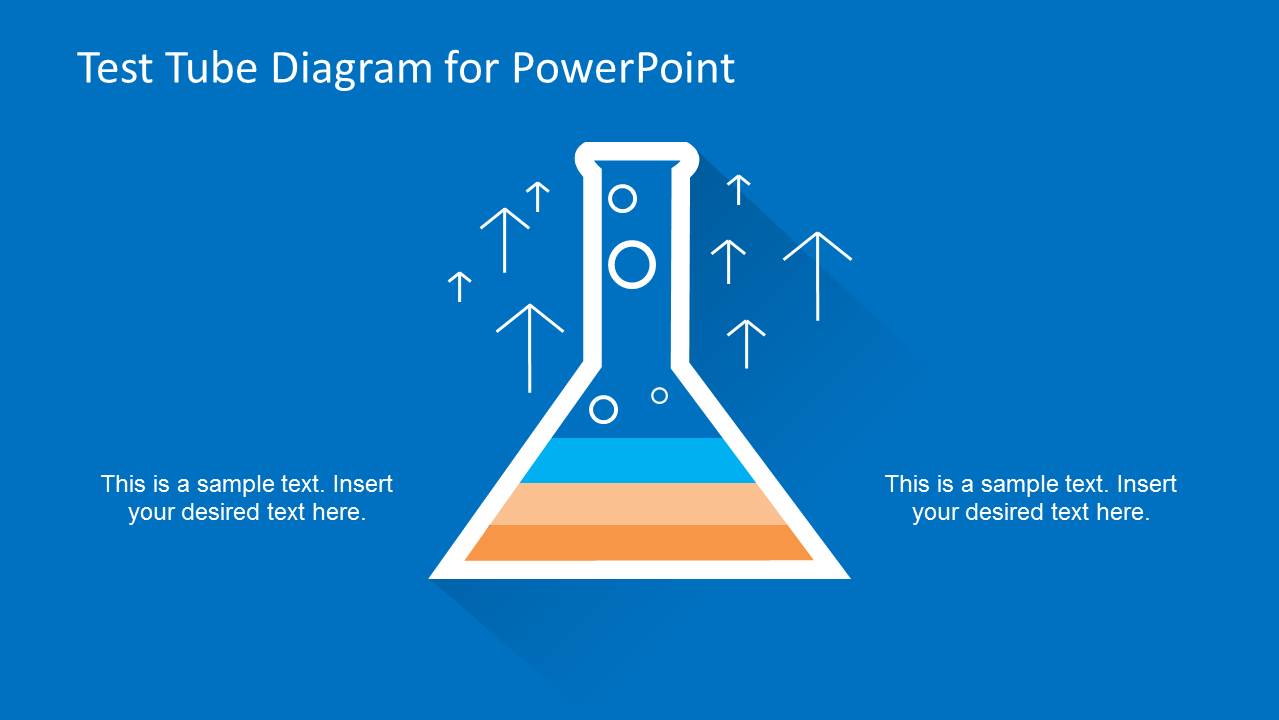
Test Tube Diagram Template for PowerPoint is a presentation design containing a simple but useful test tube shape with flat style. You can use the test tube shape slides to prepare presentations with a multi-level diagrams.
First interaction with test tubes normally takes place at school. Test tubes are used to carry out different experiments. Different ingredients are mixed in and the results come out in form of gas emission or precipitation. Test Tube Diagram Template for PowerPoint can be an ideal choice for anyone looking to explain scientific phenomenon.
School teachers make use of many illustrations and other teaching aids to help students understand science in a better way. One of them is the use of presentations for their lectures. Using a proper PowerPoint template helps catching attention of the audience, students are more attracted to animations than any other visual collateral.
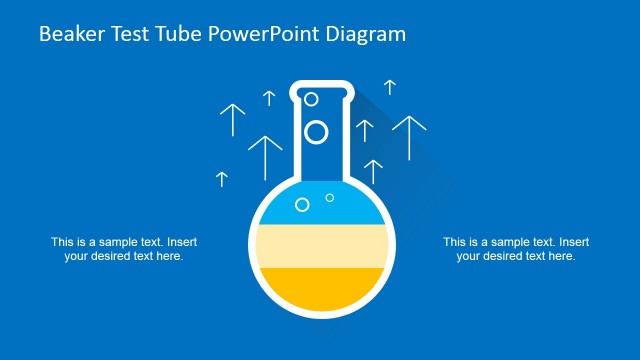
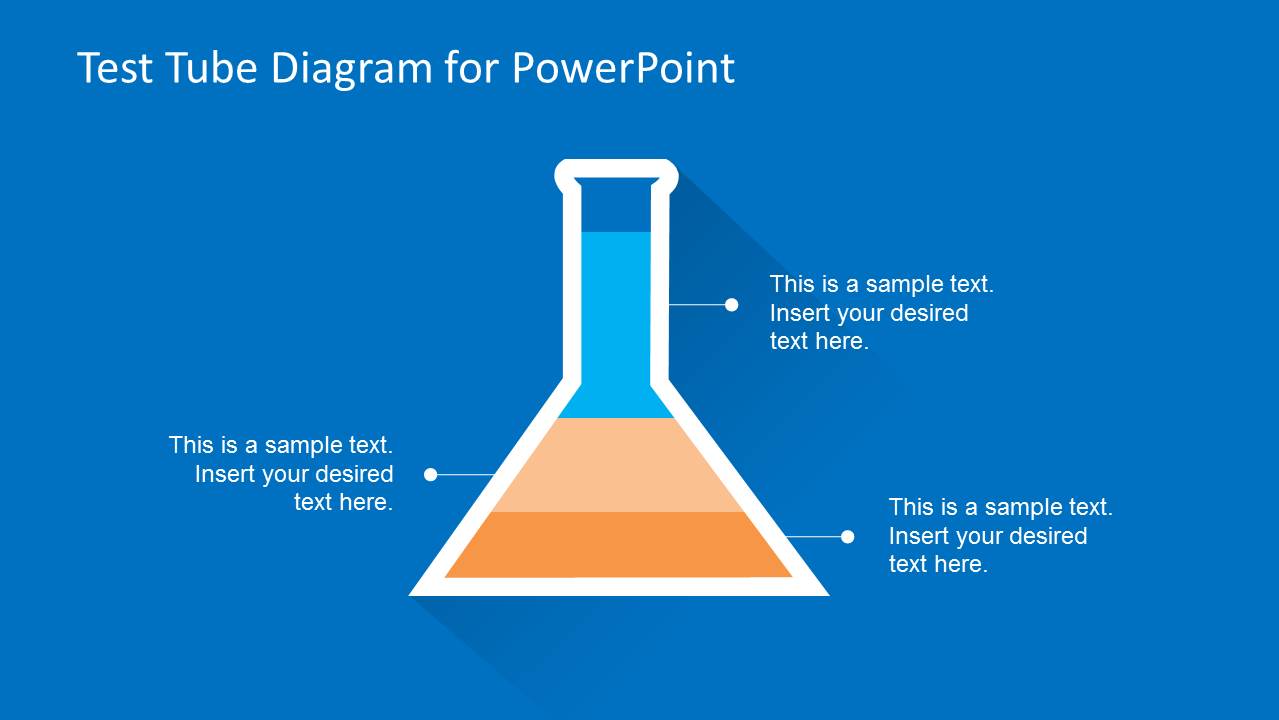
This ppt template has a test tube that students can find in school labs. The base of test tube has layers that can be used to show the ingredients; the bubbles rising up can depict the products of the reaction.
It can also be used as a business template for presentation, where the test tube boundary shows the limitations of an organization. The core values to be placed in the base and the feasible solutions of any problem being faced to rise up in bubbles. It can also be used as a sales funnel template with the costs being laid out at the base. The costs to be counted for include manufacturing, processing and sales costs as building blocks and additional data can be displayed to explain the cost.
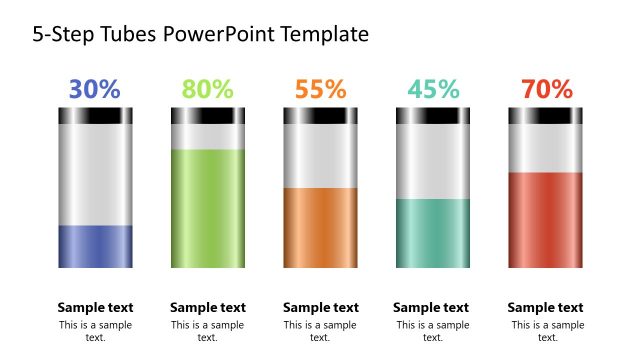
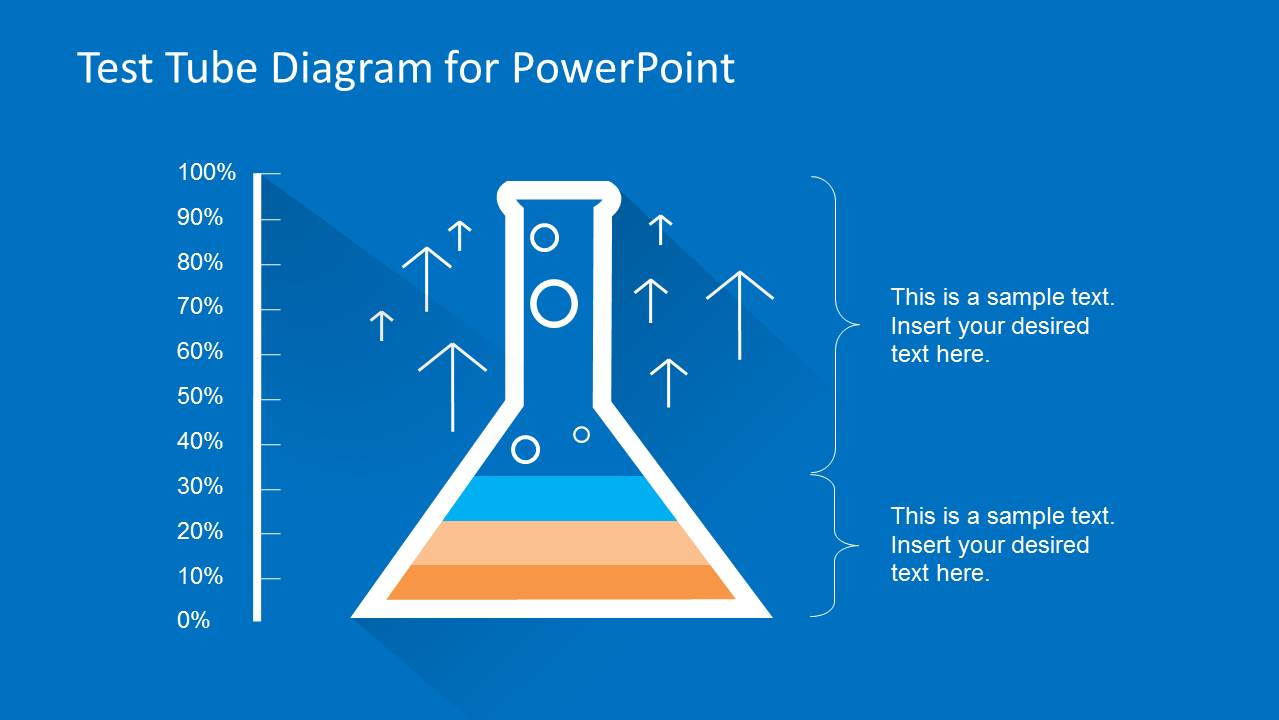
Different layouts of test tube are available in this template for presentation. It can be used to show different results at different times of a project life, with different results at different life percent shown. Also applicable to show the scientific reaction with arrows showing the direction of reactions. With ingredients at the base and bubbles coming out, the user can create a cause and effect diagram for PowerPoint.
What’s inside this template
Example presentation scenarios
- A science teacher can explain reaction inputs and outputs by placing ingredients in the layered base and labeling bubbles or arrows as observed results.
- A pharma presenter can brief a team on formulation stages by using the 0-100 percent fill-level slide to show progress, concentration, or dosage thresholds.
- A business analyst can map constraints, core inputs, and solution ideas by replacing the lab labels with cost drivers, risks, and feasible actions.
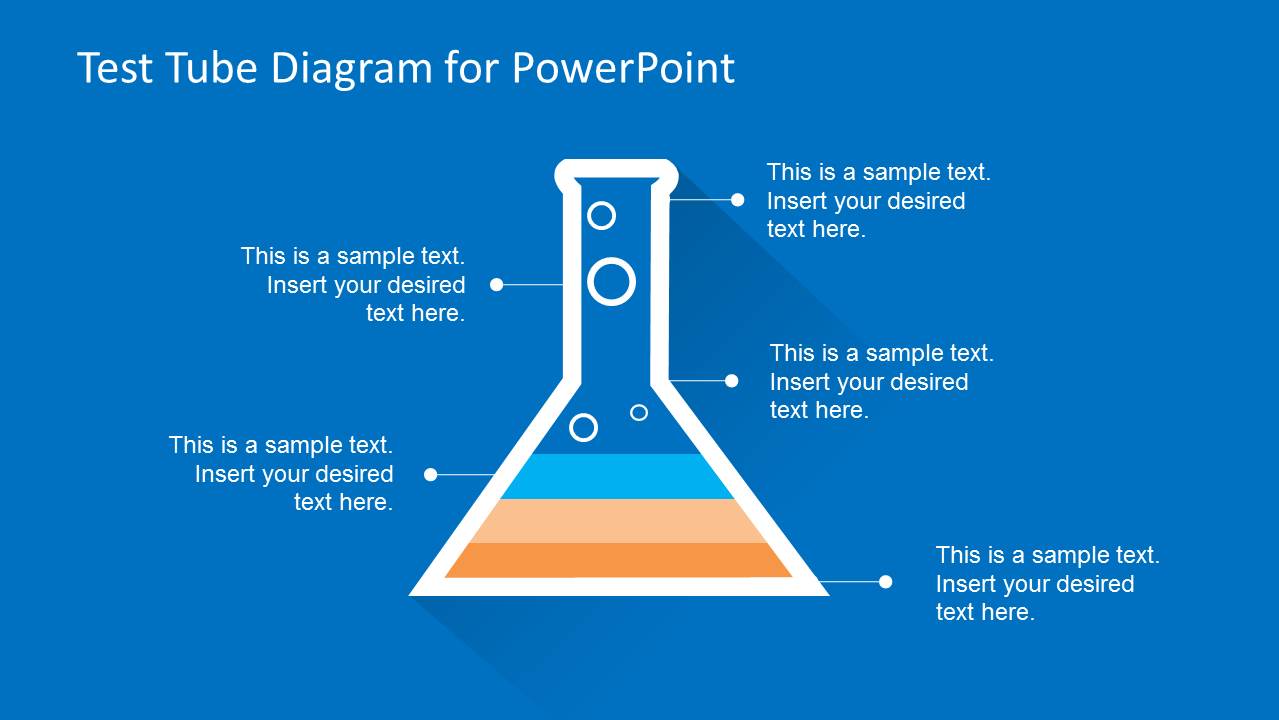
- A lab trainer can introduce an experiment workflow by using the multipoint callout slide to label liquid layers, vessel components, and expected observations.
Features
- 100% editable presentation template
- Compatible with Microsoft PowerPoint and Google Slides
- 16:9 aspect ratio slides
- Scalable vector shapes, icons and illustrations
- AI-Ready for Microsoft Copilot and Claude
- Instant access and download
Frequently asked questions
Q: How should a presenter explain a scientific reaction with this test tube diagram?
A: Start with the layered base as inputs or ingredients, then use the bubbles and upward arrows to represent the visible reaction or outcome. Keep each layer to one idea, such as reagent, condition, or catalyst. The callout slides work best when the presenter labels only the points the audience must remember.
Q: Who is this template best suited for beyond a classroom science lesson?
A: It works well for pharma, medical, lab training, and consulting presenters who need a simple metaphor for levels, mixtures, constraints, or outputs. The vessel can stand for an experiment, organization, product pipeline, or cost stack, while the fill layers show what is inside the system before results appear.
Q: Why does the test tube metaphor make the message easier to understand?
A: The lab vessel gives the audience a familiar container for complex ideas. Layers imply inputs or stages, the scale slide adds a sense of measurement, and bubbles suggest reaction or output. This visual structure helps separate cause, condition, and result without forcing the presenter into a dense process chart.


Test Tube Diagram Template for PowerPoint
4-slide presentation template with test tube fill levels, percentage scale, and scientific callout diagrams
Test Tube Diagram Template for PowerPoint is a 4-slide diagram template for showing scientific reactions, fill levels, or staged business inputs. The deck includes a layered lab vessel diagram, a 0-100 percent fill-level scale, bracketed annotations, and multipoint callouts for educators, pharma teams, analysts, and presenters using Microsoft PowerPoint or Google Slides.
- Category
- Diagrams
- Rating


 Loading...
- Aspect ratio
- 16:9
- Item ID
- 6574
- Colors
 Microsoft PowerPoint
  Microsoft Copilot
  Claude for PowerPoint
 Other formats supported
Subscribe today and get immediate
access to download our PowerPoint templates.