Low-Hanging Fruit PowerPoint Template
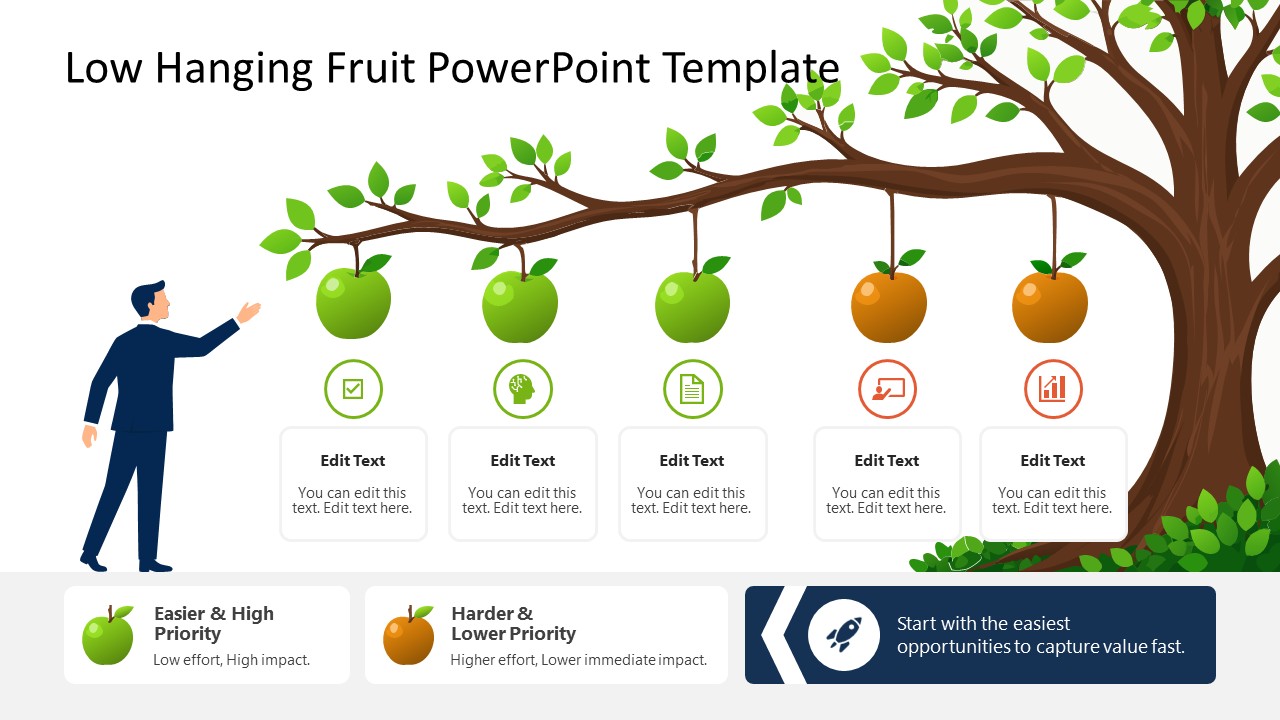
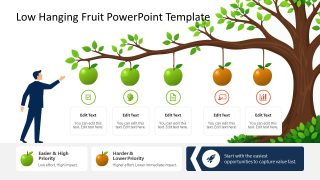
Rank business initiatives by effort and impact using a tree of green and orange apples with our Low-Hanging Fruit PowerPoint Template. This template uses the low-hanging fruit metaphor to present a visual prioritization framework. When a company has multiple options along its growth roadmap, it needs to prioritize and decide which options need attention first. This low-hanging diagram helps strategic leaders represent green apples as easier, high-priority opportunities and orange apples as harder, lower-priority opportunities. Product strategists place the five product features on the apple tree, helping stakeholders decide which one to roll out first in the next update. The low-hanging fruit diagram reinforces a sequencing logic, enabling developers to produce a consistent output. Growth marketing leads prioritize advertisement campaign ideas by expected return. Operations managers rank process improvements by implementation difficulty using this low-hanging fruit PPT layout. This design is also editable in Google Slides.
The Low-Hanging Fruit PowerPoint Template features a large tree illustration with five fruits hanging from its branch. Each fruit connects with its corresponding content card. The low-hanging fruits represent the ready-to-implement actions or easier-to-handle problems for effective progression. Management consultants use the tree diagram to organize recommendations and show which ones are quick wins and which are long-term strategic plans. An operational director introducing a lean process improvement initiative can use our low-hanging fruit diagram template to show easy fixes alongside harder implementations. At the bottom right, presenters highlight the key note in an arrow shape: Start with the easiest opportunities to capture value fast. Download the low-hanging fruit PPT layout to present a clear prioritization framework in your stakeholder presentations.
You must be logged in to download this file.
DOWNLOAD- Category
- Diagrams
- Rating

 Loading...
- Size
- 16x9
- Item ID
- 23806-01
- Colors
Subscribe today and get immediate
access to download our PowerPoint templates.