Initiate a company wide campaign of innovation through the Six Sigma Belts PowerPoint Template. This template is a presentation of the different levels of management in a Six Sigma organization. It concisely demonstrates the basic functions and responsibility of professionals in each level. The presenter can elaborate more on each level of expertise by discussing level by level roles that affect the efficiency of the process model. It can create a significant input in the company’s management innovation by highlighting the benefits and advantages of integrating Six Sigma roles in the organization. This PowerPoint template is designed to fully be customized by the presenter. The presenter can maximize the potentials of the template by coordinating unique presentation approach with the advantages of having a set of certified Six Sigma professionals.
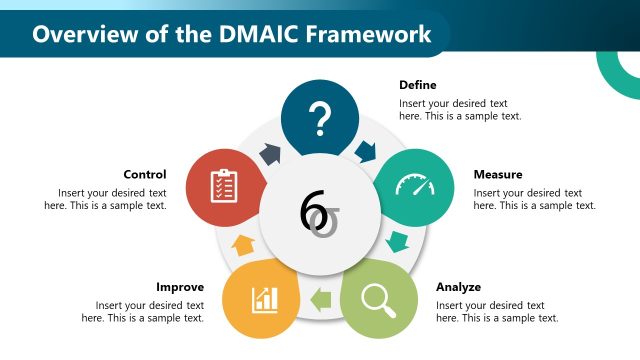
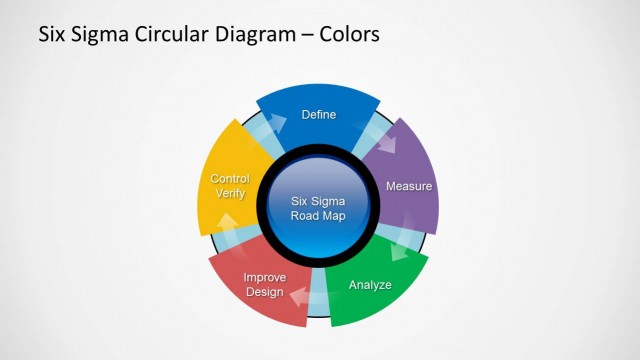
The main objective of Six Sigma is to minimize the PPM (Part per Million) defects or reduce them to a known number of times in every million opportunities. Six Sigma is a Data Driven approach methodology by nature, allowing the management of the organizations to monitor continuous improvement in analytical fashion.
Six Sigma combined with the principles of Lean Manufacturing aims to reduce waste, defects and unnecessary efforts to the least possible amount while increasing customer satisfaction. This integration is called the Lean Six Sigma.
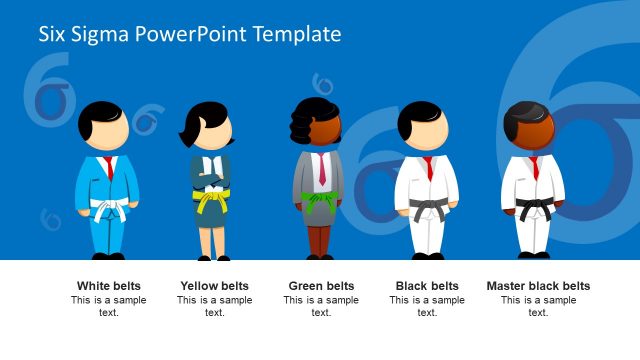
Have you ever wondered why Six Sigma leveling is inspired by karate belts? As it turned out, this management approach was started out by a Japanese firm that took over Motorola in 1986. Karate is a popular sport in Japan, the homeland of the originators of Six Sigma. Hence, the karate belts associated with the Six Sigma professionals. According to history, karate belts’ colors which represent rankings are determined by the length of practice a karateka have. It was brought by the practical circumstances where the wear and tear of a piece of clothing affects its color. The longer time he or she has been practicing karate, the darker the belt is.
The metaphor of the Six Sigma belts is mapped to the organization Role Maturity in applying the quality management process.
What’s inside this template
Example presentation scenarios
- A Lean Six Sigma trainer can use the belt lineup and role profile cards to introduce certification levels during an internal training session.
- A quality manager can use the stair-step hierarchy slide to explain how responsibility grows from white belts to master black belts in a process improvement program.
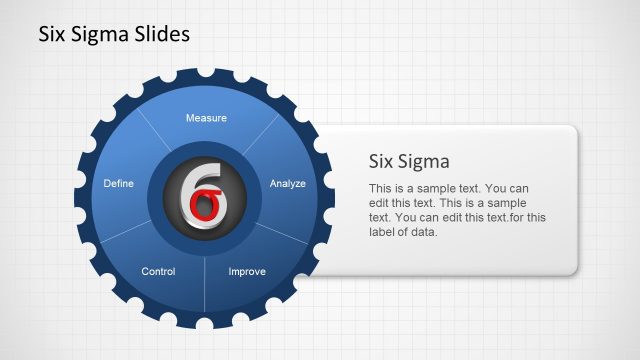
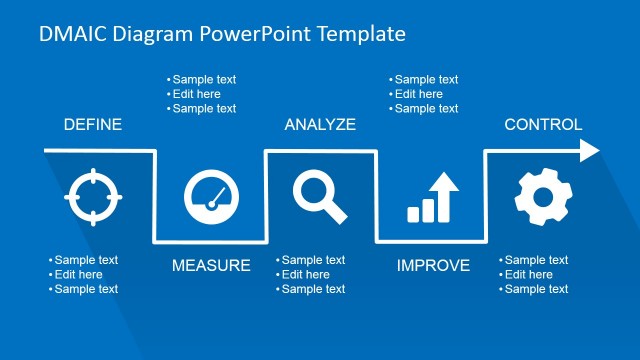
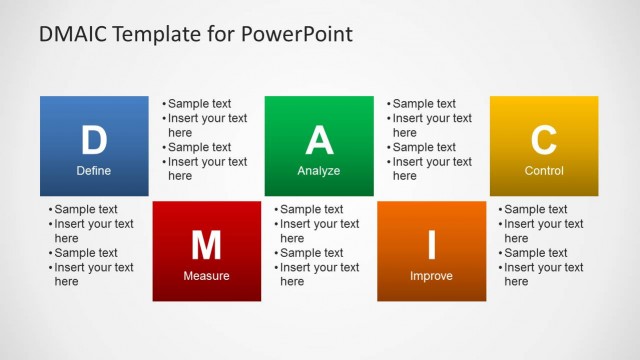
- An operations leader can use the individual belt slides to assign project ownership and clarify which team members support define, measure, analyze, improve, and control work.
- A manufacturing consultant can use the deck in a client workshop to connect waste reduction goals with the people structure needed to sustain Six Sigma practices.
Features
- 100% editable presentation template
- Compatible with Microsoft PowerPoint and Google Slides
- 16:9 aspect ratio slides
- Scalable vector shapes, icons and illustrations
- Data-driven charts, editable in Microsoft Excel
- AI-Ready for Microsoft Copilot and Claude
- Instant access and download
Frequently asked questions
Q: How should a presenter explain the belt levels without turning the deck into a list of job descriptions?
A: Start with the belt lineup to name the levels, then use the stair-step slide to show progression in responsibility. On the role profile slides, replace sample text with one decision right, one project responsibility, and one support expectation for each belt. This keeps the message focused on operating behavior, not certification terminology alone.
Q: Who is this template best suited for in a Six Sigma discussion?
A: This template fits quality managers, Lean Six Sigma trainers, operations leaders, and consultants who need to explain how people support continuous improvement. It is strongest when the audience needs a clear view of role maturity, from basic participation at the white belt level to leadership and coaching at the master black belt level.
Q: Why does the martial arts belt metaphor work for communicating Six Sigma roles?
A: The belt colors give the audience an immediate visual code for rank, experience, and responsibility. The character illustrations make the concept less abstract, while the stair-step hierarchy turns the metaphor into a progression. That design helps viewers remember that Six Sigma maturity is built through practice, capability, and leadership responsibility.


Six Sigma Belts PowerPoint Template
7-slide presentation template for Six Sigma belt levels, role maturity, and DMAIC training discussions
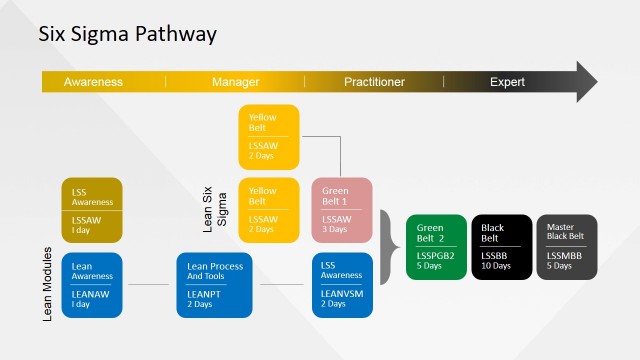
Six Sigma Belts PowerPoint Template is a 7-slide diagram deck for explaining belt levels in a Six Sigma organization. It includes a belt lineup, stair-step hierarchy, and color-coded role detail cards for white, yellow, green, black, and master black belts. It is built for quality, operations, and Lean teams in PowerPoint and Google Slides.
- Category
- Diagrams
- Rating


 Loading...
- Aspect ratio
- 16:9, 4:3
- Item ID
- 6693-01
- Colors
 Microsoft PowerPoint
 Microsoft Copilot
 Claude for PowerPoint
Other formats supported
Subscribe today and get immediate
access to download our PowerPoint templates.