Slide 5 of 5 from Product Life Cycle Template for PowerPoint
6224-01-product-life-cycle-5
Product Life Cycle Diagram for PowerPoint
- Diagram
- Process Flow
- Strategic Analysis Slide
- 16:9
- 100% Editable
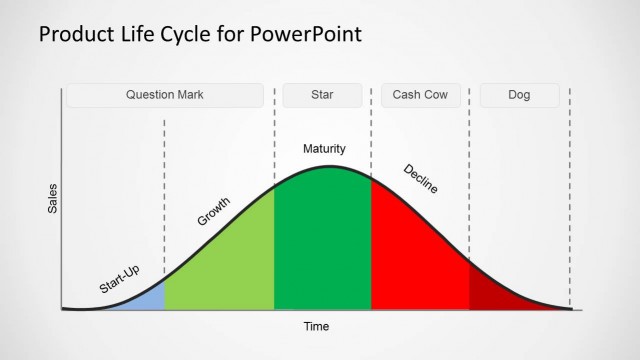
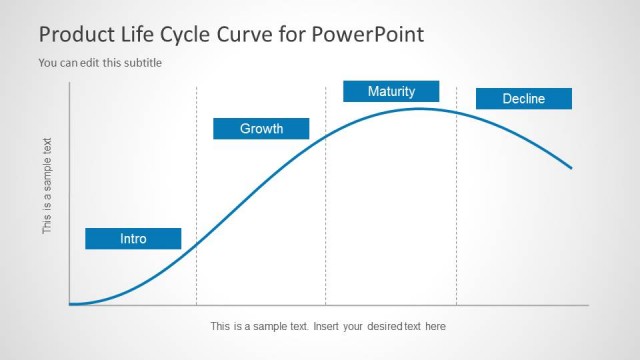
The Product Life Cycle Diagram slide from the Product Life Cycle Template for PowerPoint visually represents key stages of product performance over time, using editable shapes and vector icons to highlight phases like Start-Up, Growth, Maturity, and Decline. This slide layout is suitable for business presentations and pitch deck templates focused on strategic analysis and market strategy, providing clear insights into product management concepts.
What’s on This Slide
The slide features a curved line graph representing the product life cycle, with labeled phases including Start-Up, Growth, Maturity, and Decline. The x-axis denotes Time, while the y-axis indicates Sales. Four distinct phase bands are visually separated, with a red callout box positioned centrally over the curve, indicating a specific point in the cycle. The text placeholders are aligned within the callout, and the phase labels are positioned above the corresponding sections of the curve. The overall layout emphasizes the progression of the product life cycle visually.
How to Use It
This layout serves as a visual representation of the product life cycle, ideal for illustrating the stages of a product's market presence. It fits well in a presentation discussing product management strategies or market analysis. This slide is particularly useful for product managers and strategists when explaining concepts related to growth, maturity, and decline phases. It can be used in business meetings, reports, or educational contexts to convey the dynamics of product performance over time.
Text Placeholders & Capacity
Keep your copy within these limits so it fits without resizing. Callout text slots can hold about 15-20 words each.
| Placeholder | Count | Max characters (approx.) |
|---|---|---|
| Slide title | 1 | 30 |
| Item heading | 4 | 15 |
| Callout | 1 | 100 |
Slide Keywords
Download unlimited PowerPoint templates, charts and graphics for your presentations with our annual plan.
DOWNLOADReturn to Product Life Cycle Template for PowerPoint.