Slide 2 of 10 from Animated Swirl Diagram for PowerPoint
PPT Swirl Diagram 6 Steps
Circular Diagram Concept for PowerPoint
- Diagram
- Circular Cycle
- Process Slide
- 16:9
- 100% Editable
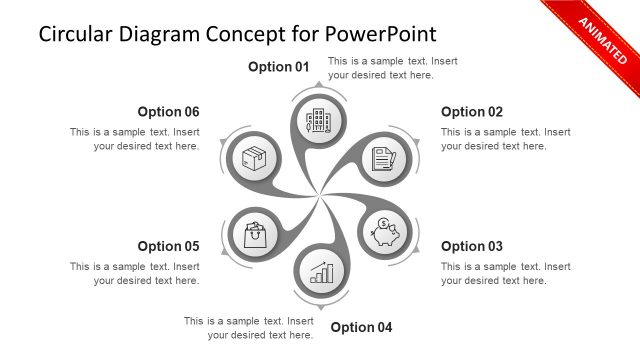
The Circular Diagram Concept slide from the Animated Swirl Diagram for PowerPoint template features a visually engaging circular process flow ideal for business presentations. This layout uses editable shapes and vector icons arranged in a swirl pattern to illustrate step-by-step guides or option comparisons effectively. It integrates well within slide decks focused on project planning or strategic initiatives, providing clear visualization of interconnected elements in a corporate presentation or pitch deck template.
What’s on This Slide
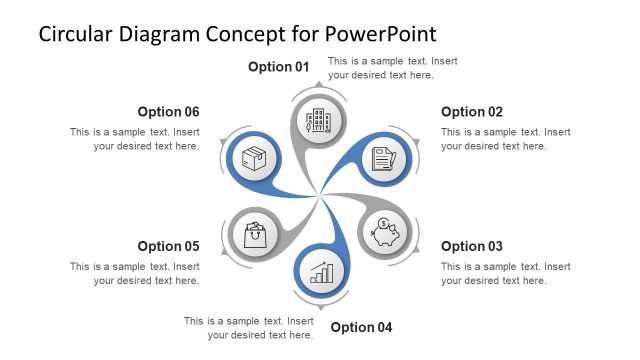
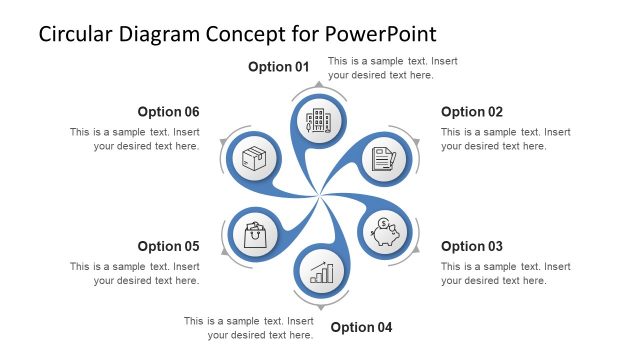
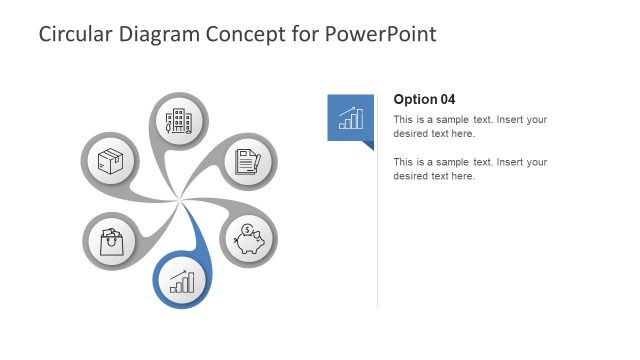
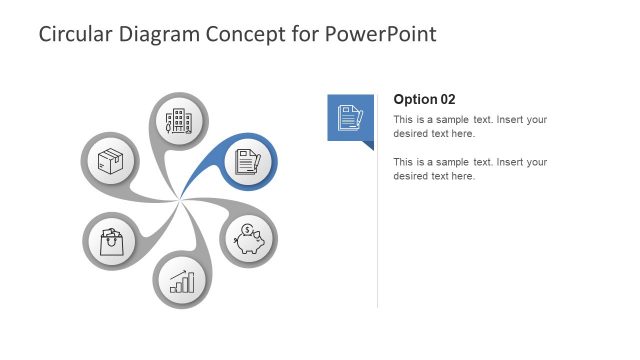
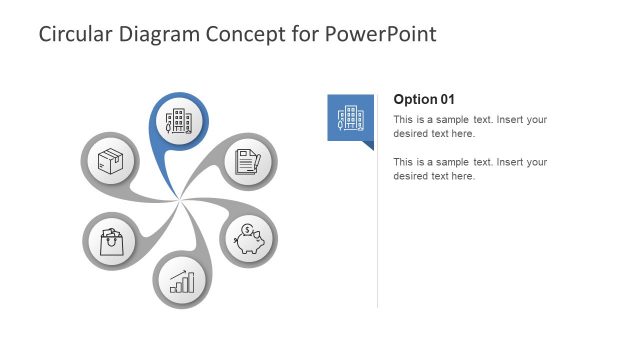
The layout features a circular diagram at the center with six evenly spaced nodes surrounding it. Each node contains an icon and a text placeholder for a title and description. The nodes are arranged in a swirl pattern, with connecting lines leading to the central diagram. The background is light, enhancing the visibility of the dark icons and text. The title is positioned at the top center, while the central diagram has a larger placeholder for additional text. Overall, the design emphasizes a flow from the central concept to the surrounding options.
How to Use It
This layout serves as a circular process flow, ideal for presenting steps or options in a sequence. It fits well in a presentation sequence after introducing a topic and before detailing specific actions or components. This structure is useful in business scenarios such as project planning, product development, or strategic initiatives where multiple related elements need to be highlighted in a cohesive manner.
Text Placeholders & Capacity
Keep your copy within these limits so it fits without resizing. Node labels can hold about 3-4 words each, while body text can accommodate roughly 10-12 words.
| Placeholder | Count | Max characters (approx.) |
|---|---|---|
| Slide title | 1 | 30 |
| Item heading | 6 | 20 |
| Item body | 6 | 50 |
Slide Keywords
Download unlimited PowerPoint templates, charts and graphics for your presentations with our annual plan.
DOWNLOADReturn to Animated Swirl Diagram for PowerPoint.