
70-20-10 Model for Learning and Development
People don’t like to admit it; however, many people indeed learn skills not before but during a job. When labeled as an ‘expert’; people tend to shy away from admitting that they lack knowledge of certain aspects of their job. This is usually nothing to be shy about since changing trends, technology and consumer demands […]

Product-Led Growth (PLG): The Ultimate SaaS Business Growth Strategy To Pursue
The competition today, both in the product and services space, is tougher than ever. Superior UX (user experience) and CX (customer experience) are the two key battlefields with the most at stake. Should we still stay with the sales-led business growth model or pursue the newer product-led growth (PLG) paradigm? Let’s deep dive into the matter.
A Manager’s Guide to Interpersonal Communication
People are promoted to management positions for a variety of reasons. For many, they rise to the top because of their knowledge, technical skills, and decision-making capabilities. As a manager, your effectiveness also strongly depends on your ability to communicate well with your team members and other stakeholders. Here is a quick guide on Interpersonal Communication for Managers.

Multitasking & Context Switching Ruin Your Productivity
Did you know that about 28 billion man-hours are wasted each year because of what we now call context switching or multitasking? If you are finding that lack of focus and constant interruptions are affecting your work, then this post is for you. You’ll learn exactly what context switching and multitasking are and get some tips on how to overcome both of these productivity-breakers.

The Ultimate Guide to Using Metaphors in Presentations and Speeches
Metaphors are one of the often-forgotten tricks among presenters. Along with other figures of speech such as similes, analogies personification, and alliteration, they make your texts more engaging, memorable and eloquent. As well, metaphors serve as a great tool for breaking down complex concepts into more digestible statements.
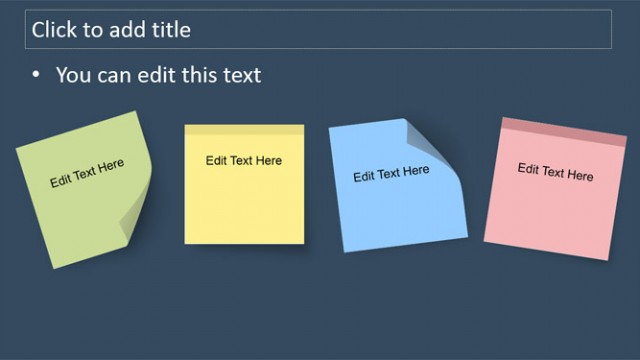
How To Add Custom Sticky Notes to PowerPoint Presentations
A sticky note is a small piece of paper with adherable strip of glue that you can use to attach notes to documents or any other surface such as a computer screen, a desk, a calendar, or even the fridge. Normally sticky notes can easily be removed and attached to any other surface and it was originally invented by 3M […]
A Quick Read on Prospect Theory and Loss Aversion
For a consumer, economic decisions are based on certain types of behavior. Prospect Theory or the loss-aversion theory in behavioral economics and behavioral finance, aims to determine people’s decision making and their tendency for loss aversion.

Overcoming Sunk Cost Fallacy: Get Better at Decision-Making
One of the first things you learn at an economics course is that you should never take irrecoverable (sunk) costs into account when you need to decide upon present or future investments. But since humans are not the most rational beings, we often forget that basic rule and let the past “investment” distort our judgments. This cognitive tendency is known as “sunk cost fallacy” and it can massively undermine both your personal and business decision-making.

Circular Economy to Save the Planet
The circular economy is an economic model based on eliminating waste and making the economy more sustainable. The model is a diversion from the linear economy, which focuses merely on the take, make, consume and dispose of method. But can the circular economy model save the planet?