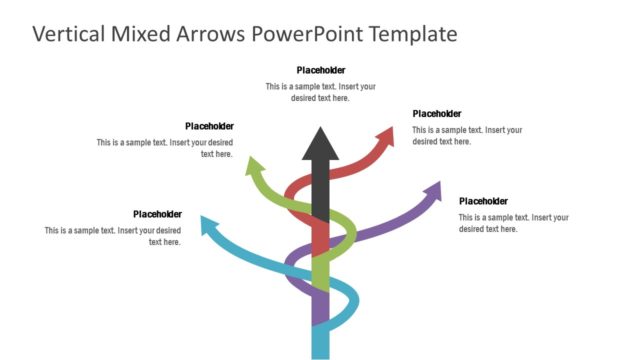
Multiple Directions PowerPoint Diagram With Arrows is a professionally crafted template for displaying different aspects of a presentation topic with the help of arrow shapes in PowerPoint.
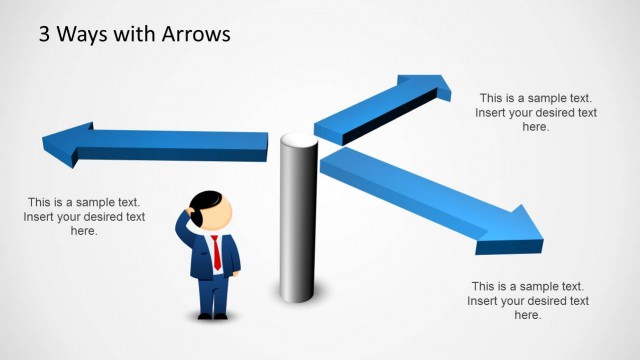
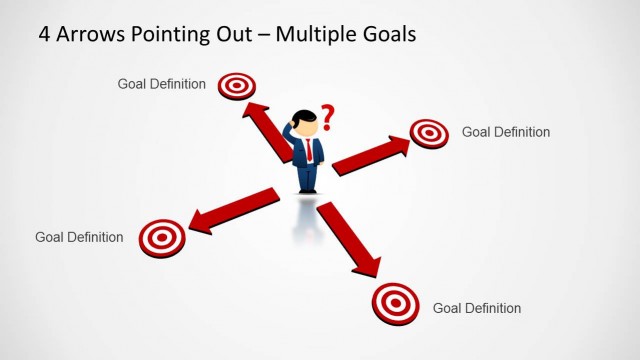
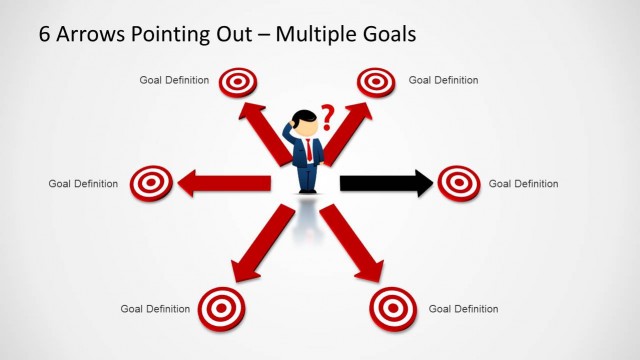
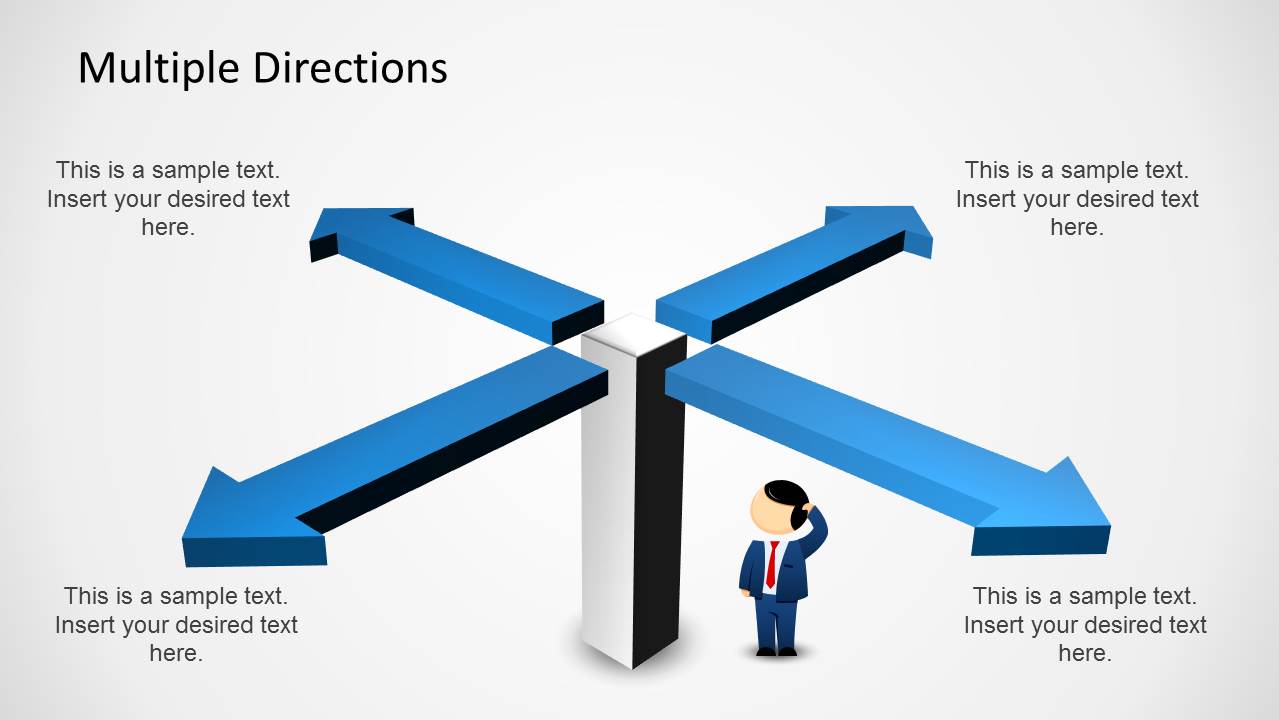
The template depicts a man standing beneath arrows pointing in multiple directions. You can use this template to create attractive 3D presentation slides to compare multiple parts of a topic using easy to grasp diagrams.
Each slide in this template is highly customizable, which makes it quite easy to edit presentation slides to match your needs. To display two or more perspectives related to a topic you can not only edit the given slides but even move or delete arrows according to requirement, as well as change the look of the arrows using PowerPoint Drawing Tools.
What’s inside this template
Example presentation scenarios
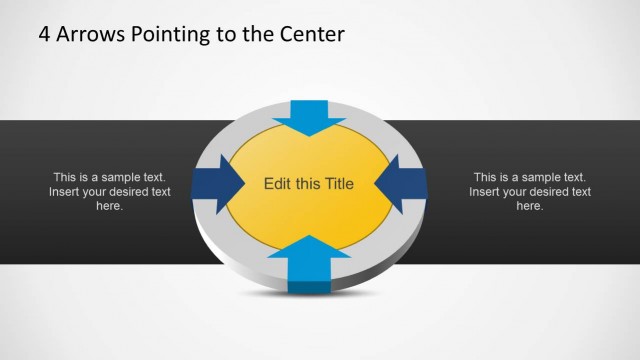
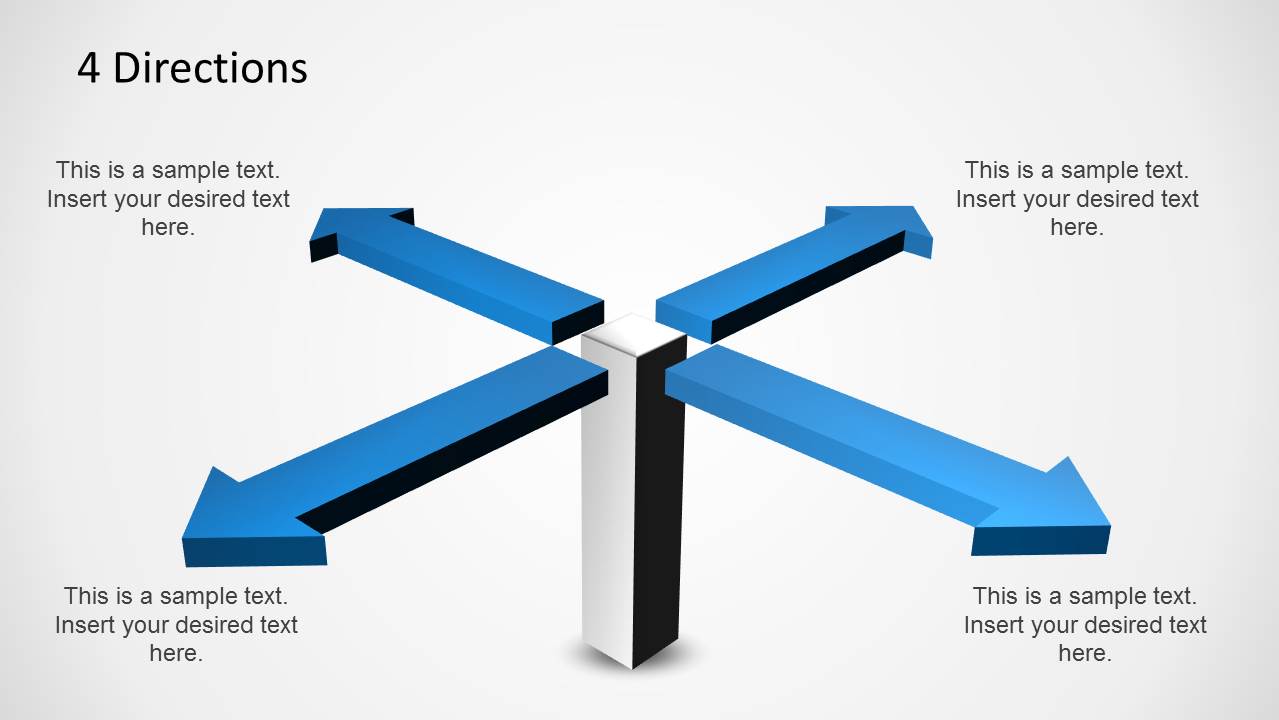
- A strategy consultant can use the four-direction arrow diagram to compare possible market moves and keep the audience focused on the central decision point.
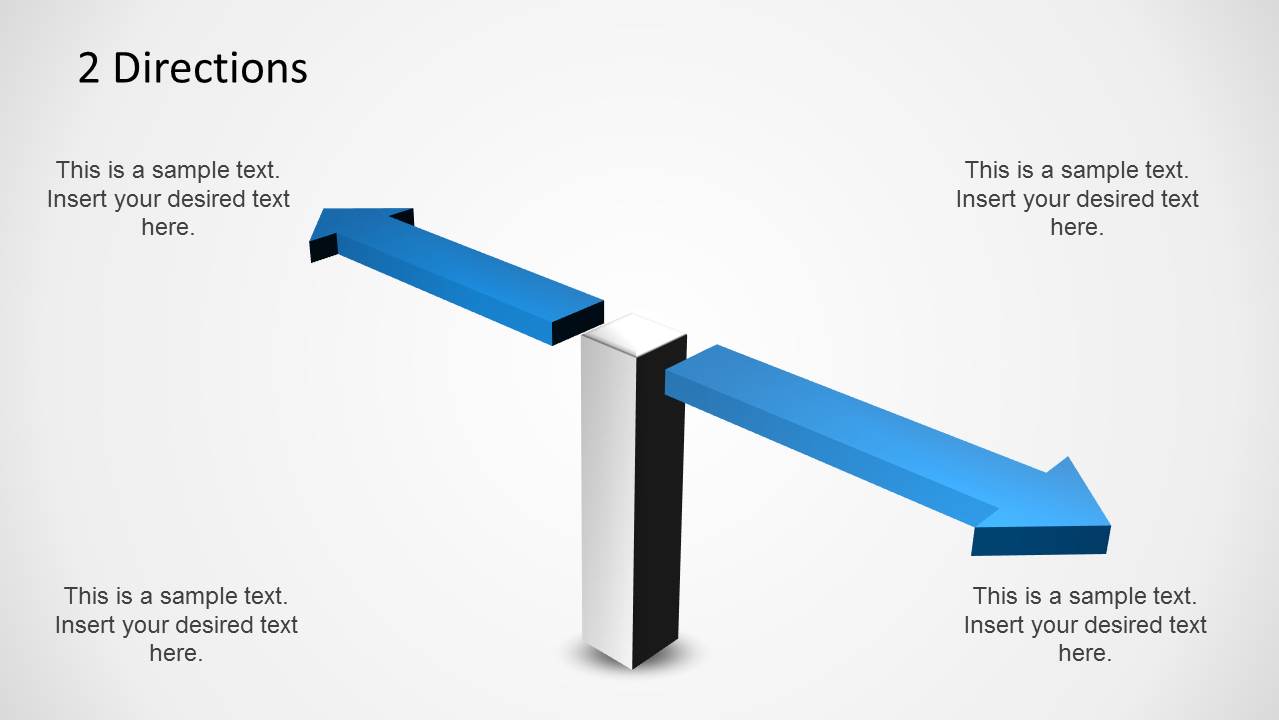
- A project manager can use the two-direction layouts to explain competing execution paths, such as proceed or pause, with short callouts beside each arrow.
- A trainer can use the multiple-direction signpost with the cartoon businessperson to introduce decision-making confusion before guiding learners through a framework.
- A sales or marketing presenter can use the arrows as option labels to contrast audience segments, campaign routes, or positioning choices before recommending one direction.
Features
- 100% editable presentation template
- Compatible with Microsoft PowerPoint and Google Slides
- 16:9 aspect ratio slides
- Scalable vector shapes, icons and illustrations
- AI-Ready for Microsoft Copilot and Claude
- Instant access and download
Frequently asked questions
Q: How should a presenter make the arrow diagram communicate a clear recommendation?
A: Use the arrow diagram first to name the available paths, then guide attention toward the option you want the audience to evaluate. Keep each callout short, ideally one option or criterion per arrow. If one direction is the preferred choice, reserve the strongest color or boldest label for that arrow and explain why it matters.
Q: Who is this template best suited for in a business presentation?
A: This template fits presenters who need to frame choices before discussing details: consultants comparing strategic directions, project managers explaining route decisions, trainers teaching decision-making, or leaders showing competing priorities. The two-way and four-way layouts work best when the message is about alternatives, not detailed process steps or performance data.
Q: Why use a signpost metaphor instead of a standard bullet list?
A: The signpost metaphor turns an abstract choice into a recognizable visual situation: one starting point with different possible directions. That makes the audience see separation between options immediately. The central post also creates a shared reference point, so the presenter can move around the arrows while keeping the discussion anchored.





Multiple Directions PowerPoint Diagram with Arrows
4-slide presentation template for multiple-direction arrow diagrams, decision paths, and option comparisons
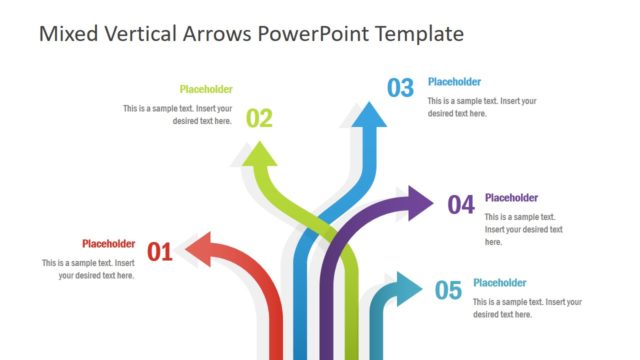
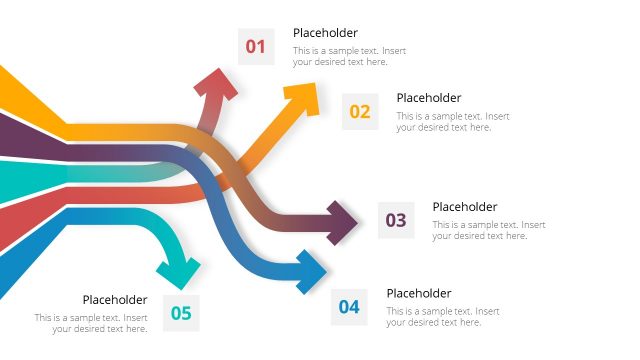
Multiple Directions PowerPoint Diagram with Arrows is a 4-slide diagram presentation template for showing choices, alternative paths, or competing priorities. It includes a multiple-direction signpost, a four-way arrow diagram, two two-direction arrow layouts, and text callouts for option labels in Microsoft PowerPoint and Google Slides.
- Category
- Diagrams
- Rating


 Loading...
- Aspect ratio
- 16:9
- Item ID
- 6121-09
- Colors
 Microsoft PowerPoint
 Microsoft Copilot
 Claude for PowerPoint
Other formats supported
Subscribe today and get immediate
access to download our PowerPoint templates.