
PowerPoint sections can help organize a PowerPoint presentation to help you sort out different subtopics. Adding sections to your PowerPoint templates can be handy for quickly creating new outlines and generating organized slide decks. It also makes it easy to find subtopics in a presentation to revisit specific information.
How to Add a Section in PowerPoint
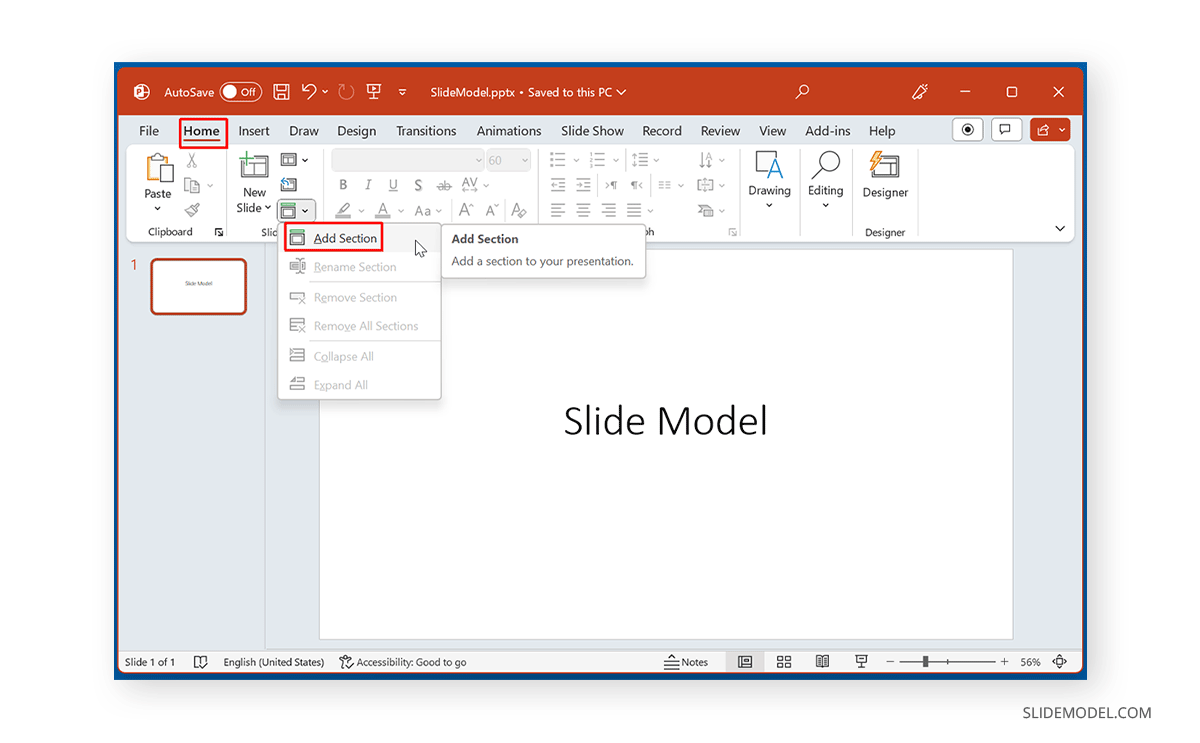
If you’re wondering how to add a PPT section, go to Home -> Section -> Add Section or right-click between slides and select Add Section.
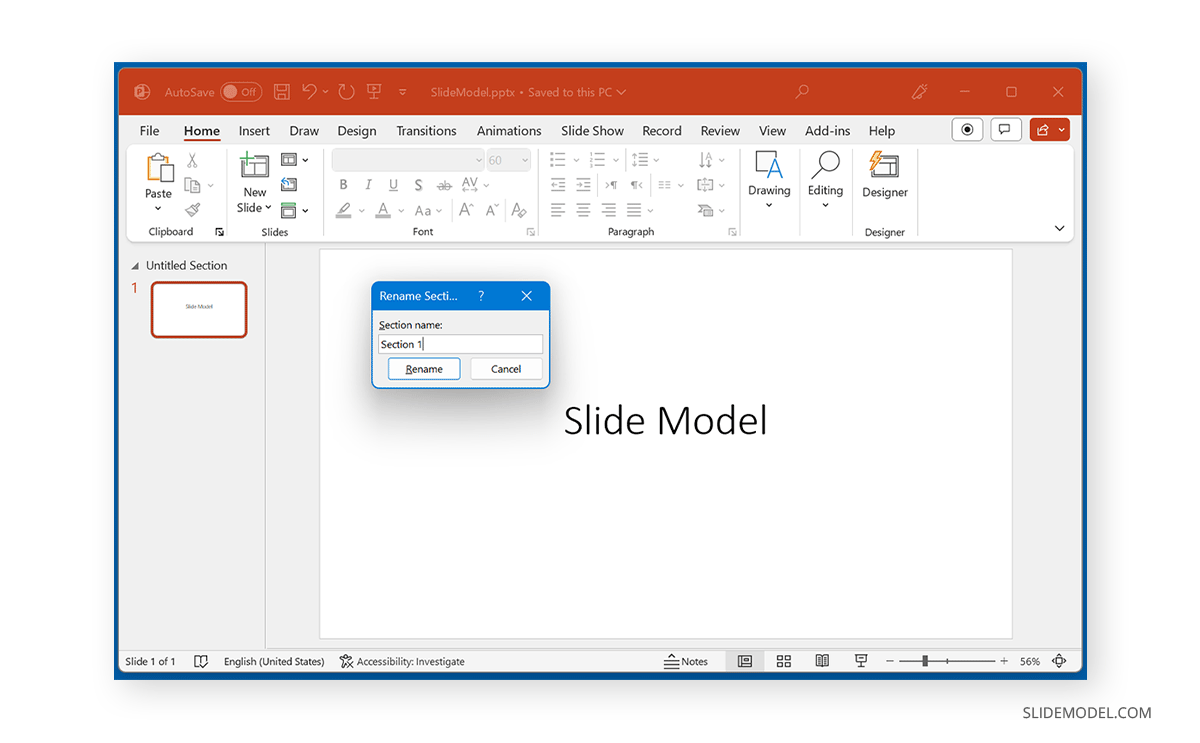
In the dialog box that appears, enter a name for your section, then click Rename. This will give a name to your section. You can name sections based on the topics they cover. For example, one section might introduce the topic, another your team, and a final section covering the project, budget, timeline, etc.
How to Rename, Remove, Collapse, and Expand Sections in PowerPoint
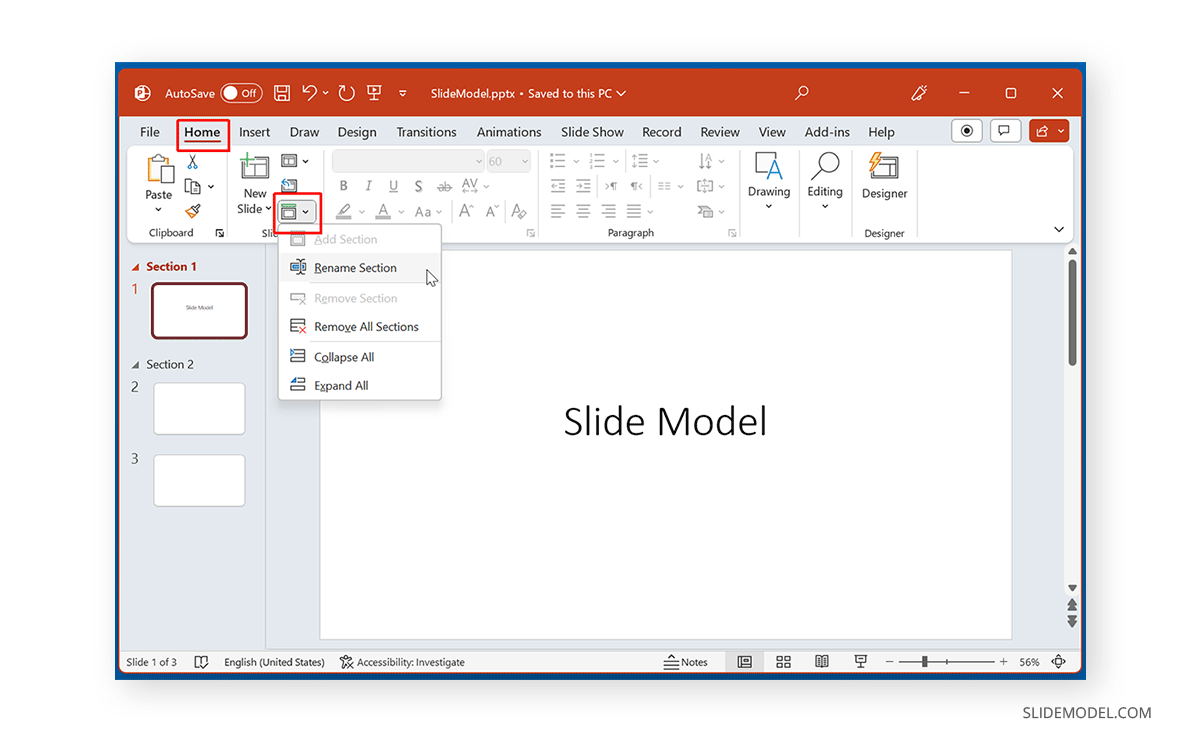
To rename, remove, collapse, or expand sections, select the section and go to Home -> Sections.
Rename Section: This option allows you to rename the section.
Remove Section: Use this option to remove a specific section.
Remove All Sections: This is a quick way to remove all sections simultaneously.
Collapse All: This option collapses all sections.
Expand All: Expands all collapsed sections.
How to Move Sections in PowerPoint
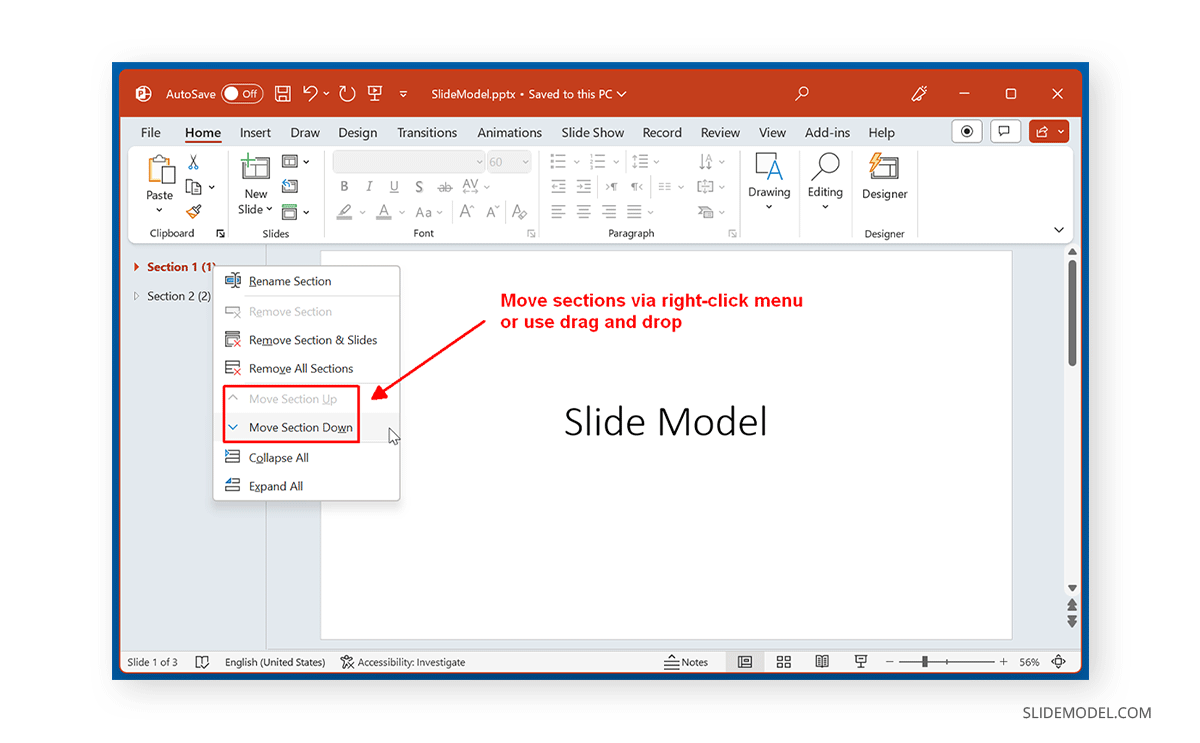
You can either use drag and drop to move sections or via the right-click menu. The latter provides options to move sections up or down. You will find various options in the right-click menu via the Sections menu. Furthermore, you can also select Remove All Sections & Slides at once to start over from scratch.
How to Group PowerPoint Slides
Grouping slides in PowerPoint involves both a technical action and an editorial judgment. What goes into each group and how that group is named shape whether a presentation feels structured or disjointed. Presenters working on long decks often discover that the grouping they planned at the outset does not survive contact with the actual content. Building that structure with intention from the start reduces the revision cycles that come from fixing it later.
The more useful question is which slides belong together because they serve a shared purpose in the presentation. A financial overview slide does not belong in the same group as the product roadmap, regardless of its position in the deck. Grouping by what each slide does, rather than by where it appears in the file, produces sections that feel earned rather than arbitrary.
For large presentations, the Slide Sorter View offers the clearest picture of how slide groups are distributed across the deck. Before confirming section boundaries, switching to that view shows all slides at thumbnail scale, making it easy to catch imbalances. A group running fifteen slides while an adjacent one holds only two usually signals a structural problem, and seeing it at a glance is faster than catching it in the panel.
Deciding How to Organize Your Slides Before Creating Groups
The most common error when grouping PowerPoint slides is building sections after the slides already exist. When that happens, the groupings tend to reflect the order in which content was added, rather than the order that best serves the audience. Mapping the section structure before any slide is built avoids that problem.
Begin by identifying the distinct phases or topics the presentation needs to address. Each phase becomes a section, and every slide inside it should advance that specific topic. If a slide does not fit cleanly into any group, it either belongs somewhere else or does not belong in the deck. Leaving those slides in tends to weaken whatever section they end up in without improving any other part of the presentation.
Once the section map exists, the Outline View in PowerPoint provides a useful text-level check. Reading slide titles in sequence within each group makes it clear whether the section holds together or if titles that seemed logical in isolation feel out of place when read together. That kind of mismatch is much faster to catch at the outline stage than after full design has been applied.
For decks with a formal structure, adding a table of contents in PowerPoint that corresponds to the section names reinforces the overall logic. It also gives the audience a frame of reference early in the presentation, which helps during longer sessions where the volume of topics can make it hard to track progress.
Naming Slide Groups in a Way That Supports Navigation
Section names appear in the slide panel and the presentation outline. During a live slideshow, they remain invisible to the audience. Their usefulness becomes apparent during editing and when handing the file off to someone else, since clear section names help anyone locate a specific part of the deck quickly, without scrolling through every slide.
Section names like Introduction or Timeline work for short presentations. In longer files covering several phases or product lines, names at that level of generality become indistinguishable at a glance. A section labeled “North America Q1 Performance” tells a co-author exactly where to look. The specificity of section names should scale with the deck’s complexity.
How groups are named also determines the quality of a table of contents slide. Vague section names produce a list of topics that tells the audience little about what each section actually contains. Names that are specific and grammatically consistent create a table of contents that functions as a genuine navigation reference throughout the presentation, not just a decorative first slide.
When working with PowerPoint themes that use divider slides between sections, the section name often populates the dividers automatically via linked text fields. Naming groups accurately at the start means those divider slides require no additional editing each time the structure changes.
Final Words
You can group slides in PPT by creating sections in PowerPoint. Now that you know how to create sections in PPT, you can create relevant groups of slides clubbed together to generate more comprehensive presentations that are easier to sort and manage.