You might not remember the many shortcuts in PowerPoint, but you can remain highly productive using the Quick Access Toolbar. It provides the most basic PowerPoint options at a click, and you can customize it to quickly access features you frequently need to use when making presentations from scratch and doing endless editing to make sense of PowerPoint templates.
What Is the Quick Access Toolbar in PowerPoint
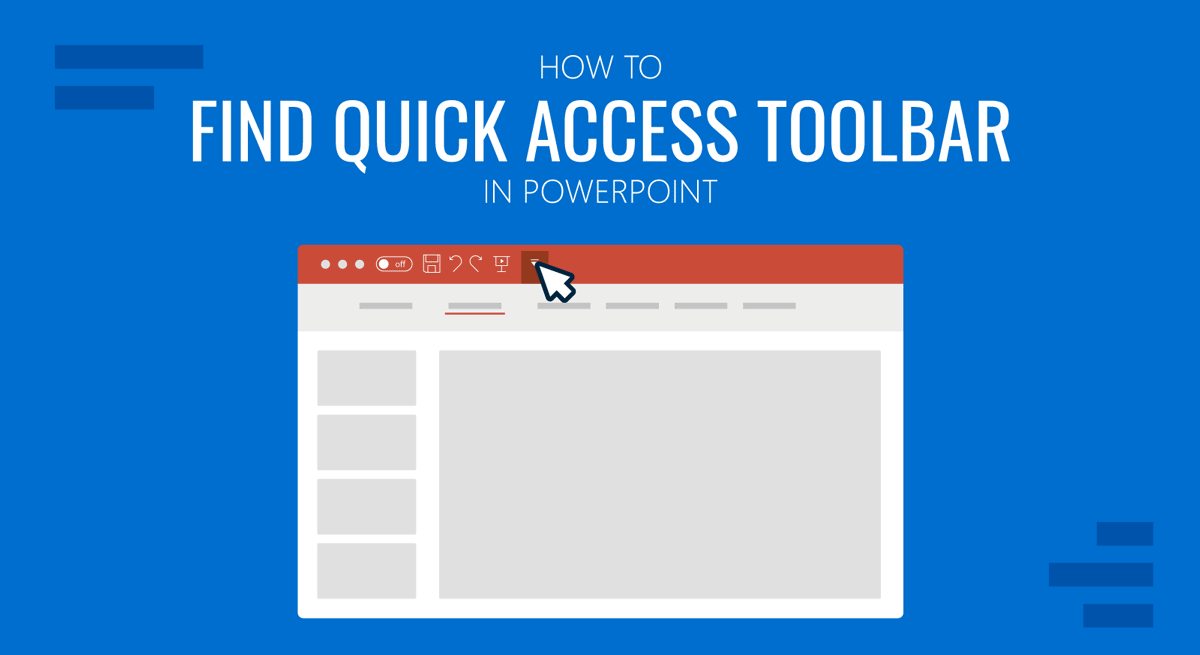
The Quick Access Toolbar (QAT) is customizable. Depending on your version of PowerPoint and toolbar settings, it appears either above or below the Ribbon menu. This toolbar contains shortcuts to commands you use often, such as Save, Undo, Redo, Align Objects, or Format Painter.
Unlike Ribbon menu tabs, which change depending on what you select, the Quick Access Toolbar stays visible at all times. This makes it ideal for workflows where speed and consistency are essential, such as designing slide layouts, formatting shapes and text, aligning objects and diagrams, repeated exporting or saving, or reviewing and editing slides. Since it’s fully customizable, the QAT can be tailored to suit presenters, professional presentation designers, consultants, educators, researchers, executives, and others.
Using the PowerPoint Quick Access Toolbar can provide you with several benefits, including faster access to frequently used tools, fewer steps for common tasks, and a personalized menu that matches how you work.
Where is the Quick Access Toolbar in PowerPoint
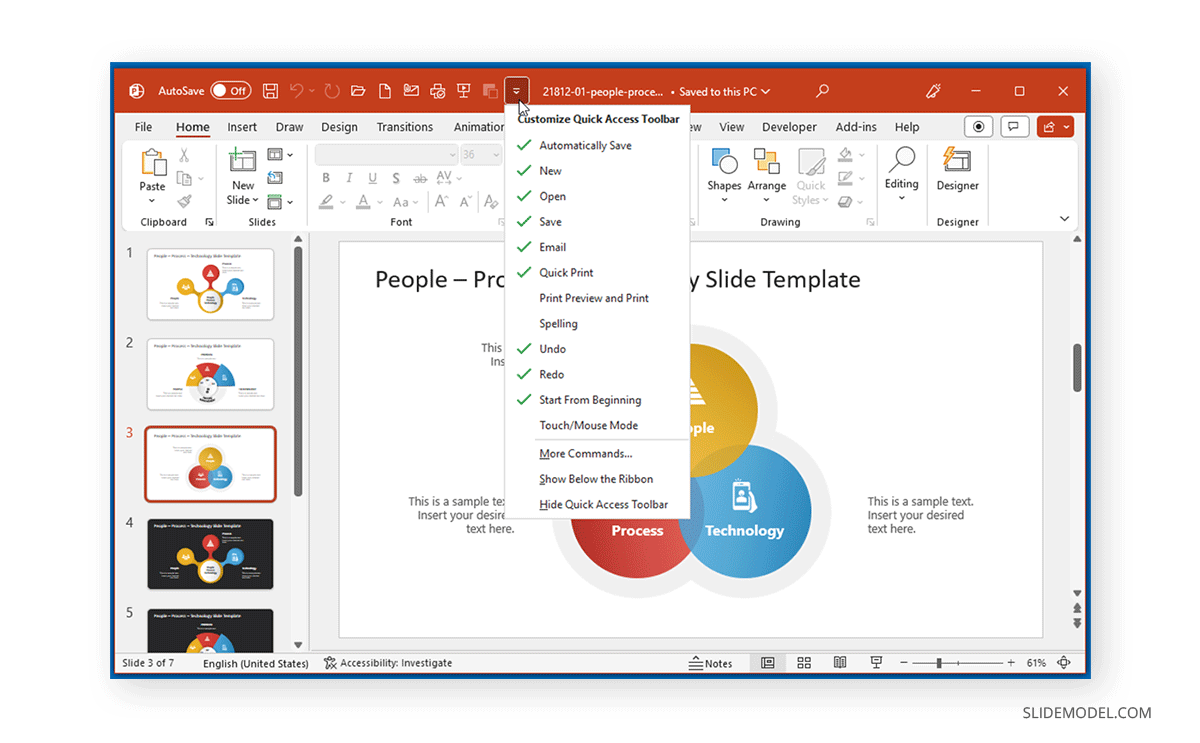
If you’re using a legacy version of PowerPoint, the Quick Access Toolbar might be located at the top, above the Ribbon menu. The recent edition of PowerPoint has changed the location of the toolbar by default below the Ribbon menu. You can, however, change its position to place it above the Ribbon menu.
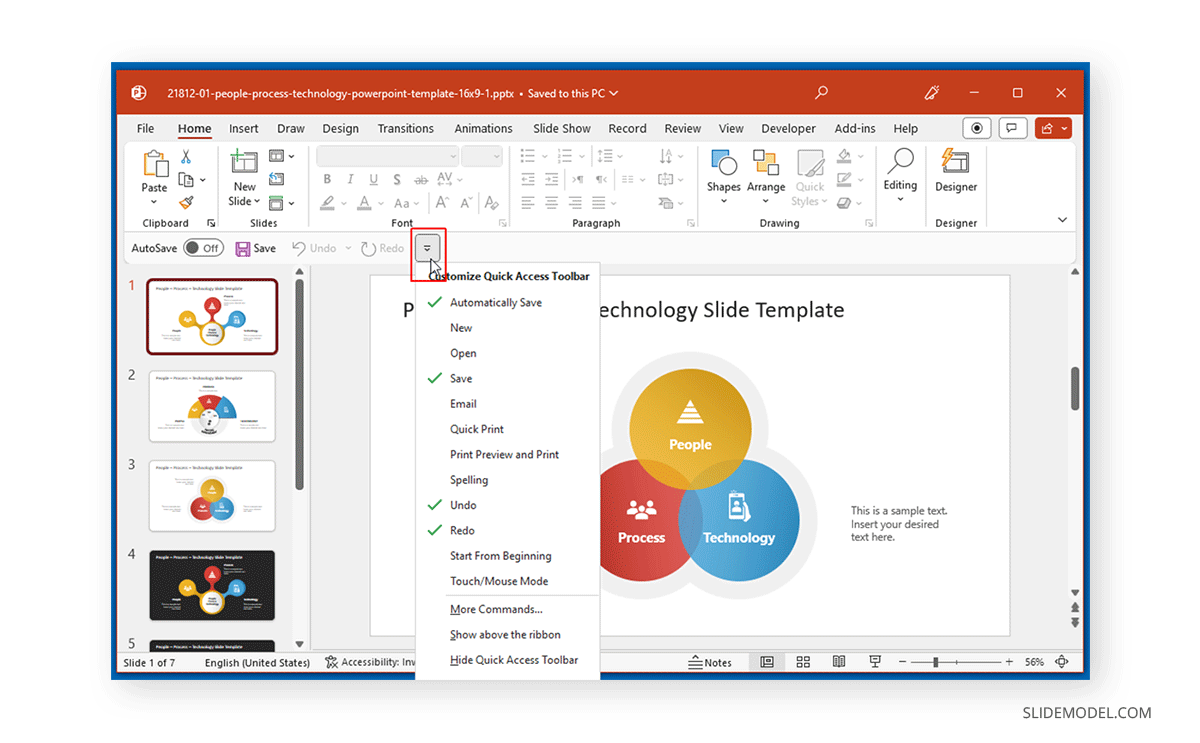
How to Enable the Quick Access Toolbar in PowerPoint
In most cases, the Quick Access Toolbar is enabled by default. If it’s missing or appears empty, you can easily enable it. For those wondering how to install the Quick Access Toolbar, it’s preinstalled; all you have to do is customize and enable it. While some users might wonder how to install the Quick Access Toolbar, PowerPoint provides it by default; it only needs to be enabled if it is not showing up. Below are a few easy steps to enable the Quick Access Toolbar.
Step 1: Go to File -> Options.
Step 2: Select Quick Access Toolbar.
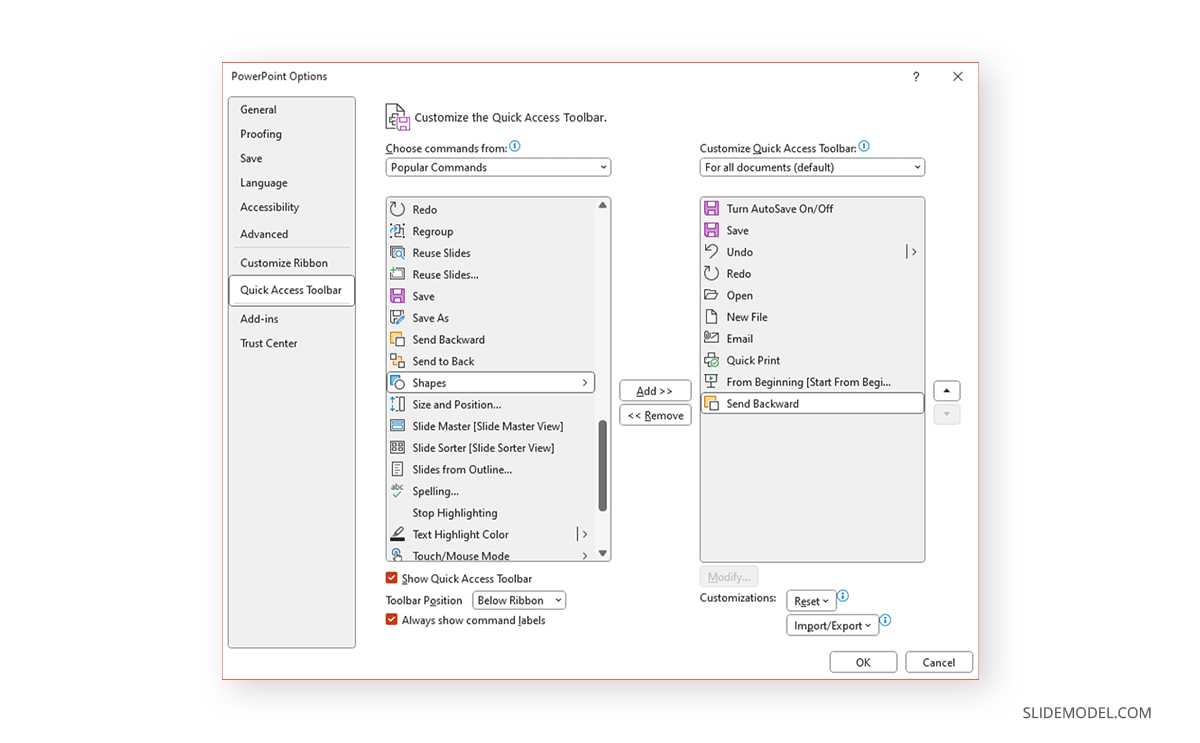
Step 3: Choose commands from the left panel and click Add to add a new command or Remove to remove toolbar items.
Step 4: Select Show Quick Access Toolbar at the bottom, then click OK to enable it.
How to Use the Quick Access Toolbar in PowerPoint
Once configured, using the QAT is simple because it functions like a permanent shortcut bar. Power users often include commands buried deep in the Ribbon, turning multi-click actions into single clicks.
Common Use Cases
- Selecting shapes and instantly aligning them.
- Applying consistent formatting without opening multiple menus.
- Saving, exporting, or duplicating slides faster.
- Switching between design and review tasks efficiently.
Recommended Commands to Add to the Quick Access Toolbar
There’s no single “best” setup, but certain commands are popular among professionals.
Common QAT Commands for PowerPoint
- Save As
- Align Left / Center / Right
- Distribute Horizontally / Vertically
- Format Painter
- Selection Pane
- Group / Ungroup
- Bring Forward / Send Backward
- Duplicate Slide
- Export to PDF
Designer Focused Commands:
- Shape Fill / Outline
- Rotate Objects
- Merge Shapes
- Edit Points
Presenter Focused Commands:
- Start Slide Show from Current Slide
- Presenter View
- Rehearse Timings
The above-mentioned commands provide an example and an overview of the type of tools you can add to your custom QAT to suit your workflow needs. These can be customized to suit your workflow and command preferences.
How to Customize PowerPoint Quick Access Toolbar
If you’re new to the Quick Access Toolbar, you will notice that some commands are already available, whereas you can add new options by selecting them from a given list. Checking these options would show them on the toolbar.
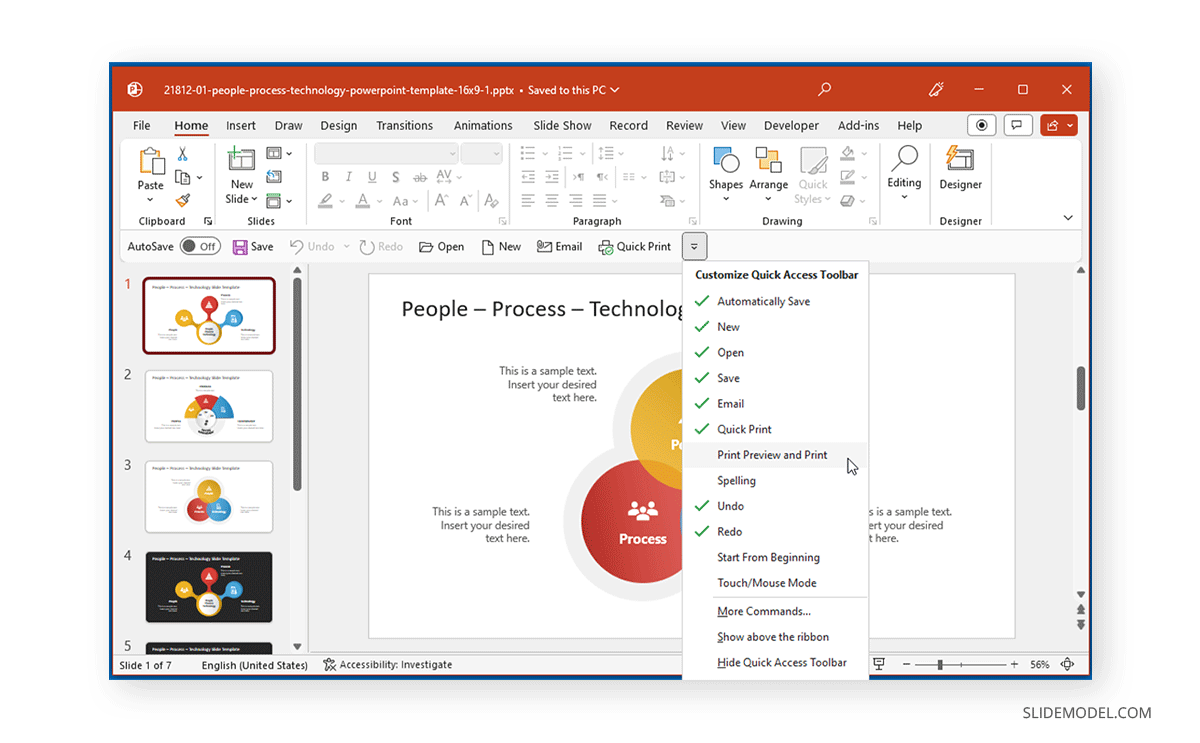
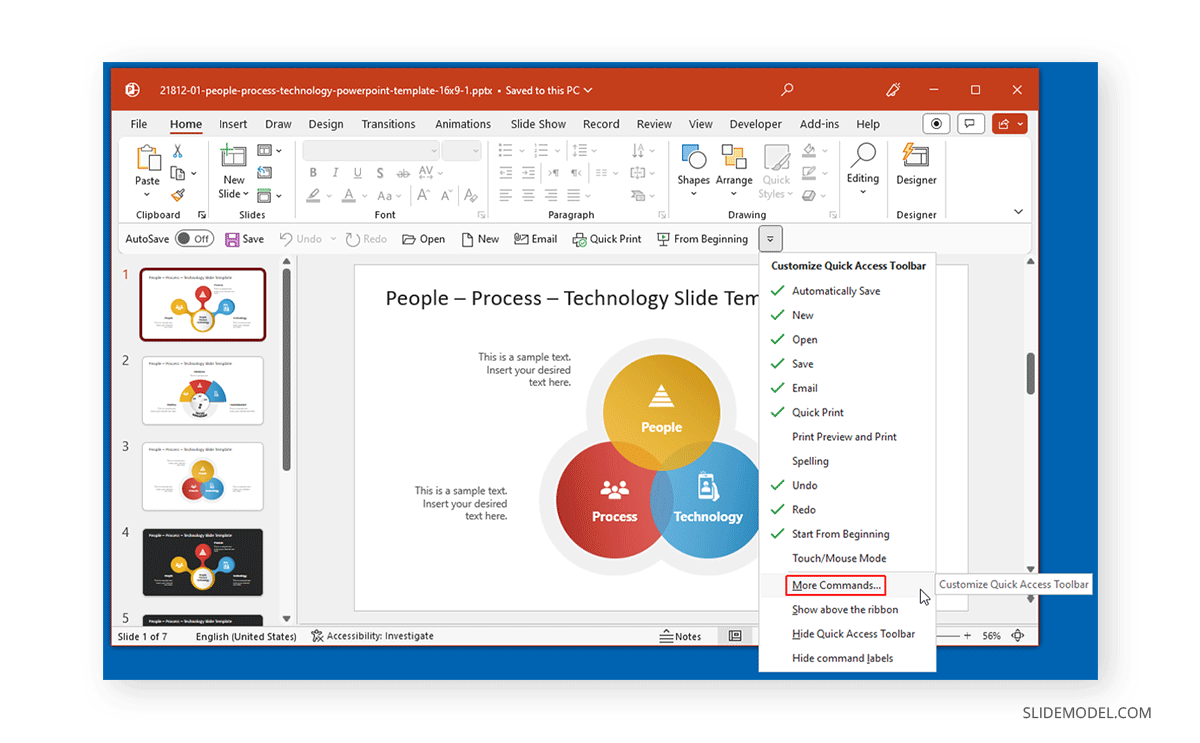
To create a custom list of features to use with the bar, choose the More Commands option or access the same customization options via File -> Options -> Quick Access Toolbar.
Selecting commands via Choose commands from you can add them to the toolbar, whereas selecting commands via Customize Quick Access Toolbar menu and clicking Remove would remove them. Once you have customized the toolbar, click OK to apply the changes.
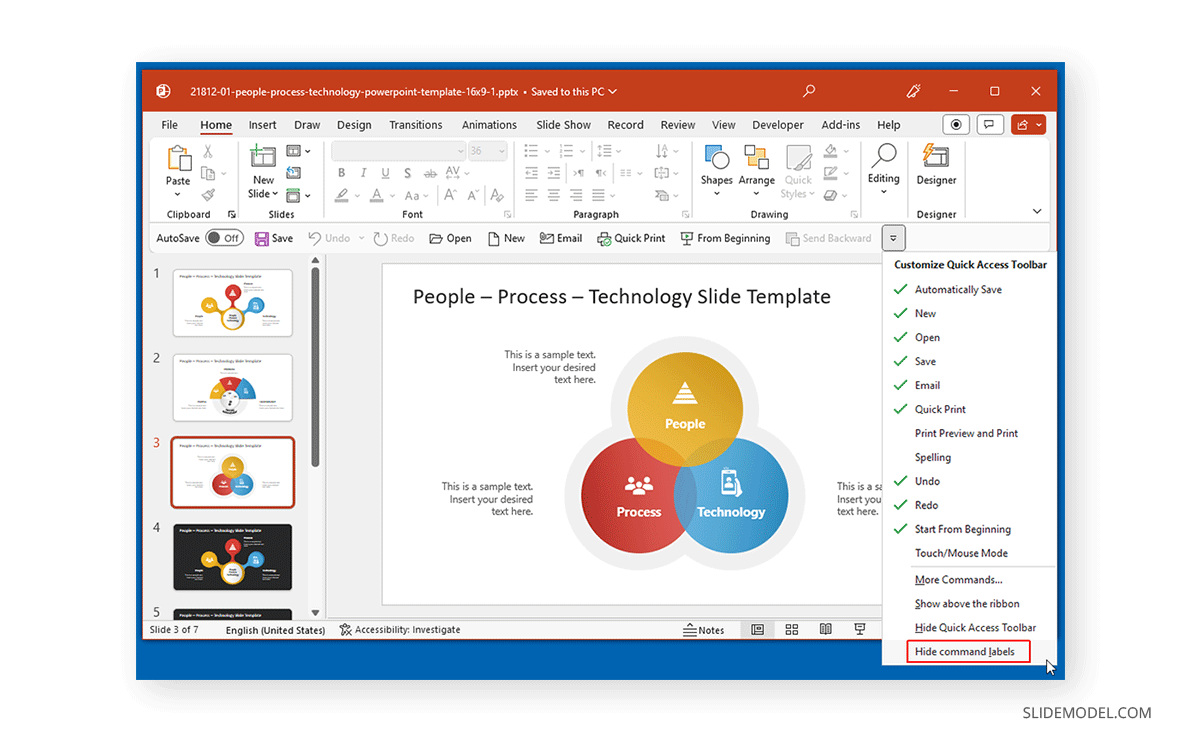
How to Hide Command Labels in Quick Access Toolbar
You can hide the command labels to make your toolbar less crowded.
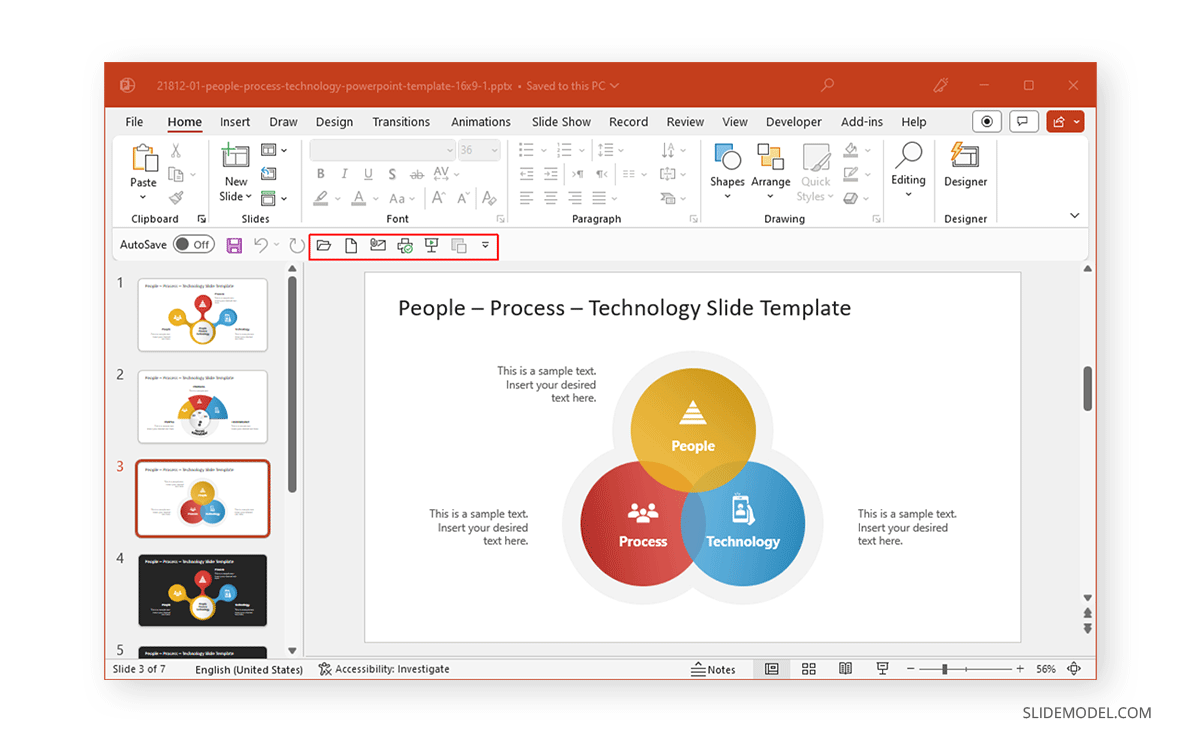
The below image shows the Quick Access Toolbar without the command labels in a more compact layout.
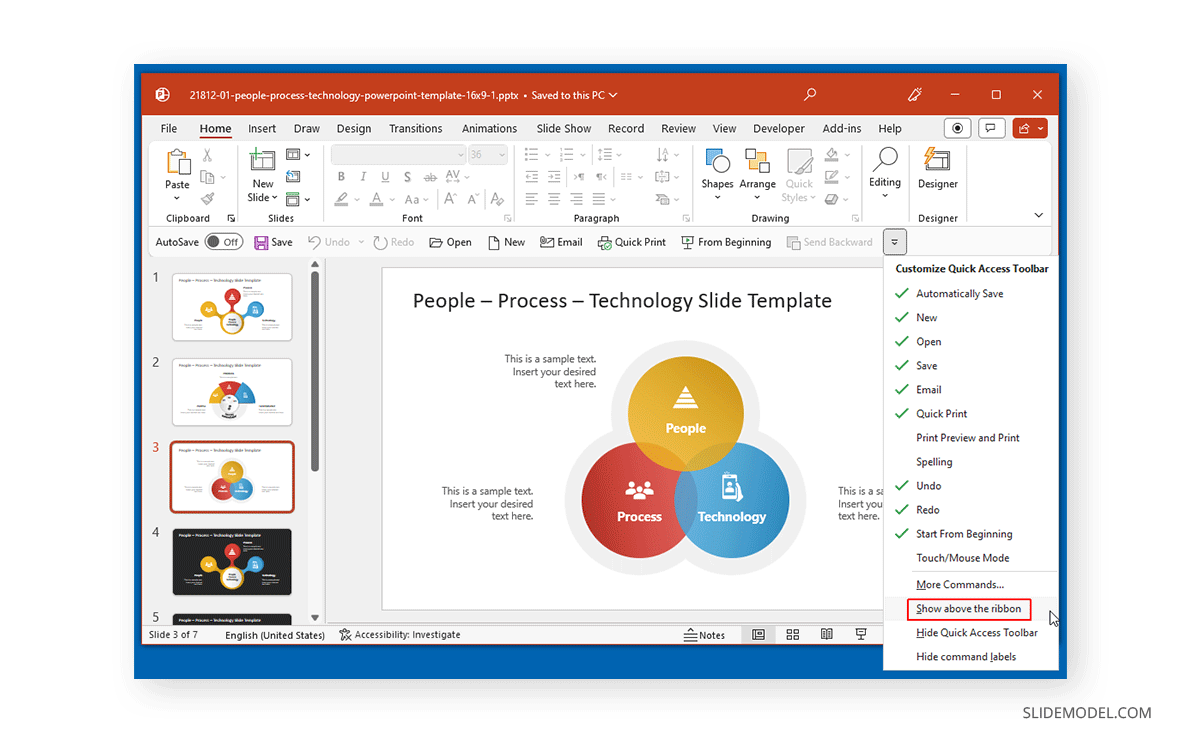
How to Change the Location of the Quick Access Toolbar
Suppose you would like to switch back to the legacy view for the toolbar by locating it above the Ribbon menu, or already have it above the Ribbon and want to change it back to the bottom of the menu. In that case, you can choose to change the location of the Quick Access Toolbar via the options within the Customize Quick Access Toolbar menu (arrow button).
By changing the location to above or below the Ribbon menu, you can place the toolbar in a location convenient for you to maximize your productivity.
How to Optimize the Quick Access Toolbar in PowerPoint
If your toolbar feels cramped, there are a few ways to expand or optimize it. While you can’t resize icons directly, command organization can improve efficiency and productivity.
- Move QAT Below the Ribbon Menu: You can move the Quick Access Toolbar below the Ribbon to gain more horizontal space.
- Remove Commands: Removing rarely used commands can help reduce clutter in the Quick Access Toolbar.
- Use Icons Only: By using only icons, you can reduce space on the QAT. To do this, select the arrow at the end of the toolbar and select the Hide command labels.
- Show Command Labels: While icons take up less space, some users might prefer labeled commands to easily identify them. By selecting Show command labels, you can enable command names alongside icons to expand the Quick Access Toolbar.
How to Import and Export Quick Access Toolbar Settings
One of the most overlooked features is the ability to export and import QAT settings, which is ideal for teams or multi-device setups. By importing and exporting the toolbar, you can maintain consistent workflows across computers, share optimized setups with colleagues, and recover settings after reinstalling Office.
How to Export the Quick Access Toolbar
If you want to export QAT to later import it to another system or before reinstalling Office, you can follow the following method:
Step 1: Go to File -> Options -> Quick Access Toolbar.
Step 2: Click Import/Export.
Step 3: Select Export all customizations.
Step 4: Save the .exportedUI file.
How to Import the Quick Access Toolbar:
Quick Access Toolbar settings that have been exported can be imported to a new device or after reinstalling Office. To import your QAT settings, follow the simple steps mentioned below:
Step 1: Go to File -> Options -> Quick Access Toolbar.
Step 2: Click Import/Export.
Step 3: Select Import customization file.
Step 4: Choose your saved .exportedUI file.
Note: Importing replaces existing Ribbon and QAT customizations, so export your current setup as a backup first.
Troubleshooting: Quick Access Toolbar PowerPoint Not Showing
There are several steps you can take if the Quick Access Toolbar in PowerPoint is not showing. Here are a few quick fixes to show or restore the Quick Access Toolbar in PPT.
- Check Ribbon Display: If the Quick Access Toolbar isn’t showing, check Ribbon display settings and select Ribbon Display Options (top-right). Also, ensure that Show Tabs and Commands are selected.
- Reset the Quick Access Toolbar: Go to File -> Options -> Quick Access Toolbar, click Reset, and choose Reset only Quick Access Toolbar. This restores default settings and fixes most display issues.
- Check for Corrupted Settings: User profiles or Office updates can corrupt toolbar settings. Resetting often resolves this.
FAQs
Where is the Quick Access Toolbar located in PowerPoint?
In the most recent versions of PowerPoint, the Quick Access Toolbar is located below the Ribbon menu by default. In older versions, it was positioned above the Ribbon menu. You can move it back to the top if you prefer the older layout.
How can I customize the Quick Access Toolbar in PowerPoint?
To customize the Quick Access Toolbar, you can add or remove commands by selecting More Commands from the dropdown menu or going to File -> Options -> Quick Access Toolbar. From there, you can choose the commands you want to add or remove from the toolbar and click OK to save your changes.
How do I hide command labels in the Quick Access Toolbar?
You can hide command labels to make the toolbar more compact. This option is available within the customization settings, allowing you to create a cleaner, less cluttered toolbar.
Can I change the position of the Quick Access Toolbar in PowerPoint?
Yes, you can change the position of the Quick Access Toolbar. You can move it above or below the Ribbon menu based on your preference. This option is available through the Customize Quick Access Toolbar menu.
Why should I use the Quick Access Toolbar in PowerPoint?
The Quick Access Toolbar is a handy feature that allows you to add the most frequently used commands for quick and easy access. It helps streamline your workflow and improves productivity by reducing the need to navigate through multiple Ribbon tabs.
How do I add more commands to the Quick Access Toolbar in PowerPoint?
You can add more commands to the Quick Access Toolbar by selecting More Commands from the dropdown menu or navigating to File -> Options -> Quick Access Toolbar. Then, choose the desired commands from the list and add them to your toolbar.
Is it possible to reset the Quick Access Toolbar to its default settings?
Yes, you can reset the Quick Access Toolbar to its default settings by using the Reset option available in the customization menu. This will remove any added commands and restore the original toolbar setup.
Final Words
The Quick Access Toolbar is a convenient way of adding the most frequently used commands in PowerPoint. It is a good alternative to remembering endless commands and makes it quick and easy to access frequently used options without sifting through Ribbon menu tabs.